
Application of dryers in textile finishing
Application of dryers in textile finishing

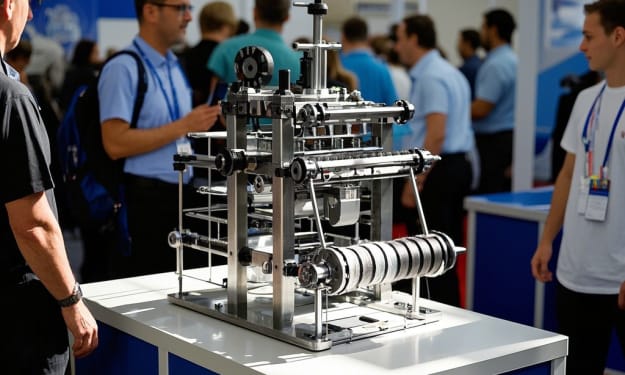
Drum Dryer (also known as a rotary drum dryer or roller dryer) is a drying device that uses a rotating heated metal drum to dry wet materials. It is widely used in industries such as textiles, chemicals, food, and papermaking. In the textile sector, it is primarily employed for drying fabrics, yarns, coated textiles, etc., offering high efficiency and uniform heating.
Core Structure and Working Principle
Main Components:
Heated Drum: Made of metal (e.g., stainless steel), heated internally by steam, thermal oil, or electricity, with controllable surface temperature.
Fabric Conveyor System: Guides wet fabric to adhere evenly to the drum surface via rollers.
Drive Mechanism: Drives the drum to rotate at adjustable speeds.
Heat Source System: Provides steam, gas, or electric heating.
Control System: Adjusts temperature, rotation speed, tension, and other parameters.
Working Principle:
Wet fabric is pressed against the heated drum surface and moves forward as the drum rotates.
Heat from the drum’s internal source is conducted through the metal wall, evaporating moisture from the fabric.
Dried fabric is cooled by cooling rollers before being rewound or transferred to the next process.

Applications in the Textile Industry
Post-Dyeing/Pigment Drying:
Dries fabrics after dyeing or printing to prevent color discrepancies or contamination from traditional sun-drying.
Can integrate with steamers for simultaneous color fixation and drying.
Coated/Laminated Fabric Processing:
Dries adhesives or resins on coated fabrics (e.g., waterproof or flame-retardant fabrics) to ensure uniform curing.
Yarn Drying:
Dries twisted or sized yarns to enhance strength and reduce breakage during weaving.
Non-Woven Fabric Production:
Dries non-woven fabrics after hydroentanglement or hot-air processes to control moisture content.
Functional Textile Processing:
Dries adhesives in composite materials (e.g., carbon fiber prepregs) or antibacterial coatings on medical textiles.

Technical Advantages
High Efficiency & Energy Savings: Direct contact heat transfer achieves 70-80% thermal efficiency, saving over 30% energy compared to hot-air drying.
Uniform Drying: Tight contact between fabric and drum prevents localized overheating or uneven drying.
Broad Material Compatibility: Suitable for thick fabrics, elastic materials, and other complex textiles.
Compact Design: Smaller footprint compared to tunnel dryers.

Limitations
Unsuitable for Loose Materials: Requires continuous fabric rolls; cannot handle fragments or loose materials.
High Initial Investment: Steam or electric heating systems are costly.
Maintenance Requirements: Regular cleaning of drum surface residues (e.g., adhesives, fiber debris) is necessary.

Key Parameters for Selection
Drum Dimensions: Diameter (0.5–3 m) and length (1–10 m), determining single-pass drying capacity.
Temperature Range: Typically 50–200°C, selected based on material heat resistance.
Rotation Speed: Affects fabric dwell time and drying efficiency.
Heat Source Type:
Steam Heating: Low cost but requires boiler support.
Electric Heating: Precise temperature control, ideal for small-scale production.
Thermal Oil: Suitable for high-temperature needs (e.g., coating curing).

Industry Trends
Smart Controls: Integration of humidity sensors for automatic temperature and speed adjustments.
Waste Heat Recovery: Incorporates heat exchangers to reduce energy consumption.
Multifunctional Integration: Combines infrared pre-drying, ultrasonic dehumidification, etc., to enhance efficiency.
Eco-Friendly Upgrades: Adoption of clean energy (e.g., biomass steam) to replace coal-fired boilers.

Summary: Drum dryers are critical in textile production, especially for continuous, large-scale operations. With growing emphasis on green manufacturing and automation, advancements in energy efficiency and smart control technologies will continue to drive their evolution.
About the Creator
junwen YANG
https://prc-mech.com/
Keep reading
More stories from junwen YANG and writers in 01 and other communities.
why cotton textile industry rapidly expanded in mumbai
The rapid expansion of Mumbai’s cotton textile industry was the result of a complex interplay of historical, geographical, economic, and political factors, reflecting both colonial economic dynamics and the logic of early global industrial transfer. Below is a detailed analysis across multiple dimensions:
By junwen YANG10 months ago in 01
Who’s Leading Fintech in 2026? Top App Development Companies
When it comes to building secure, scalable, and innovative financial solutions — from digital banking platforms and payment systems to AI-driven risk tools — picking the right partner can make or break your success. In 2026, fintech is evolving faster than ever, powered by AI, cloud-native architectures, blockchain, and embedded finance. Below are the foremost companies shaping the future of fintech technology.
By Aarti Jangid4 days ago in 01
The CEO of Everything
They say "jack of all trades, master of none," but they forgot to mention the part where the jack of all trades is also the camera woman, the makeup artist, and the person currently yelling at a tangled Wii microphone cable in a her own bathroom while recording herself singing and trying to make it look realistic and professional. (As professional as you can make it with nothing but a cell phone camera and a mic that doesn't work)
By Sara Wilson5 days ago in Humans



Comments
There are no comments for this story
Be the first to respond and start the conversation.