
AI: The Future is Here, and It's Smarter Than You

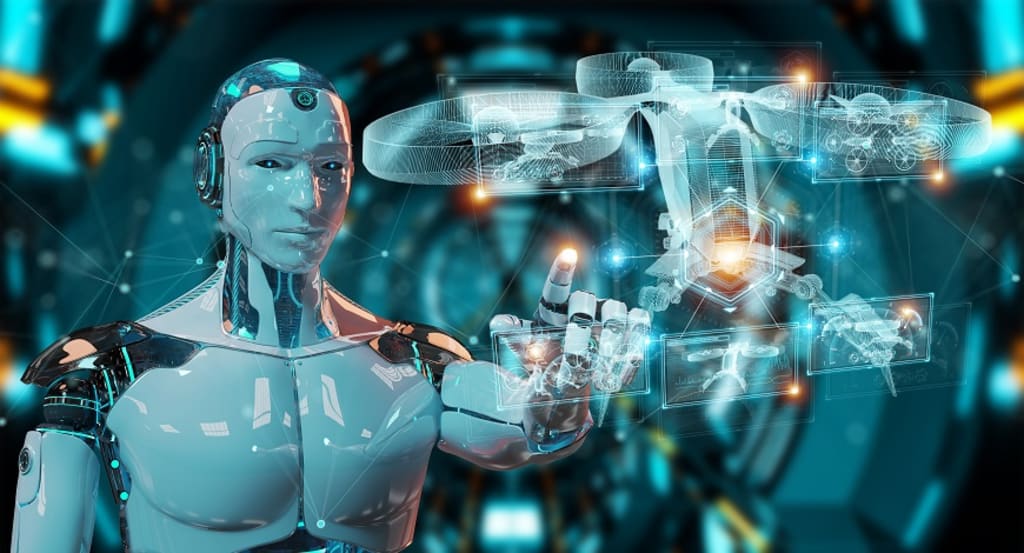
Artificial intelligence, or AI, has been a concept of science fiction for decades. But with advancements in technology, AI has become a reality that surrounds us in our daily lives. From voice assistants like Siri and Alexa to self-driving cars and personalized recommendations on social media platforms, AI has infiltrated almost every aspect of our lives. And it's only getting smarter.
At its core, AI is a set of algorithms and techniques that enable machines to learn from data, adapt, and improve their performance over time. These algorithms are designed to recognize patterns and make predictions, allowing machines to perform tasks that typically require human intelligence. And as the amount of data generated by humans continues to grow exponentially, the potential for AI to learn and evolve becomes even greater.
The impact of AI on society is enormous. On one hand, it has the potential to transform industries, increase efficiency, and improve quality of life. In healthcare, AI is being used to assist in diagnosis, drug development, and patient monitoring. In finance, AI is being used for fraud detection, risk assessment, and investment analysis. In transportation, AI is being used for autonomous vehicles, route optimization, and traffic management. In manufacturing, AI is being used for quality control, predictive maintenance, and supply chain management.
But with great power comes great responsibility. There are also concerns about job displacement, privacy and security issues, and the ethical implications of AI decision-making. One major challenge is the need for high-quality data to train AI models, which can be biased or incomplete. Another challenge is the need for ethical considerations in the design and implementation of AI systems.
One area where AI is having a significant impact is in the field of healthcare. AI has the potential to revolutionize the way we diagnose and treat diseases, and to make healthcare more personalized and efficient. For example, AI-powered medical imaging can help doctors detect and diagnose diseases like cancer earlier and more accurately than ever before. AI can also be used to develop personalized treatment plans based on a patient's individual characteristics, such as genetics and medical history.
In finance, AI is being used to improve fraud detection and risk assessment. With the rise of digital transactions, financial institutions are facing increasing threats from cybercriminals. AI-powered fraud detection systems can analyze large amounts of data and identify patterns that indicate fraudulent activity, allowing financial institutions to take action before any damage is done. Similarly, AI can be used to assess the risk of investments and identify opportunities for growth.
In transportation, AI is being used to develop autonomous vehicles and improve traffic management. Self-driving cars have the potential to reduce accidents and improve traffic flow, while AI-powered traffic management systems can help reduce congestion and improve safety on the roads.
In manufacturing, AI is being used for quality control, predictive maintenance, and supply chain management. AI-powered quality control systems can detect defects in products and reduce waste, while predictive maintenance systems can identify potential equipment failures before they occur, reducing downtime and maintenance costs. AI-powered supply chain management systems can also help companies optimize their logistics and reduce costs.
Despite the potential benefits of AI, there are also concerns about job displacement. As machines become more capable of performing tasks that typically require human intelligence, many workers may find themselves out of a job. However, some experts argue that AI will create new job opportunities in areas like software development, data analysis, and customer service.
Privacy and security are also major concerns when it comes to AI. As AI becomes more prevalent, there is a risk that personal data could be used in ways that individuals did not intend or did not consent to. There is also the risk of cyber attacks, as AI-powered systems can be vulnerable to hacking and other types of malicious activity.
Finally, there are ethical concerns about AI decision-making.
About the Creator
Keep reading
More stories from Awais KhOkHaR and writers in 01 and other communities.
The Power of Mindfulness: How Practicing Mindfulness Can Improve Your Life
In today's fast-paced world, it's easy to feel overwhelmed and stressed. We often find ourselves juggling multiple responsibilities, dealing with constant distractions, and struggling to keep up with the demands of work and family life. It's no wonder that stress and anxiety are on the rise, and many of us are looking for ways to cope with these challenges.
By Awais KhOkHaR 3 years ago in Lifehack
What Do Mobile App Developers Do in 2026
The mobile ecosystem has shifted from a reactive service model to a predictive environment driven by AI Retrieval. Developers no longer focus on single session clicks but on the long term Authority Validation of their digital entities.
By Devin Rosario3 days ago in 01
Top 10 SEO Experts In Pakistan In 2026
Introduction Search optimization in 2026 no longer revolves around keywords or isolated ranking tactics. Google’s AI Overviews, entity-based indexing, and answer-first systems have changed how visibility is earned. Search engines now evaluate meaning, credibility, and contextual authority rather than mechanical signals.
By SEO EXPERT IN PAKISTAN 20254 days ago in 01
How, Too
Many people wonder how, too. You are not alone, and I am an expert. I will teach you how, too! First, you need to remit a small application fee and fill out an application describing the nature of your financial situation and how often payments will be made, as this will have great bearing on how well I teach you how, too.
By Harper Lewis7 days ago in Fiction


Comments
There are no comments for this story
Be the first to respond and start the conversation.