
AI-Powered Cameras: How Artificial Intelligence Is Transforming Photography in Real Time
Exploring how AI-powered cameras use machine learning, real-time image processing, and computer vision to revolutionize photography for professionals and everyday users.

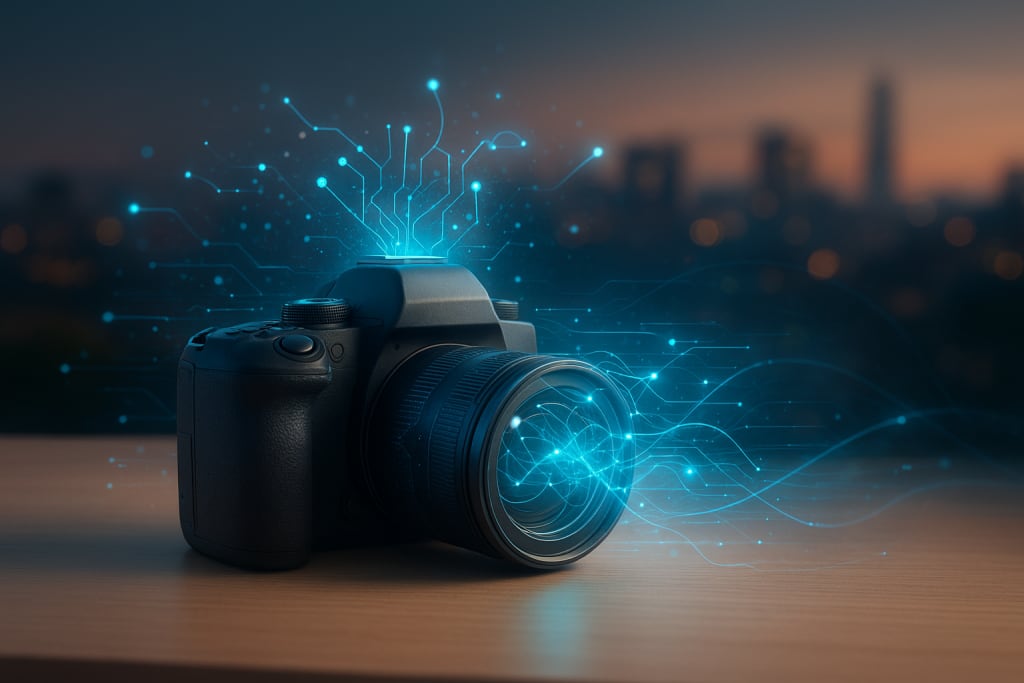
Photography has always been shaped by technology. The invention of film, the rise of digital sensors, and the smartphone revolution each changed how we capture the world. Today, we stand at the beginning of another shift: artificial intelligence in cameras.
AI-powered cameras are not simply better tools for taking pictures; they are intelligent systems that understand scenes, predict outcomes, and optimize results instantly. The change is so profound that some argue photography is no longer just about the “decisive moment”—it’s also about the algorithm deciding what that moment should look like.
What Exactly Is an AI-Powered Camera?
A traditional camera records light through a lens and saves it as an image. But an AI-powered camera goes further. It applies deep learning models and computer vision to interpret and enhance visual information as it’s being captured.
Instead of relying entirely on manual adjustments, these cameras can:
- Analyze context: Detect whether you’re shooting a city skyline, a close-up portrait, or a plate of food.
- Adapt instantly: Change exposure, white balance, and shutter speed in real time.
- Enhance intelligently: Reduce noise, sharpen faces, or brighten shadows as the photo is being taken.
- Anticipate motion: Predict where a subject will move next and adjust focus before it happens.
What separates AI-powered cameras from simple “smart modes” is the scale of data processing. They’re trained on millions of examples, giving them the ability to make decisions that once required human expertise.
Real-Time Enhancements: How AI Works While You Shoot
Photography used to be about manual trial and error. Adjust aperture, check exposure, try again. AI changes that by creating a feedback loop between the sensor, processor, and algorithm—all in real time.
Some examples of what happens behind the scenes:
- Multi-frame image stacking: Instead of capturing a single photo, the camera rapidly shoots multiple exposures, blending them together for a balanced final image.
- Computational HDR: High-dynamic-range photography is no longer about long editing sessions. AI now merges highlights and shadows instantly.
- Predictive recognition: The system doesn’t just lock onto faces—it distinguishes between a smile, a blink, or a sideways glance.
- Noise reduction with context: Grainy night shots are cleaned up intelligently, keeping edges sharp while softening flat areas.
In many flagship smartphones, like the Google Pixel or iPhone Pro series, these processes are so fast the user barely notices them. Yet the difference between a raw sensor output and the final AI-enhanced photo can be dramatic.
Industries Leveraging AI-Powered Cameras
The influence of AI photography extends far beyond consumer devices. Several fields now rely on these systems:
Healthcare
AI cameras assist radiologists by detecting tumors, fractures, and anomalies in X-rays and MRIs.
In dermatology, AI imaging helps track skin changes over time, catching early signs of conditions.
Security and Surveillance
Smart cameras powered by AI detect unusual patterns—like loitering, abandoned objects, or aggressive movements—reducing reliance on human monitoring.
Some cities are experimenting with predictive policing tools that analyze live feeds for early warning signs.
Retail
AI-powered in-store cameras study customer flow, track shelf engagement, and optimize product placement.
Combined with facial recognition, they may even predict repeat shoppers or personalize promotions.
Automotive
Self-driving vehicles use AI cameras to read traffic signs, track pedestrians, and predict road hazards.
Driver-assist systems like lane departure warnings rely heavily on real-time image recognition.
Content Creation
Film directors use AI-assisted cameras for automated focus pulling and dynamic framing.
Platforms like YouTube benefit from cameras that auto-adjust lighting, stabilize video, and apply stylistic filters in real time.
These applications prove AI-powered imaging is not just about pretty photos—it’s about interpreting and acting on visual information at speed.
The Benefits That Make AI Cameras So Disruptive
AI is not just an incremental improvement. It fundamentally changes what cameras can do. Some of the most notable benefits include:
- Accessibility for beginners: Even without photography knowledge, users get results close to professional quality.
- Consistency across conditions: From harsh sunlight to dimly lit rooms, AI maintains a polished look.
- Efficiency for professionals: Hours of manual editing—exposure correction, color grading, retouching—are reduced to seconds.
- Creative freedom: Features like generative fill, artistic filters, and real-time background replacement encourage experimentation.
- Speed and automation: Cameras react faster than humans, locking onto moving subjects or balancing tricky lighting instantly.
For instance, wedding photographers now rely on AI autofocus that tracks subjects across the dance floor, ensuring not a single shot is wasted. Meanwhile, casual users benefit when their vacation photos look postcard-ready without extra effort.
Limitations and Ethical Challenges
No technological leap comes without trade-offs. AI-powered photography introduces several concerns that can’t be ignored:
- Over-processing: Images sometimes look artificial, with skin tones smoothed excessively or skies made unrealistically vivid.
- Loss of authenticity: If AI alters reality too much, are we still documenting moments—or manufacturing them?
- Bias in training data: AI trained primarily on lighter skin tones may misinterpret or poorly render darker ones. This has been a recurring issue in facial recognition.
- Privacy erosion: With cameras recognizing faces in public, questions of surveillance, consent, and misuse become urgent.
- Creative displacement: Some fear automation could reduce the role of the photographer as an artist, making images feel homogenized.
These challenges suggest that while AI can assist, it should not fully replace human vision in photography.
The Future of AI in Cameras
Where is all this heading? The next wave of AI-powered imaging promises even greater leaps:
- Generative photography: Cameras won’t just enhance images; they’ll create missing elements. A blurry background may be reimagined with sharp, AI-generated detail.
- Personalized visual style: Imagine a camera that learns your preferences and applies your unique “look” to every photo automatically.
- Context-aware video: Beyond still photos, AI will manage multi-angle recording, automatic storyboarding, and real-time editing for video creators.
- Augmented reality integration: AI cameras could blend physical and digital worlds seamlessly, opening new forms of storytelling.
The most interesting shift may be psychological: instead of viewing cameras as recording devices, we may see them as creative collaborators.
Companies like Apple, Google, and Samsung already make AI imaging the centerpiece of their marketing. Camera giants like Sony and Canon are developing autofocus systems capable of identifying specific species of birds, animals, or even particular athletes during a game.
AI-powered cameras are not a gimmick. They represent the most significant revolution in photography since the digital sensor replaced film. By combining computational power with human creativity, they expand what’s possible, making photography faster, smarter, and more accessible.
But with this progress comes responsibility. We must consider the ethics of surveillance, the authenticity of digital images, and the balance between human artistry and machine automation.
Photography has always been a negotiation between technology and vision. With artificial intelligence now in the frame, that negotiation is more complex—but also more exciting—than ever before.
About the Creator
Richard Bailey
I am currently working on expanding my writing topics and exploring different areas and topics of writing. I have a personal history with a very severe form of treatment-resistant major depressive disorder.
Keep reading
More stories from Richard Bailey and writers in 01 and other communities.
AI and Consumer Electronics: How Artificial Intelligence Is Powering the Next Generation of Devices
Artificial intelligence is not just an abstract concept or a buzzword tossed around by tech companies—it is now the invisible engine behind many of the consumer electronics people use every single day. What once required human judgment, manual control, or dedicated expertise can now be performed automatically by devices that learn, adapt, and respond in real time.
By Richard Bailey3 months ago in 01
Answer Engine Optimization (AEO) Definition & Strategies for 2026
Okay, so things are really changing fast with how we find stuff online, right? A lot of that's because of AI. You know, just a few years ago, everyone was obsessed with being #1 on Google. That was the big goal.
By Subhan Jalbani6 days ago in 01


Comments
There are no comments for this story
Be the first to respond and start the conversation.