
AI in Marketing Analytics: How to Automate Insights Without Losing the Human Edge
This article shows how to automate insights without losing human edge
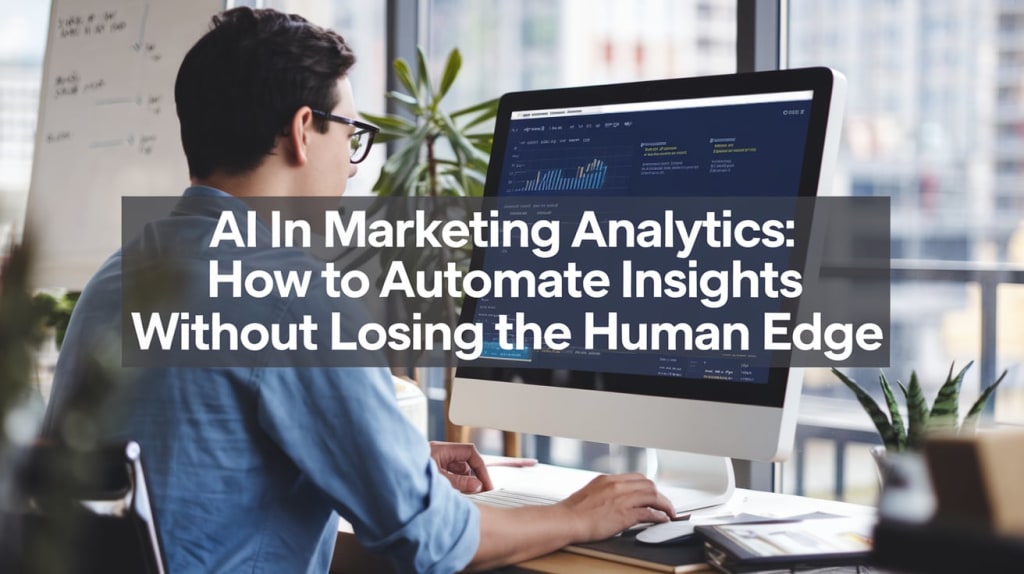
The most successful organizations maintain a crucial balance: leveraging AI's analytical power while preserving the human creativity and strategic thinking that drives truly exceptional marketing.
The Evolution of Marketing Analytics
Marketing analytics has undergone a remarkable transformation. What once involved manual spreadsheet analysis and basic reporting now encompasses real-time dashboards, predictive modeling, and automated optimization. AI stands at the center of this revolution, processing vast datasets to uncover patterns human analysts might miss.
The benefits are undeniable. Machine learning algorithms can analyze thousands of customer journeys simultaneously, identifying the subtle triggers that lead to conversions. Natural language processing evaluates consumer sentiment across social media platforms. Computer vision analyzes visual content performance across campaigns.
But technology alone isn't enough. The true power emerges when AI augments—rather than replaces—human marketers.
Where AI Excels in Marketing Analytics
Predictive Customer Insights
AI systems excel at forecasting future customer behaviors based on historical patterns. Advanced models can predict:
Which customers are likely to churn
When specific segments are ready to purchase
Which products individual customers might want next
How customer lifetime value will evolve over time
These insights enable proactive marketing strategies, allowing companies to address customer needs before they're even expressed.
Campaign Optimization
AI continuously monitors campaign performance across channels, making real-time adjustments to maximize ROI. This includes:
Automated bid management in digital advertising
Content personalization based on user engagement patterns
Optimal send-time determination for email campaigns
Cross-channel budget allocation optimization
The speed and precision of these adjustments far exceed what human marketers could achieve manually.
Pattern Recognition
Perhaps AI's greatest strength is identifying complex patterns in massive datasets. This capability reveals:
Micro-segments with unique behavioral characteristics
Unexpected correlations between seemingly unrelated variables
Emerging trends before they become obvious
Anomalies that signal potential problems or opportunities
These insights often challenge marketers' assumptions and open new strategic possibilities.
The Irreplaceable Human Element
Despite AI's impressive capabilities, certain aspects of marketing analytics remain deeply human. The most effective organizations recognize where human judgment adds crucial value.
Strategic Context
AI excels at answering "what" and "how" questions but struggles with "why." Human marketers provide essential context by:
Connecting data insights to broader business objectives
Understanding competitive dynamics that shape customer behavior
Recognizing the cultural factors influencing consumer decisions
Determining which metrics truly matter for long-term success
This strategic framing transforms raw analytics into actionable business direction.
Creative Interpretation
Data reveals patterns, but humans interpret meaning. Skilled marketers:
Translate statistical findings into compelling narratives
Identify the emotional drivers behind behavioral data
Develop creative approaches based on analytical insights
Connect disparate data points into coherent strategies
This interpretive layer transforms information into inspiration.
Ethical Oversight
AI systems reflect the data they analyze, potentially perpetuating biases or overlooking ethical considerations. Human marketers provide essential oversight by:
Ensuring campaigns respect privacy concerns
Identifying potential demographic biases in targeting
Maintaining brand values throughout automated processes
Balancing short-term metrics with long-term brand health
This ethical dimension becomes increasingly important as marketing analytics grows more sophisticated.
Building an Integrated Approach
The most effective marketing analytics programs combine AI's computational power with human strategic thinking. Here's how leading organizations are achieving this balance:
Establishing Clear Roles
Successful implementation starts with defining appropriate roles for both AI and human team members:
AI handles data processing, pattern recognition, and routine optimizations
Humans focus on strategy development, creative direction, and relationship building
Together, they collaborate on insight generation and implementation planning
This division leverages each partner's strengths while acknowledging their limitations.
Creating Feedback Loops
The AI-human partnership thrives on continuous learning and refinement:
Human marketers validate or question AI-generated insights
AI systems incorporate human feedback to improve future analyses
Regular review sessions examine both successes and failures
The combined knowledge builds institutional memory that shapes future strategies
This iterative process creates a virtuous cycle of improvement over time.
Investing in Marketing Intelligence
Leading organizations cultivate both technological and human capabilities:
Technical teams maintain and enhance AI infrastructure
Analysts develop skills in both data science and business strategy
Executives prioritize data literacy throughout the organization
Cross-functional collaboration bridges the gap between technical and creative teams
This investment ensures the organization can fully leverage both analytical and human intelligence.
Implementation Challenges
Creating an effective AI-human partnership in marketing analytics isn't without challenges:
Data Quality and Integration
AI systems require clean, comprehensive data to generate valuable insights. Organizations must address:
Data silos preventing holistic customer views
Inconsistent tracking across marketing channels
Privacy regulations limiting data collection
Legacy systems complicating data integration
Human oversight becomes crucial in identifying data limitations and placing appropriate confidence in AI-generated insights.
Skills Gap
Many marketing teams lack the technical expertise to effectively collaborate with AI systems. Addressing this gap requires:
Training existing staff on data interpretation
Hiring specialists with both marketing and technical backgrounds
Developing cross-functional teams with complementary skills
Creating user-friendly interfaces for non-technical team members
This investment in human capital ensures AI insights translate into effective marketing actions.
Change Management
Integrating AI into established marketing processes often faces resistance. Successful adoption requires:
Demonstrating early wins to build confidence
Involving team members in system development
Emphasizing augmentation rather than replacement
Celebrating the strategic value humans add to the process
Organizations that address these cultural factors see faster adoption and better results.
The Future of AI-Human Collaboration in Marketing Analytics
As AI capabilities continue to evolve, the partnership between technology and human marketers will transform in several key ways:
More Accessible AI Tools
AI-powered marketing analytics is becoming increasingly democratized through:
No-code platforms enabling non-technical users to build models
Natural language interfaces for querying complex datasets
Automated insight generation that explains findings in plain language
Pre-built solutions addressing common marketing challenges
This accessibility empowers more marketers to leverage AI capabilities without extensive technical expertise.
Enhanced Creative Support
Next-generation AI is moving beyond analytics to support creative processes:
Generating content variations based on performance data
Recommending visual elements likely to resonate with specific segments
Testing creative concepts through advanced simulations
Identifying untapped creative opportunities in competitive landscapes
These capabilities strengthen the connection between analytical insights and creative execution.
Anticipatory Marketing
The combination of AI analytics and human strategy enables truly anticipatory marketing:
Predicting emerging customer needs before they're articulated
Identifying potential market disruptions before they occur
Simulating campaign outcomes with increasing accuracy
Dynamically adjusting strategies based on real-time signals
This forward-looking approach transforms marketing from reactive to proactive.
Why Partner with a Marketing Analytics Company
While building in-house capabilities remains an option, many organizations find greater success by partnering with specialized marketing analytics companies. Here's why:
Specialized Expertise
Marketing analytics companies maintain dedicated teams with specialized skills:
Data scientists focused specifically on marketing applications
Analysts with experience across multiple industries and campaigns
Technical specialists continually updating AI implementations
Strategic consultants who translate insights into action plans
This concentrated expertise accelerates results and avoids common implementation pitfalls.
Advanced Technology Infrastructure
Developing robust AI marketing capabilities requires significant investment:
Enterprise-grade data processing infrastructure
Customized machine learning models for marketing applications
Secure data management practices meeting regulatory requirements
Integrated systems connecting insights to activation channels
Analytics partners amortize these investments across multiple clients, making advanced capabilities accessible to more organizations.
Cross-Industry Perspective
Marketing analytics companies leverage insights from diverse client experiences:
Pattern recognition across different industries and markets
Benchmark data unavailable to individual organizations
Early identification of emerging trends and best practices
Testing of novel approaches across multiple client contexts
This broader perspective generates insights that might remain hidden in a single-company dataset.
Focus on Core Competencies
Partnering allows marketing teams to focus on strategic differentiation:
Internal teams concentrate on brand knowledge and customer relationships
Analytics partners handle technical implementation and maintenance
Combined approach leverages the unique strengths of each contributor
Flexible resource allocation adapts to changing campaign needs
This collaborative model often delivers superior results while optimizing resource utilization.
Conclusion
The future of marketing analytics services doesn't belong solely to artificial intelligence or human marketers—it belongs to partnerships that leverage both. By combining AI's computational power with human creativity, strategic thinking, and ethical oversight, organizations can generate deeper customer insights, create more compelling campaigns, and build stronger brand relationships.
As you consider your marketing analytics strategy, remember that the goal isn't to choose between technological and human intelligence—it's to create an integrated approach that amplifies both. Whether developing in-house capabilities or partnering with specialized analytics providers, the organizations that thrive will be those that master this essential balance.
About the Creator
The Top 10 Reasons Why Hackers Target Facebook Accounts: A Complete Guide to Methods, Malware, and Protection
The Billion-Dollar Black Market of Stolen Identities A Facebook account is more than a social profile—it’s a digital identity, a repository of personal connections, memories, and often, a gateway to other online services. This immense value has made Facebook accounts a prime target for cybercriminals worldwide. But what truly drives hackers to invest time and resources in compromising these accounts? This in-depth article explores the top motivations, reveals the real methods and tools used, and provides a robust defense blueprint to protect your digital life.
By Alexander Hoffmann7 days ago in 01
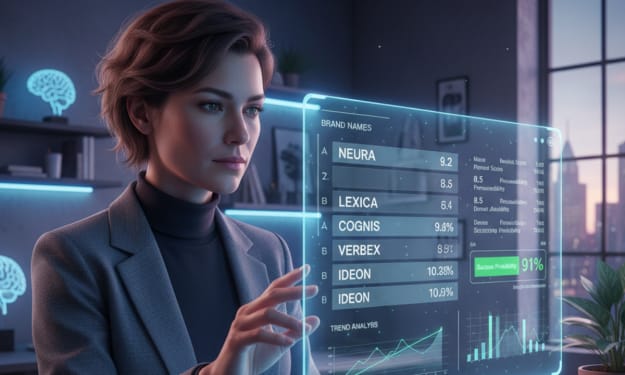
Can AI Predict a Successful Brand Name? Let’s Find Out
Did you know that a staggering 9 out of 10 startups fail? While many factors contribute to this grim statistic, the strength and memorability of a brand name often play a surprisingly significant role in a business's initial traction and long-term success.
By Ecom Mediatech7 days ago in 01
The Duelist
The rays of a dying red sun flashed against the onrushing blade. The grey beards say the key to dueling lies in size, speed, reach, righteous fury, whatever the person in front of them pays them to say. Matteo knew better than any it was none of these and had an undefeated record on these sands to prove it.
By Matthew J. Fromm7 days ago in Fiction


Comments
There are no comments for this story
Be the first to respond and start the conversation.