
Can AI Predict a Successful Brand Name? Let’s Find Out
Can AI really predict a winning brand name? Explore data, creativity, and algorithms to see if success can be forecast before launch.


Did you know that a staggering 9 out of 10 startups fail? While many factors contribute to this grim statistic, the strength and memorability of a brand name often play a surprisingly significant role in a business's initial traction and long-term success.
In today's rapidly evolving digital landscape, businesses are constantly seeking an edge, and the allure of Artificial Intelligence (AI) offering a shortcut to the perfect, success-guaranteed brand name is undeniably tempting. But can AI truly lift the veil on brand-name destiny?
Key Takeaways
- AI can significantly aid in brand name generation and evaluation by analyzing vast datasets.
- Key AI capabilities include name generation, evaluation of linguistic and cultural factors, and identifying potential pitfalls.
- AI relies on data, and limitations exist regarding its ability to grasp deep emotional resonance, subjective creativity, and evolving cultural nuances.
- AI should be viewed as a powerful augmentative tool to enhance human brainstorming and analysis, not a sole predictor of success.
- Human expertise, intuition, and strategic vision remain critical in selecting and developing a successful brand name.
- Always conduct thorough legal trademark searches, as AI availability checks are not definitive.
- Let's dive deep into the world of AI-powered brand naming and see if it's a crystal ball or just clever algorithms.
The Allure of AI in Brand Naming
Imagine this: you’re launching a new product or service, and the pressure to find a name that resonates with your target audience, stands out from competitors, and is legally available is immense. The traditional process can involve brainstorming sessions, market research, linguistic analysis, and often, a good dose of intuition. It can be time-consuming, expensive, and still leave you with a name that doesn't quite hit the mark.
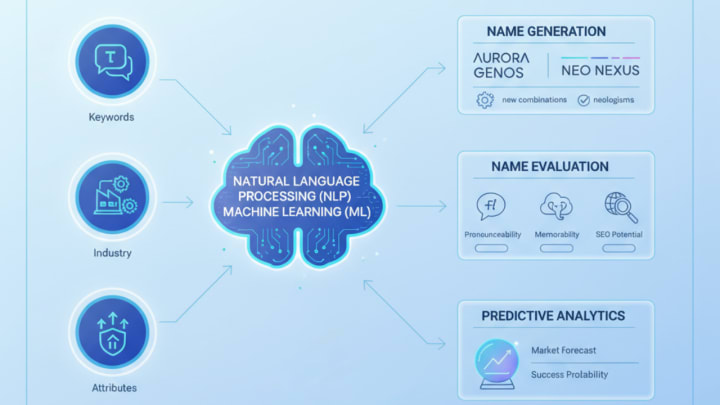
This is where AI steps in, promising a more data-driven and efficient approach. AI tools, often powered by natural language processing (NLP) and machine learning (ML), can analyze vast datasets of existing brand names, consumer preferences, linguistic patterns, and even market trends. The idea is that by understanding what makes successful names tick, AI can generate or evaluate potential names with a higher probability of success.

How AI Tools Approach Brand Naming
AI brand naming tools typically work in a few key ways:
- Name Generation: These tools can be fed keywords, industry information, desired brand attributes (e.g., trustworthy, innovative, playful), and even phonetic preferences. The AI then uses its algorithms to generate a list of potential names, often combining words, creating neologisms (newly coined words), or suggesting variations on existing terms.
- Name Evaluation: Some AI platforms focus on analyzing existing or proposed names. They might assess a name's pronounceability, memorability, emotional impact, potential for negative connotations in different languages, and even its SEO potential. This is done by comparing the name against a massive database of linguistic and cultural data.
- Predictive Analytics: This is the most ambitious aspect. By analyzing historical data of brand success correlated with naming conventions, AI attempts to predict a name's future performance. This could involve predicting brand recall, market penetration, or even potential for viral marketing.
The Science Behind the Algorithms: What Data Does AI Use?
To understand AI's capabilities, we need to peek under the hood. The success of any AI model hinges on the quality and quantity of data it's trained on. For brand naming, this data can include:
- Linguistic Data: Analyzing word structures, etymology, phonetics, and the emotional associations of words across different languages. For example, research in psycholinguistics has shown that certain sounds or word structures can evoke specific feelings.
- Consumer Behavior Data: This involves analyzing how consumers interact with brands, what makes them remember a name, and what influences their purchasing decisions. This can come from surveys, social media sentiment analysis, and purchase history data.
- Market Trends and Competitor Analysis: AI can monitor current naming trends within specific industries, identify gaps, and analyze the names of successful and unsuccessful competitors. This helps in avoiding overly common or problematic naming conventions.
- Cultural Nuances and Connotations: A name that sounds great in one culture might be offensive or nonsensical in another. AI can be trained to identify potential cross-cultural issues by analyzing vast amounts of text and cultural databases.
Can AI Really Predict Success? The Limitations and Nuances
While the potential of AI in brand naming is exciting, it's crucial to approach it with a healthy dose of skepticism. Predicting the success of a brand name is not a purely scientific endeavor; it's deeply intertwined with human psychology, cultural shifts, marketing execution, and sheer luck.
The Human Element: Beyond the Data
- Emotional Resonance: A truly great brand name often evokes an emotional connection. It can tell a story, spark curiosity, or convey a feeling that goes beyond the sum of its linguistic parts. AI, while sophisticated, often struggles to replicate the nuanced emotional impact that humans intuitively grasp.
- Creativity and Uniqueness: The most iconic brand names are often unexpected, sometimes even abstract. Think of 'Apple,' 'Google,' or 'Amazon.' These names weren't necessarily derived from logical keyword combinations but possessed a certain spark or serendipity that AI might not generate if it's strictly adhering to patterns.
- Brand Story and Vision: A name's success is inextricably linked to the brand's story, its mission, and how it's presented to the world. A brilliant name can falter if the product or service doesn't deliver, and a less-than-perfect name can become iconic if backed by a powerful brand experience. AI can't predict the quality of your product or the effectiveness of your marketing strategy.
- Cultural Evolution: Consumer tastes and cultural perceptions are constantly evolving. What resonates today might not resonate tomorrow. AI models are trained on historical data, and while they can adapt, they might lag behind rapid cultural shifts.
The "Black Box" Problem
Many advanced AI algorithms, particularly deep learning models, operate as "black boxes." While they can produce outputs (like suggested names), understanding why they made a particular suggestion can be challenging. This lack of transparency can make it difficult for businesses to fully trust the AI's recommendations or to refine them based on deeper strategic insights.
The Problem of Data Bias
AI models are only as good as the data they are trained on. If the training data contains biases – for example, if it predominantly features names of successful Western brands – the AI might inadvertently perpetuate those biases, potentially limiting creativity or overlooking names that would resonate with diverse global audiences.
AI as a Tool, Not a Dictator
Instead of viewing AI as a magic bullet that guarantees a successful brand name, it's more productive to see it as a powerful augmentative tool. AI can significantly enhance the traditional brand naming process by:
- Accelerating Brainstorming: AI can quickly generate a vast array of name ideas, saving countless hours of manual brainstorming. This provides a broader starting point for human creativity.
- Identifying Potential Pitfalls: AI can quickly scan for linguistic issues, potential trademark conflicts (though not a substitute for legal checks), and negative connotations across languages, saving businesses from costly mistakes.
- Providing Data-Driven Insights: AI can offer insights into phonetic appeal, memorability scores, and market relevance based on data, helping to validate or refine human-generated ideas.
- Exploring Unconventional Options: By analyzing patterns, AI can sometimes suggest novel word combinations or neologisms that human teams might not have considered.
Real-World Examples and Case Studies (Illustrative)
While specific, publicly documented case studies of AI solely determining a successful brand name are scarce (due to the proprietary nature of branding and AI development), we can look at how AI is integrated into the process.
Many modern business name generators leverage AI principles. For instance, a tool might use NLP to understand the core concepts of a business and then employ algorithms to combine keywords, generate synonyms, and check for domain availability. Companies like AIBizName aim to streamline this process by offering AI-powered name suggestions and brand identity solutions, demonstrating the growing application of AI in this space.
Consider a hypothetical scenario: A new sustainable fashion brand wants a name. An AI tool could be fed keywords like 'eco-friendly,' 'ethical,' 'style,' 'nature,' and 'conscious.' The AI might then suggest names like 'Veridian Thread,' 'TerraStyle,' 'EcoLoom,' or even more abstract combinations. Human creatives would then review these, select the most promising, and further refine them, perhaps adding a tagline or checking for deeper cultural resonance. The AI has provided a strong, data-informed starting point.
The Future of AI and Brand Naming
The capabilities of AI are constantly advancing. We can expect future AI tools to become even more sophisticated in:
- Deeper Semantic Understanding: AI will likely develop a more nuanced understanding of meaning, context, and emotional undertones in language.
- Predictive Power Enhancement: With more data and advanced algorithms, AI might become better at predicting certain aspects of a name's market reception, although true prediction of success will remain elusive.
- Personalized Naming Strategies: AI could tailor naming strategies not just to industries but to specific target demographics and psychographic profiles.
- Integration with Visual Branding: AI might increasingly assist in developing visual brand elements (logos, color palettes) that align perfectly with the chosen name, creating a more cohesive brand identity.
How to Use AI Effectively for Your Brand Name
If you're considering using AI to help name your brand, here’s a practical approach:
- Define Your Brand Clearly: Before using any AI tool, have a crystal-clear understanding of your brand's mission, values, target audience, and unique selling proposition. The AI needs good input to provide good output.
- Use AI as a Brainstorming Partner: Generate a large list of names using AI tools. Don't expect the first suggestion to be the winner. Think of it as a super-powered brainstorming session.
- Leverage AI for Evaluation: Use AI tools to check for linguistic issues, potential negative connotations, and basic availability. Many tools offer these checks.
- Involve Human Expertise: Crucially, always involve human creativity, intuition, and strategic thinking. Review the AI-generated lists, select the most promising candidates, and refine them. Conduct market research and test names with your target audience.
- Don't Forget Legal Checks: AI can flag potential availability issues, but it is not a substitute for a thorough trademark search conducted by legal professionals. A name might be available as a domain, but already trademarked in your industry.
- Consider Tools like AIBizName: Explore platforms that integrate AI for name generation and related branding aspects to see how they can fit into your workflow.
Conclusion: AI is a Powerful Assistant, Not a Magic Wand
Can AI predict a successful brand name? The answer is nuanced. AI can analyze data, identify patterns, generate creative options, and flag potential issues with remarkable efficiency. It can undoubtedly increase the probability of landing on a strong, viable name by augmenting human capabilities. However, the ultimate success of a brand name is a complex cocktail of human psychology, market dynamics, strategic execution, and a touch of serendipity that AI, in its current form, cannot fully replicate or predict.
AI is a powerful ally in the quest for the perfect brand name, offering speed, data-driven insights, and novel ideas. But it's the human touch – the intuition, the emotional understanding, the strategic vision – that truly transforms a name into a beloved and successful brand. Use AI wisely as a sophisticated tool in your naming arsenal, but remember that the heart and soul of your brand will always require human direction.
Frequently Asked Questions (FAQs)
1. Can AI guarantee my brand name will be successful?
No, AI cannot guarantee success. While AI can increase the likelihood of choosing a strong name by providing data-driven insights and generating options, ultimate brand success depends on many factors, such as product quality, marketing, customer service, and market conditions.
2. How does AI analyze a brand name's potential success?
AI analyzes names by processing data related to linguistics, consumer preferences, market trends, and cultural connotations. It looks for patterns associated with successful brands, such as memorability, pronounceability, and positive associations, but it cannot predict future market reception with certainty.
3. What are the biggest limitations of AI in brand naming?
The primary limitations include the inability to fully grasp subjective emotional resonance, genuine human creativity, the evolving nature of culture, and the complex interplay of a brand's overall strategy and market execution. AI also faces challenges with data bias and the "black box" nature of some algorithms.
4. Should I rely solely on AI for my brand name?
Absolutely not. AI should be used as a tool to assist your decision-making process. Human intuition, creativity, market testing, and legal due diligence are essential components that AI cannot replace.
5. What kind of data does an AI use to suggest names?
AI uses a wide range of data, including dictionaries, thesauruses, linguistic databases, consumer sentiment analysis from social media, historical brand performance data, and information on cultural nuances across different languages.
About the Creator
Ecom Mediatech
Ecom Mediatech is a Professional ecommerce blog website Platform. We are committed to providing you the best of ecommerce blog website, with a focus on reliability and Shopify apps, Magento extensions, WooCommerce extensions...
Keep reading
More stories from Ecom Mediatech and writers in 01 and other communities.
Top Trends Shaping Travel App Development in 2026
The global travel industry continues to evolve at a rapid pace, driven by changing traveler expectations, digital innovation, and the demand for seamless experiences. As we move into 2026, travel apps are no longer just booking tools—they have become intelligent travel companions that assist users before, during, and after their journeys. From personalized trip planning to immersive exploration, modern travel applications are redefining how people experience travel.
By shane cornerus6 days ago in 01




Comments
There are no comments for this story
Be the first to respond and start the conversation.