
AI in Gaming: Tools, Gadgets, and Innovations Reshaping How We Play
Discover how AI gaming tools, smart gadgets, and advanced technology are transforming video games with adaptive NPCs, immersive hardware, and personalized player experiences

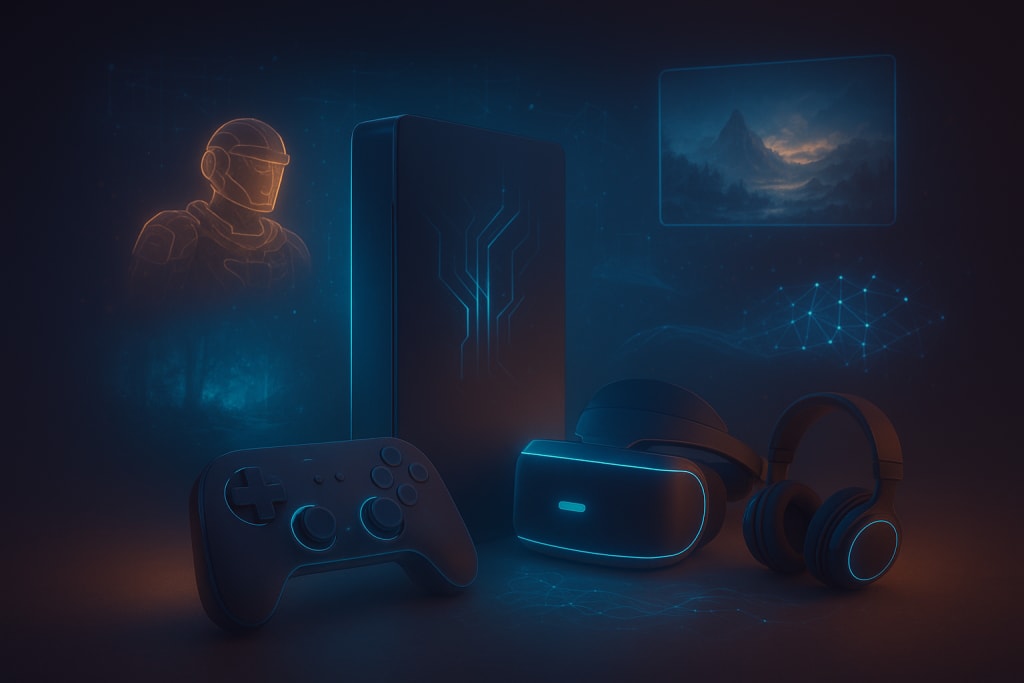
Artificial Intelligence has quietly woven itself into nearly every aspect of gaming. From the way enemies react on-screen to the gadgets players hold in their hands, AI is no longer a background feature—it’s a driving force changing the rules of play. What was once a niche experiment in design has become the backbone of modern gaming experiences, shaping everything from realism and immersion to personalization and competitive balance.
This shift is not just about smarter computer opponents. It’s about how AI influences development pipelines, hardware innovation, player interaction, and even the way entire game worlds are constructed. Let’s dig deeper into how these technologies are rewriting the playbook.
The Rise of AI-Driven Gameplay
When players think about AI in games, the first thought usually goes to enemy behavior. Early titles often relied on predictable patterns—enemy soldiers who always rushed straight at you, or monsters who circled the player in the same mechanical loop. But today, that’s changed dramatically.
Adaptive NPCs: Modern games use reinforcement learning and neural networks to create enemies that learn from the player. Instead of repeating the same tactics, they flank, retreat, or coordinate with others. Some AI systems even remember how players defeated them in earlier encounters.
Procedural Generation: Games like No Man’s Sky or Minecraft use AI-driven algorithms to generate near-infinite variations of terrain, weather, and creatures. This gives players the sense of exploring a living, endless universe where no two sessions are alike.
Dynamic Storytelling: AI tools allow branching narratives to become more fluid. Instead of pre-written binary choices, systems can weave together personalized dialogue or character reactions in response to the player’s style. A player who often chooses stealth, for example, might have NPC allies comment on their subtle tactics.
This type of AI-driven design ensures that every session feels less like a script and more like a genuine experience, where unpredictability is part of the fun.
AI Gadgets Enhancing Player Interaction
Software gets much of the spotlight, but AI-powered gadgets and peripherals are where immersion deepens. Hardware designed with machine learning capabilities has transformed controllers, headsets, and even VR devices.
Smart Controllers: Haptic triggers now simulate resistance, mimicking the tension of a drawn bow or the recoil of a gun. Advanced AI controllers can even analyze a player’s grip strength or play style and adjust sensitivity accordingly.
Voice Assistants in Consoles: AI-driven assistants like Xbox’s integration with Cortana or PlayStation’s voice navigation help players launch games, invite friends, or search for walkthroughs without pausing gameplay. These assistants are becoming smarter, even offering real-time tips based on your in-game progress.
AI-Powered Headsets: Beyond standard noise cancellation, headsets are now using AI to separate voice chat from environmental sounds. This makes communication sharper in team-based games. Some models include real-time translation, allowing international players to cooperate seamlessly.
VR and AR Enhancements: Virtual reality devices employ AI for inside-out tracking, eye movement prediction, and environment mapping. Augmented reality games also use machine learning to identify objects and overlay game elements convincingly onto the real world.
For many gamers, these gadgets mean immersion no longer stops at the screen—the hardware responds and adapts in ways that feel instinctive.
Personalization and Player Experience
The modern gamer expects content tailored to them, and AI is the engine powering this personalization.
Dynamic Difficulty Adjustment: Instead of choosing “easy,” “normal,” or “hard” at the start, games use AI to continuously adjust challenge levels. For example, if a player fails a mission several times, enemy aim might subtly weaken, or checkpoints might appear closer. Conversely, expert players may face more aggressive AI opponents to keep engagement high.
Content Generation: AI is used to populate worlds with side quests, believable NPCs, and environmental details. A city might be filled with residents who move, speak, and interact based on AI rules rather than static scripts. This keeps worlds from feeling empty or repetitive.
Player-Centric Design: AI tracks metrics like playtime, favored weapons, or preferred strategies, then suggests loadouts, skill trees, or even in-game purchases that align with a player’s behavior. Done well, this creates a sense that the game truly “knows” the player.
Personalization is especially powerful in RPGs and open-world adventures, where no two players’ experiences feel the same.
Competitive Gaming and AI Analysis
Esports thrives on razor-thin margins, where the smallest improvement can decide a match. AI has carved out a vital role here.
Coaching and Analytics: AI platforms review gameplay frame by frame, identifying habits such as wasted movements or poor map awareness. They provide tailored insights far faster than human coaches can.
Anti-Cheat Systems: Traditional anti-cheat relied on signature detection, which was easy to bypass. Modern AI anti-cheat monitors playstyle patterns—tracking reaction times, accuracy, and input sequences. If an account consistently performs at inhuman levels, the system flags it.
AI for Viewers: Broadcasters use AI overlays that show probability of success, highlight critical plays, and provide real-time commentary support. This elevates esports viewing into something closer to professional sports broadcasting.
For both players and audiences, AI enhances fairness, competitiveness, and excitement.
The Future of AI in Gaming
Looking ahead, AI could reshape gaming in ways that feel almost science fiction.
AI Companions: Instead of scripted sidekicks, players may get companions who learn preferences, remember past missions, and respond emotionally. Imagine a squadmate who recalls how you saved them hours earlier and changes their loyalty because of it.
Emotion Tracking: With VR headsets already reading body movement and facial cues, AI may soon adapt storylines or music to a player’s emotional state. A tense player could face calming sequences, while a bored player may trigger more intense challenges.
Cloud-Based AI Assistants: These could generate entire missions, worlds, or dialogue on the fly, essentially becoming a live game master for every player.
As hardware and software continue to merge, the boundary between designed experiences and emergent ones will blur even further.
Helpful Resources to Explore
If you want to dig deeper into the technical side of AI in gaming, these resources are worth checking out:
- MIT Technology Review on AI in Gaming
- Game Developer’s Guide to Procedural Content Generation
- Unity’s Machine Learning Tools
AI is no longer a supporting mechanic—it has become the architect of modern gaming. From smarter NPCs and evolving storylines to controllers that think and headsets that adapt, artificial intelligence reshapes how we play, how we compete, and how we connect with others.
The next generation of gaming may not simply be about better graphics or faster hardware. Instead, it will be defined by how seamlessly AI integrates into every aspect of the experience, building living, reactive worlds where no two playthroughs are ever the same.
About the Creator
Richard Bailey
I am currently working on expanding my writing topics and exploring different areas and topics of writing. I have a personal history with a very severe form of treatment-resistant major depressive disorder.
Keep reading
More stories from Richard Bailey and writers in 01 and other communities.
AI Search Tools vs Google: The Future of Finding Information Online
For over two decades, Google has shaped the way we access knowledge, becoming the go-to entry point for billions of users worldwide. The familiar white page, colorful logo, and quick list of blue links have defined how we interact with the internet. But in recent years, AI search tools—from conversational assistants like ChatGPT and Perplexity to AI-infused browsers and apps—have begun to challenge that dominance.
By Richard Bailey6 months ago in 01
How to Increase Your Revenue by Optimizing Website Performance
Introduction In today's fast-paced digital world, slow website performance is no longer just an inconvenience—it's a major barrier to business success. Whether you're running an e-commerce store, a corporate website, or a personal blog, website speed plays a critical role in user retention, conversion rates, and overall business efficiency. A slow-loading website causes frustration among users, leading to high bounce rates and lost revenue. In fact, research has shown that even a 1-second delay in load time can reduce conversions by up to 7%, ultimately affecting your bottom line.
By Cristina Baker7 days ago in 01




Comments
There are no comments for this story
Be the first to respond and start the conversation.