
AI & IoT — Cyber-Security in a Post-COVID19 Pandemic World
How Artificial Intelligence and the Internet of Things will change Cyber Security in 2020 and the years to come
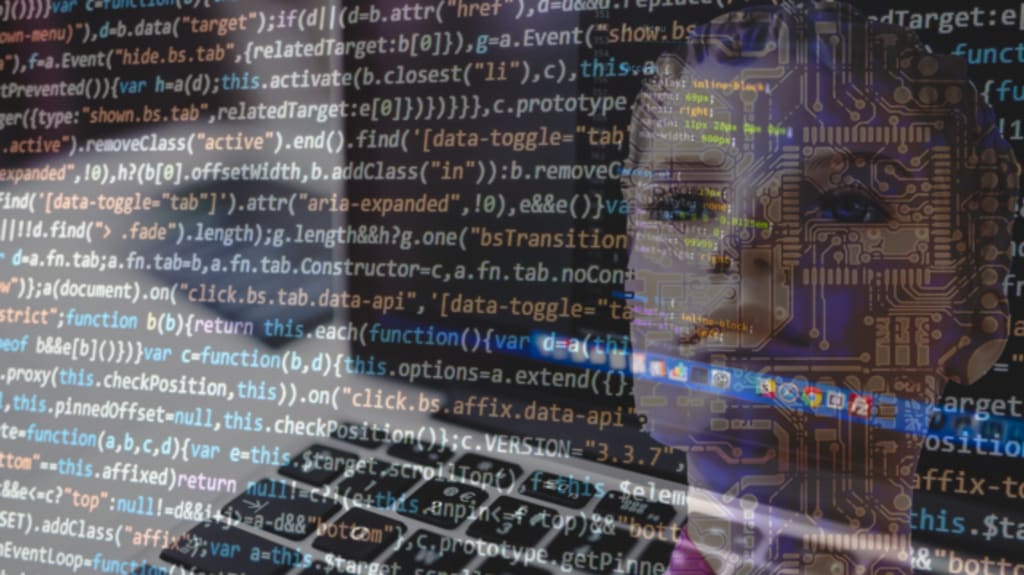
In this article, I analyse two WEF (World Economic Forum) articles and try to connect the dots together to see the bigger picture of what is happening in terms of AI and Cyber-Security in 2020.
1. These will be the main cybersecurity trends in 2020 — Jan 7, 2020
In the article linked above, Dorit Dor — Vice-President, Products, Check Point Software Technologies — claims that ‘it is possible to forecast what is likely to happen in the cyber landscape over the next 12 months.’ Mind you, this was written before the COVID-19 pandemic.
Amongst a total of 5 points made, the two that I wish to focus on are both ‘the rise of artificial intelligence (AI)’, and ‘5G development and adoption of IoT devices increase vulnerability’.
The rise of AI
The rise of AI is seen as an inevitable step in our cyber-security evolution, which is set to both aid in and aid with an increase of cybercrime.
‘AI dramatically accelerates the identification of new threats and responses to them, helping to block attacks before they can spread widely.’ — Dorit Dor
As virtually anything can be deemed a ‘threat’ in today’s world, just to be ‘safe’, in the near future, more and more businesses and organisations will implement AI-based online security systems, which will require users and customers to give up more and more privacy and give uncountable amounts of personal information away to these businesses for the sake of ‘transparency’ and ‘safety’.
With AI in control of these security systems, in the future, threat-detection will not be in the hands of humans anymore. And since the whole world will sooner or later become digitalised, with AI at the core of it all in charge of security, it will no longer be a matter of choice — it will come down to either accepting and following that which the AI requires of you to do to get access to the internet, or simply getting locked out of the internet; denied access to the world.
“Those who would give up essential Liberty, to purchase a little temporary Safety, deserve neither Liberty nor Safety.”
— Benjamin Franklin
5G development and adoption of IoT devices increase vulnerability
According to the writer, the rollout of 5G poses a threat to cybersecurity — Gen V attacks.
‘5th generation attacks can be extremely dangerous because they can spread quickly and outmanoeuvre conventional detection-based defenses such as firewalls.’
As proposed in the article, ‘a more holistic approach to IoT security’ is needed to stop, among other threats, these Gen V attacks. The potential threat the personal data of users of 5G is at requires ‘correlating, storing and analysing data across all network devices in real time’. Methods like microsegmentation are being looked at, which will aid in isolating the workload of each user for security purposes.
Once everything is interconnected through the IoT (Internet of Things), in the name of cyber-security, brand new methods of storing personal data will be implemented, to which humans at large may have no access to, however, without a doubt, that which will be in charge of security on IoT — AI — will. In that case, it will be a requirement to give up personal data to AI for it judge it and assess the potential threat it is presented with to simply be able to do any basic activity online or to even be granted access to the internet. Of course, who knows on what the criteria something can be and/or will be considered a ‘threat’, yet even if we humans do come up with some ideas of what they may be and suggest them to AI, nothing is stopping AI from making its own mind up and defining what a ‘threat’ is in the way it wants to in the future.
2. We need to rethink cybersecurity for a post-pandemic world. Here’s how — Aug 13, 2020
In this article, Leonardas Marozas — Security Research Lab Manager, CUJO AI — suggests that ‘fear and a sense of urgency are some of the most powerful vectors of human exploitation when it comes to cybersecurity’, which can be seen to be true after what we have witnessed during the first few weeks of the Covid-19 pandemic.
In the article, however, the writer quickly spirals off into a frenzy, calling the WHO (World Health Organisation) an ‘authority figure’, of which attempts at ‘impersonation’— I figure that by this the Marozas means anybody who gave/shared any information on Covid-19 or anything related which went against the WHO’s narrative— are deemed to have been ‘scams and phishing efforts’.
A Post-Pandemic World
As lockdowns came into effect globally in March of this year, many businesses had to resort to having their employees work from home.
“Businesses had usually prioritized uninterrupted service delivery over the security of remote workspaces and devices, which meant people began working from home protected only by consumer-oriented solutions (or not protected at all).”
As suggested in this article, this sudden mass-migration of online workers into their own homes resulted in a reduction in cyber-security. To combat this dilemma, more and more cyber-security is proposed as a solution to protect those who work from home.
“The growing number of internet of things (IoT) devices in home networks and the lack of security can create opportunities for access by outsiders. When we add together diverse home environments with loose security policies, shared wifi passwords, IoT and quickly-built infrastructure to ensure uninterrupted business continuity, we get to the point where a single vulnerability or misstep in configuration can open the door to malicious actors.”
With more and more people working from home, and with the growing ‘threat’ of cybercrime and cyber attacks, whilst also taking into consideration the IoT and its ability to connect all personal and domestic smart devices together, an AI cyber-security system connected to all personal and domestic smart devices through the IoT is surely the next step.
Being forced to work from home, connected to a smart grid — IoT — which will be overlooked by AI for security reasons, and which will in turn monitor everything you do, is nothing short of George Orwell’s telescreens in 1984 — it might even be worse.
AI
As mentioned already, the writer considers the WHO to be an ‘authority figure’. In this article, he also speaks on AI and its ability to filter through the internet in search for specific things — ‘threats’.
One of these ‘threats’ is — not surprised here — misinformation and ‘misleading’ content about Covid-19.
“According to MarkMonitor, there are more than 100,000 COVID-19-registered domains. Our AI analysis of uncategorized websites that were accessed by people over a period of 50 days shows that for between 20% — 35% of websites contain content which, while not directly dangerous, is at least misleading or shows signs of possible illicit intent.”
With the WHO being an ‘authority figure’, they must, without a doubt, be the ones who are in charge of determining what information is ‘dangerous’, ‘misleading’, or ‘shows signs of possible illicit intent’.
“ Censorship has been a common theme on the internet in the recent years, and it is growing at a incredible rate.
“Anything that would go against WHO (World Health Organisations) recommendations would be a violation of our policy, and so remove is another important part of our policy. “
— Susan Wojcicki, CEO of YouTube.
Think about what was just said by the CEO of the most popular video platform on the internet.
To answer my previous question of who decides what ‘facts’ are, it seems to be the WHO, at least as far as the Covid-19 pandemic and all medical advice go.
The very idea of centralising the power to determine what is the truth about any given topic to solely one organisation is beyond absurd, no matter the credibility or so-called expertise of the organisation — not that either of these are stand-out traits of the WHO, anyway.
Let’s get things clear here:
As far as what is deemed the ‘truth’ about Covid-19, the WHO is the only credible source of information, and anybody disagreeing with their statements (‘facts’) is sharing ‘false misinformation’ (committing thoughtcrime).
What could possibly go wrong, I wonder… ”
With corporate giants like YouTube already stating that their platforms will be removing content that does not agree with the WHO’s narrative of Covid-19 — the ‘authority figure’ — it is only a matter of time before this AI cyber-security system wipes the internet of all content that doesn’t agree with that which those who suggest that we need the AI system in the first place don’t.
Covid-19
The articles ends on such a note:
“It is expected that as long as COVID-19 is eradicated in at least one region (as an epidemic) and until the general public becomes less anxious about the threat it poses, we will likely still see a variety of even more sophisticated cyber-threats using COVID-19 as a cover for performing malicious activities.”
As it is in their interest to change and revolutionise the cyber world and more specifically cyber-security, the WEF (World Economic Forum) strives off the Covid-19 fear of the populous, as it gives them an excuse to implement more and more security in response to Covid-19 related ‘cyber-threats’.
I suggest you look up ‘Hegelian dialectic’ to learn more about what is happening here.
About the Creator
Keep reading
More stories from Luka Korba and writers in 01 and other communities.
How, Too
Many people wonder how, too. You are not alone, and I am an expert. I will teach you how, too! First, you need to remit a small application fee and fill out an application describing the nature of your financial situation and how often payments will be made, as this will have great bearing on how well I teach you how, too.
By Harper Lewis4 days ago in Fiction



Comments
There are no comments for this story
Be the first to respond and start the conversation.