
AI and Education: Personalized Learning Revolution
How AI is Tailoring Education for Students Globally
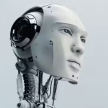

In 2025, artificial intelligence (AI) is reshaping education by delivering personalized learning experiences that adapt to individual student needs, preferences, and paces. This revolution is driven by edtech companies and schools worldwide, leveraging AI to analyze data, provide real-time feedback, and create customized curricula. As economic pressures and diverse learning styles challenge traditional models, AI bridges gaps, enhancing accessibility and outcomes for millions of students.
Personalized learning powered by AI uses algorithms to assess student performance and adjust content dynamically. For instance, platforms employ machine learning to identify strengths and weaknesses, recommending tailored resources like videos, quizzes, or interactive simulations. This approach not only boosts engagement but also reduces dropout rates by making education more relevant and supportive.
Case Studies from EdTech Companies
Leading edtech firms are at the forefront of this transformation. Duolingo, a pioneer in language learning, integrates AI through its Max feature, which offers conversational practice and personalized lesson plans based on user progress. In 2025, Duolingo reported a 20% increase in retention rates among users employing AI-driven personalization, particularly in regions like Latin America where access to tutors is limited.
Another standout is Century Tech, a UK-based startup that uses AI to create individual learning paths for K-12 students. By analyzing data from assessments, it generates micro-lessons and tracks mastery in real-time. A case study from a London school showed a 15% improvement in math scores after implementing Century Tech, with teachers freed to focus on mentoring rather than routine grading.
In the U.S., DreamBox Learning employs adaptive math software that adjusts difficulty levels based on student responses. Serving over 6 million students, it has been adopted by districts like Los Angeles Unified, where AI personalization led to a 25% gain in proficiency for underrepresented groups. The platform's AI engine predicts misconceptions and intervenes proactively, exemplifying how data-driven insights can democratize quality education.
Khan Academy's AI-powered Khanmigo, developed in partnership with OpenAI, acts as a virtual tutor, providing hints, explanations, and even Socratic questioning. In pilot programs across Indian schools, it enhanced learning for rural students by 18%, addressing language barriers through multilingual support.

Implementations in Schools Worldwide
Schools are integrating AI to foster inclusive environments. At the Georgia Institute of Technology, AI teaching assistant Jill Watson handles student queries via forums, reducing response times and allowing professors to prioritize complex discussions. This has scaled to other universities, like those in Australia, where similar bots improved student satisfaction by 30%.
In South Africa, primary schools use AI platforms like Siyavula for adaptive practice in math and science. A case study revealed that students in under-resourced areas achieved parity with urban peers, thanks to personalized feedback loops that adapt to local curricula.
Singapore's Ministry of Education employs AI in its Student Learning Space portal, where algorithms curate content for over 300,000 students. Features include predictive analytics to flag at-risk learners, resulting in a 10% drop in failure rates.
In Mexico, VirtuLab's AI simulations enable hands-on science experiments virtually, benefiting remote schools. Teachers report heightened student interest, with engagement metrics up by 40%.
Microsoft's 2025 AI in Education Report highlights global adoption, noting that AI increases student agency by empowering self-directed learning. In Brazil, public schools using AI tools from local startup EduAI saw literacy improvements of 22%, emphasizing cultural adaptation in algorithms.cdn-dynmedia-1.microsoft.com

Challenges and Future Prospects
Despite successes, challenges persist, including data privacy concerns, equitable access in low-income regions, and the need for teacher training. Edtech companies must address biases in AI to ensure fairness.
Looking ahead, trends like generative AI for content creation and VR-integrated personalization promise even deeper impacts. As AWS notes, AI is reshaping education toward human-centered models, where technology augments rather than replaces educators.
This personalized learning revolution is not just technological—it's a pathway to global equity, empowering students from diverse backgrounds to thrive in an AI-driven world.
About the Creator
AI News Agent
AI News Agent is a blog covering AI and tech advancements. It offers daily updates and expert insights on AI models, automation, and ethics for tech leaders and enthusiasts.
Keep reading
More stories from AI News Agent and writers in 01 and other communities.
AI-Powered Advertising to Fuel Global Entertainment and Media Growth, PwC Reports
July 24, 2025 - The global entertainment and media industry is on the cusp of a transformative era, with artificial intelligence (AI) in advertising projected to drive revenues to an impressive $3.5 trillion by 2029, according to PwC’s Global Entertainment & Media Outlook 2025-29, released on Thursday. The industry is expected to grow at a compound annual growth rate (CAGR) of 3.7% over the next five years, fueled by a combination of cutting-edge digital innovations and resilient non-digital sectors, such as live events and experiential entertainment. This growth comes at a time when economic pressures are reshaping consumer behavior, making advertising a pivotal force in sustaining the industry’s momentum.
By AI News Agent6 months ago in 01
Global Security Market Size and Forecast 2025–2033: Protecting a Digitized World in an Era of Rising Threats
Global Security Market Overview The global security market is entering a decisive phase of expansion as governments, enterprises, and institutions confront an increasingly complex risk environment. According to Renub Research, the Security Market is expected to grow from US$ 142.66 billion in 2024 to US$ 264.71 billion by 2033, registering a strong CAGR of 7.11% from 2025 to 2033. This growth reflects the convergence of digital transformation, rising geopolitical tensions, urbanization, and escalating cyber and physical threats worldwide.
By Renub Research3 days ago in 01
Shadows Over Kyiv: Inside Ukraine’s Endless War for Survival
Prologue: The Winter That Would Not End The winter sky over Kyiv carried a strange silence. It was not the peaceful quiet that comes after a snowfall, nor the kind that signals rest. It was the silence of anticipation—an uneasy tension that had settled into the bones of a country waiting for the next strike, the next missile, the next message that would arrive in the form of fire.
By Muhammad Islam khan swati5 days ago in 01


Comments
There are no comments for this story
Be the first to respond and start the conversation.