
AI Agents in Healthcare: Use Cases and Benefits for Hospitals & Patients
Discover how AI agents are transforming healthcare with smarter patient support, clinical decisions, and improved efficiency for hospitals

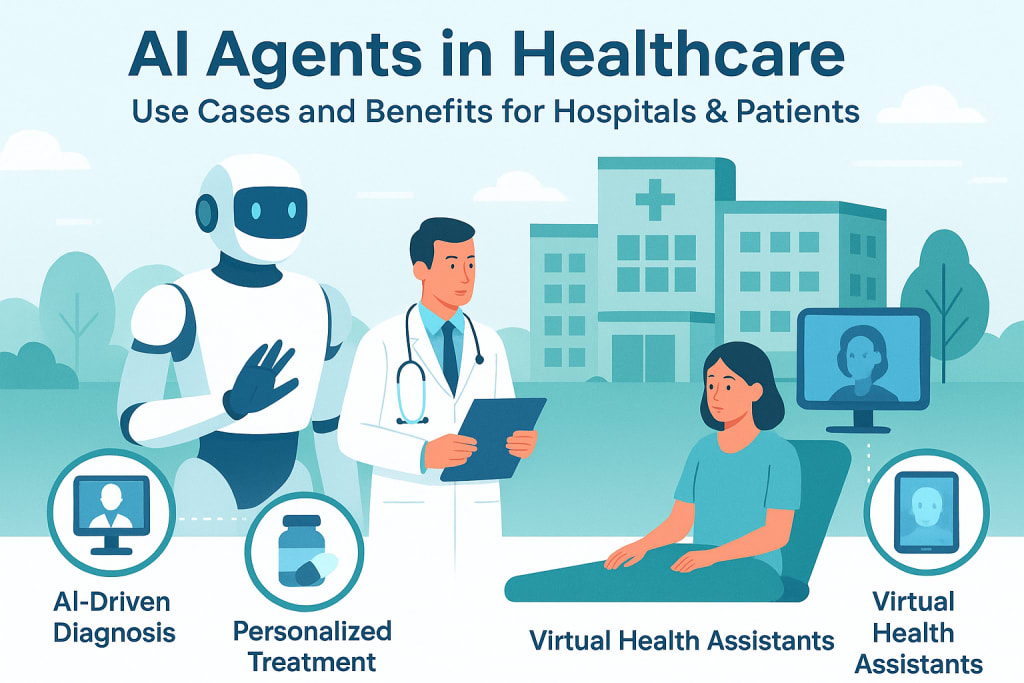
The healthcare industry is under constant pressure to deliver faster, more accurate, and more personalized care while also reducing costs and administrative burden. Hospitals are often overwhelmed with patient data, growing workloads, and increasing demands for efficiency.
In this landscape, AI agents are emerging as game-changers. Unlike traditional automation or chatbots, AI agents can learn, adapt, and take actions based on real-world scenarios making them valuable allies for both medical professionals and patients. From supporting doctors in clinical decisions to monitoring patients remotely, AI agents are reshaping the future of healthcare delivery.
What Are AI Agents in Healthcare?
AI agents in healthcare are intelligent systems that can understand context, analyze data, and take autonomous actions to assist in medical or administrative tasks. Unlike simple chatbots that follow pre-set rules or basic AI tools that only analyze data, AI agents go a step further. They can adapt to new information, make decisions, and collaborate with humans to achieve specific goals. For example, while a chatbot may simply answer FAQs about symptoms, an AI agent can analyze patient records, compare them with medical guidelines, and suggest next steps for diagnosis or treatment.
Core Functionalities and Decision-Making Capabilities
The power of AI agents lies in their decision-making ability. They combine natural language processing (NLP), machine learning, and real-time data analysis to:
- Understand patient queries and provide accurate responses
- Process vast amounts of medical data to assist doctors in diagnosis
- Prioritize tasks based on urgency, such as flagging critical cases
- Learn from interactions to improve over time
Role of Automation + Human Collaboration
AI agents don’t aim to replace doctors or nurses instead, they act as partners in care. Routine, time-consuming tasks like scheduling, billing, or symptom screening can be automated, freeing healthcare professionals to focus on complex, human-centered responsibilities. In critical decisions, AI agents serve as advisors, offering data-driven insights that help medical staff make faster and more informed choices. This synergy between human empathy and AI intelligence is what makes them so transformative.
Key Use Cases of AI Agents in Healthcare
Patient Support and Virtual Health Assistants
AI-powered virtual assistants provide patients with round-the-clock support. They can check symptoms, answer FAQs, schedule appointments, and send reminders for medications or upcoming visits. This makes healthcare more accessible, especially for patients in remote areas or those who need reassurance outside clinic hours. For hospitals, it reduces call center load and improves patient engagement.
Clinical Decision Support
Doctors often need to analyze a vast amount of information—from lab results and imaging to medical history and new research. AI agents act as clinical copilots, offering diagnostic suggestions, highlighting potential drug interactions, and recommending treatment plans based on evidence and patient data. While final decisions always rest with doctors, AI agents accelerate the process and reduce the risk of oversight.
Administrative Automation
A significant portion of hospital resources goes into administrative tasks like billing, claims management, and record-keeping. AI agents can automate these repetitive processes, ensuring fewer errors and faster workflows. For example, they can process insurance claims by cross-checking patient data against policies, reducing delays and improving the financial health of hospitals.
Remote Patient Monitoring
With the rise of wearables and IoT devices, AI agents can now monitor patients in real time. Devices tracking heart rate, blood pressure, or oxygen levels feed data to AI agents, which analyze trends and send alerts to doctors if irregularities are detected. This ensures early intervention and prevents critical situations, particularly for patients with chronic conditions.
Personalized Patient Care
Every patient’s journey is unique, and AI agents help tailor treatments accordingly. By analyzing individual health records, lifestyle factors, and ongoing progress, they can create personalized care plans. Patients receive medication reminders, diet suggestions, or follow-up instructions that suit their specific needs, leading to better adherence and improved outcomes.
Emergency Response and Triage
In emergency rooms, seconds can mean the difference between life and death. AI triage agents can quickly assess patient symptoms, prioritize cases, and direct critical ones to immediate attention. This reduces waiting times for urgent cases and helps hospitals manage large patient volumes more effectively.
Medical Research and Drug Discovery Support
AI agents also play a role behind the scenes in medical research and drug development. They can analyze clinical trial data, simulate drug interactions, and identify promising compounds faster than traditional methods. This not only accelerates research but also lowers the cost of bringing new treatments to patients.
Benefits of AI Agents for Hospitals
- Reduced operational costs and workload: Automating admin and routine care tasks lowers expenses and frees up staff time.
- Improved efficiency and accuracy: AI reduces human error in data handling, billing, and clinical analysis.
- Faster patient triage and emergency handling: Critical cases are identified sooner, saving lives.
- Enhanced decision-making for medical staff: Doctors and nurses can rely on AI insights to support better clinical outcomes.
Benefits of AI Agents for Patients
- Quicker access to healthcare information: Patients can get reliable answers instantly without long wait times.
- Personalized treatment and better engagement: Care plans are tailored to individual needs, making recovery smoother.
- Improved health outcomes through proactive monitoring: Continuous tracking ensures issues are flagged early.
- Greater convenience and satisfaction: From virtual consultations to medication reminders, patients enjoy a seamless experience.
Conclusion
AI agents are not just futuristic tools they are already reshaping healthcare for hospitals and patients alike. By taking over repetitive tasks, supporting clinical decisions, and enabling proactive care, they allow medical professionals to focus on what matters most: human connection and patient well-being. Many AI Agent examples are already visible in hospitals today, from assisting nurses with routine queries to helping doctors analyze complex patient data.
For patients, AI agents mean quicker responses, personalized care, and greater peace of mind. As these technologies continue to evolve, the future of healthcare looks more efficient, accurate, and compassionate than ever before.
About the Creator
Nico Gonzalez
Hi, I'm Nico Gonzalez! I'm passionate about technology, software development, and helping businesses grow. I love writing about the latest trends in tech, including mobile apps, AI and more.
Keep reading
More stories from Nico Gonzalez and writers in 01 and other communities.
Use Cases of Amadeus API in Travel Mobile App Development
The way people plan and book their trips has changed dramatically over the past decade. Today, travelers expect fast, personalized, and seamless experiences right from their smartphones. From finding flights and hotels to managing itineraries and booking ground transport, everything happens in a few taps. Behind the scenes, APIs (Application Programming Interfaces) play a massive role in powering this convenience.
By Nico Gonzalez5 months ago in 01
How to Choose the Best Website Maintenance Company in India for UK Businesses
In today’s fast-paced digital world, a company’s website is often its most important business asset. For UK businesses, maintaining a high-performing, secure, and up-to-date website is critical to attracting customers and staying competitive. However, managing website upkeep in-house can be resource-intensive and time-consuming. This is why many UK businesses turn to professional website maintenance companies in India.
By Dyna Gilbert4 days ago in 01
What are Development Miami Trends Every Leader Should Know
In 2026, most CEOs in Miami no longer treat mobile apps as supporting tools. The app is often the brand, the revenue engine, or the operational backbone. When it slows down, breaks, or fails compliance checks, the impact lands at the executive level. This is the moment when trend awareness stops being a curiosity and becomes a responsibility.
By Mary L. Rodriqueza day ago in 01
Smart phones, Humans and Aliens.
WARNING. I will be tapping into one of your favorite creative tensions: The absurdity of humans worshipping their glowing rectangles as if they were tiny oracles. There’s something deliciously poetic about that contradiction, and it lends itself beautifully to an instructive proviso.
By Novel Allen4 days ago in Poets



Comments (1)
Great Insights!