
Advertising in AI Chatbots: The Next Disruption in Digital Marketing
The way brands connect with consumers is changing — fast. Just as social media revolutionized marketing a decade ago, a new wave is rolling in: advertising through AI chatbots.
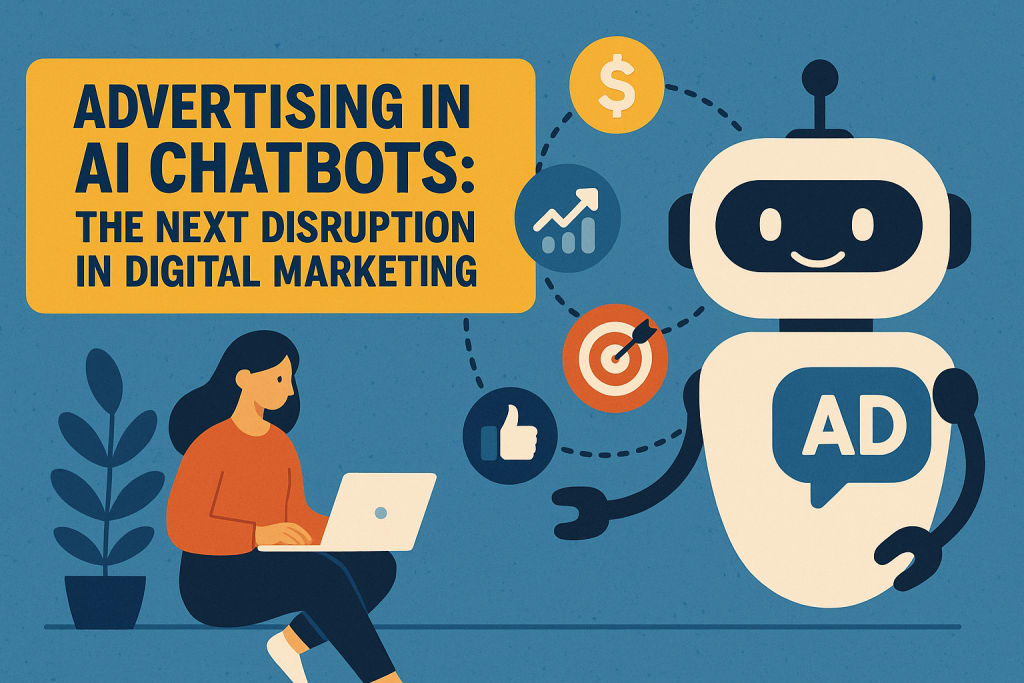
AI chatbots are no longer just customer service tools. Powered by advances in natural language processing (NLP) and machine learning, they’ve evolved into sophisticated digital environments where brands can market, sell, and nurture customer relationships — often more effectively than traditional ads. In fact, chatbots are quietly becoming the next frontier in digital marketing disruption.
Let’s explore how and why advertising through AI chatbots is changing the game — and what you need to know to stay ahead.
1. From Static Ads to Dynamic Conversations
Traditional ads — whether on social media, search engines, or websites — are largely static. A banner ad or a promoted post hopes to catch a user's eye in the right moment.
AI chatbots flip that model. Instead of broadcasting messages at people, bots engage users in real-time, personalized conversations.
Example:
Imagine interacting with a travel chatbot. Instead of being shown five random hotel ads, the bot might ask you about your travel dates, budget, and preferences — then recommend personalized offers tailored just for you.
Why this matters:
- Higher engagement rates
- Better personalization
- Immediate responses to objections or questions
- Stronger emotional connection
In the era of attention scarcity, conversations win over impressions.
2. Hyper-Personalization at Scale
AI chatbots aren’t guessing — they know.
Using data like user behavior, purchase history, preferences, and even the tone of conversation, chatbots can deliver hyper-personalized advertising at scale.
Example:
A user chats with an e-commerce bot about fitness. Based on past browsing history and current inputs, the bot can promote specific workout gear, offer a discount on protein supplements, and even upsell virtual fitness classes — all in a way that feels natural and helpful.
- Impact on marketers:
- Micro-segmentation becomes effortless
- Upselling and cross-selling become conversational
- Retention improves because users feel understood
No static campaign can compete with a bot that adapts to each user dynamically.
3. New Monetization Models for Chatbots
Leading tech companies and emerging startups are already building frameworks to integrate sponsored content and native advertising inside AI chat experiences.
Some examples include:
- Sponsored recommendations ("Powered by Brand X")
- In-chat promotions triggered based on conversation topics
- Affiliate integrations where chatbots earn commissions
- Conversational product placements (subtle and contextually relevant)
Real-world case:
OpenAI recently announced experiments in introducing "relevant suggestions" into chat conversations — opening the door for entirely new advertising ecosystems inside AI platforms.
For brands:
This means new inventory beyond search engines and social feeds.
It also means new creative formats — where ad success is measured by conversation quality, not just clicks.
4. Challenges Marketers Must Prepare For
Every disruptive opportunity comes with its set of challenges. Advertising in AI chatbots isn’t a simple "copy-paste" of traditional strategies.
Key challenges:
Privacy concerns: Users must trust that bots won't misuse their data.
Tone sensitivity: Overly salesy or intrusive ads can break the conversational flow — and lose the user instantly.
Measurement evolution: Metrics like "conversation depth," "user sentiment," and "conversion per dialogue" will become more important than simple CTRs.
Brands need to rethink advertising not as an interruption, but as an enhancement of the user journey.
5. The Future: AI Chatbots as Micro-Influencers?
Looking forward, we may see AI personas — popular bots with distinct personalities and followings — become micro-influencers themselves.
Imagine:
- A personal finance chatbot recommending financial tools.
- A fashion chatbot suggesting seasonal trends.
- A fitness chatbot endorsing health supplements.
- Instead of hiring human influencers, brands might sponsor AI personalities tailored precisely to their niche audience.
The lines between advertising, conversation, and content are blurring faster than ever.
Final Thoughts
Advertising in AI chatbots isn’t just the future — it’s already happening.
As AI continues to evolve, chatbots are becoming smarter, more intuitive, and more human-like. Brands that embrace this shift early will tap into deeper engagement, richer personalization, and a competitive edge that static ads simply can’t match.
In this new world, marketing success will belong to those who master the art of conversational marketing — blending empathy, AI, and advertising into seamless user experiences.
Ready to rethink your digital marketing strategy for the chatbot era?
Let’s start the conversation today!
About the Creator
Configure KeyLocker for JarSigner using the DigiCert KSP Library
Prerequisites Before configuring KeyLocker for JarSigner, please ensure you have the following components and environment set up. Each of these is necessary and plays a role in establishing a contracted, secure, engaging signing environment.
By Anna Shipmana day ago in 01
How to Choose the Right Retail Business Consulting Partner in the UAE
Choosing the right retail business consulting partner in the UAE has become more important than ever as the retail sector continues to grow and evolve. The UAE retail market is valued in the hundreds of billions of dirhams and continues to expand due to population growth, tourism, high consumer spending, and strong infrastructure. Dubai alone attracts millions of tourists every year, many of whom contribute directly to retail sales through shopping malls, outlet stores, and luxury retail destinations. At the same time, online shopping has increased rapidly, with more customers expecting fast delivery, easy returns, and seamless digital experiences. Because of these changes, retailers are under pressure to modernize operations, improve efficiency, and create better customer journeys. Professional retail consulting partners help businesses adapt to these market conditions and stay competitive.
By Preethu Sonuabout 2 hours ago in 01



Comments
There are no comments for this story
Be the first to respond and start the conversation.