
Advancements in Anti-Vibration Technology: What's New in the Industry
Innovations shaping the future of anti-vibration technology.

It is impossible to overestimate the importance of vibration control in the fast-paced industrial environment of today. Anti-vibration technology is essential in many industries, from protecting the longevity of machinery to guaranteeing user comfort. With the introduction of novel materials, intelligent systems, and sustainable solutions, recent developments have driven this discipline into new horizons. This article explores the most recent advancements that have shaped the anti-vibration sector, emphasizing significant patterns and innovations.
The Evolution of Anti-Vibration Solutions
In the past, anti-vibration solutions mostly depended on simple mechanical designs and elastomeric materials. Although somewhat successful, these conventional techniques frequently failed to handle the intricate vibration issues brought on by contemporary machinery and equipment. More advanced anti-vibration solutions have had to develop in response to the growing need for accuracy, effectiveness, and durability.
Smart Materials: The New Frontier
The use of smart materials is among the most noteworthy developments in anti-vibration technology. These materials provide dynamic vibration control because they can change their characteristics in reaction to outside stimuli. When exposed to magnetic fields, for example, magnetorheological (MR) elastomers can alter their stiffness and damping properties, enabling real-time vibration reduction. In a similar vein, shape memory alloys (SMAs) offer adaptive vibration isolation by changing their stiffness and form in response to temperature variations.
Integration of IoT and Sensor Technologies
Anti-vibration systems have been transformed by the combination of sensor and Internet of Things (IoT) technology. These days, anti-vibration mounts come with sensors that track load, temperature, and vibration levels in real time. Predictive maintenance and quick reaction to anomalous conditions are made possible by the transmission of this data to centralized systems. These intelligent systems lower maintenance expenses and downtime while also improving equipment safety.
Advancements in Anti-Vibration Mounts

Rubber Bobbin Mounts: Enhanced Performance
Rubber bobbin mounts have long been a staple in vibration isolation due to its effectiveness and simplicity of application. Recent advancements in compounding and design have significantly improved rubber's performance. These days, modern formulations are more resilient to environmental factors including oil, ozone, and temperature fluctuations. Redesigned geometries have also led to improved load-bearing capacities and vibration damping qualities.
Anti Vibration Rubber Mounts: Versatility and Durability
Rubber bobbin mounts have long been a staple in vibration isolation due to its effectiveness and simplicity of application. Recent advancements in compounding and design have significantly improved rubber's performance. These days, modern formulations are more resilient to environmental factors including oil, ozone, and temperature fluctuations. Redesigned geometries have also led to improved load-bearing capacities and vibration damping qualities.
Sustainable and Eco-Friendly Innovations
Environmental factors are now taken into account when developing anti-vibration devices. Sustainable production methods and materials are currently the focus of manufacturers. Anti-vibration mounts made of recyclable and biodegradable materials are becoming more and more popular. Additionally, energy-efficient manufacturing methods are being used to lessen the production's carbon footprint.
Industry-Specific Applications and Developments
Automotive Sector
Because electric motors operate differently, the transition to electric vehicles (EVs) has created new vibration difficulties in the automobile sector. To meet these particular needs and maintain vehicle integrity and passenger comfort, sophisticated anti-vibration mounts are being created.
Aerospace and Defense
Lightweight yet incredibly efficient vibration isolation systems are required for aerospace applications. To satisfy the exacting performance standards of this industry, innovations like active vibration control systems and composite material mounts are being used.
Industrial Machinery
Large vibrations produced by heavy machinery in sectors like construction and manufacturing can cause structure damage and equipment wear. In order to lessen these impacts and increase the longevity of machinery, the most recent anti-vibration technologies provide strong solutions, such as heavy-duty mounts and damping systems.
Future Outlook
Anti-vibration technology's trajectory suggests a greater integration of application-specific solutions, sustainable materials, and smart systems. It is anticipated that continued research and development will produce even more sophisticated materials and designs, improving vibration control even more. The need for creative anti-vibration solutions will surely increase as long as industries continue to place a high priority on sustainability and efficiency.
In summary, the anti-vibration sector is going through a revolutionary stage that is characterized by notable technology breakthroughs and a move toward more clever and environmentally friendly solutions. Industries can attain better equipment performance, lower maintenance costs, and increased operational safety by adopting these improvements.
About the Creator
The Rise of AI Gigafactories: What They Are and How They Operate
Artificial Intelligence has become a defining force in technology, industry, and economic competition. That’s why every country wants to position itself as a leader in providing AI-ready compute infrastructure. And the European Union (EU) knows it can’t just afford to sit on the sidelines. So, Europe has taken a big step forward with something called AI Gigafactories to strengthen technological sovereignty.
By Shikharsparxa day ago in 01
Asia Pacific Prebiotics Market Size and Forecast 2025
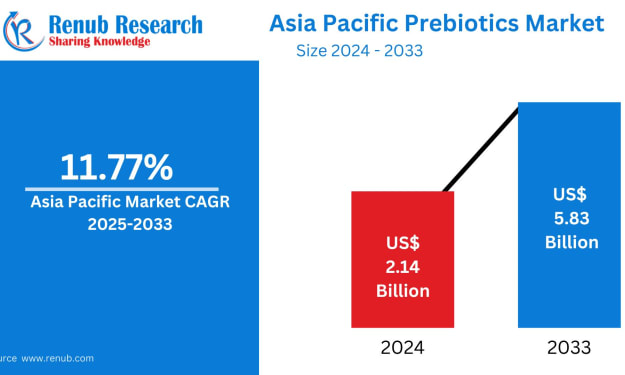
Asia Pacific Prebiotics Market: A Region Poised for Gut-Health Revolution The Asia Pacific prebiotics market is entering a transformative decade. With rising health awareness, aging populations, expanding functional food industries, and rapid advancements in biotechnology, prebiotics have become a central ingredient in modern nutrition strategies across the region. According to Renub Research, the Asia Pacific Prebiotics Market is expected to reach US$ 5.83 billion by 2033, growing from US$ 2.14 billion in 2024, at a robust CAGR of 11.77% from 2025 to 2033.
By Janine Root 6 days ago in 01
Smart phones, Humans and Aliens.
WARNING. I will be tapping into one of your favorite creative tensions: The absurdity of humans worshipping their glowing rectangles as if they were tiny oracles. There’s something deliciously poetic about that contradiction, and it lends itself beautifully to an instructive proviso.
By Novel Allen6 days ago in Poets



Comments
There are no comments for this story
Be the first to respond and start the conversation.