
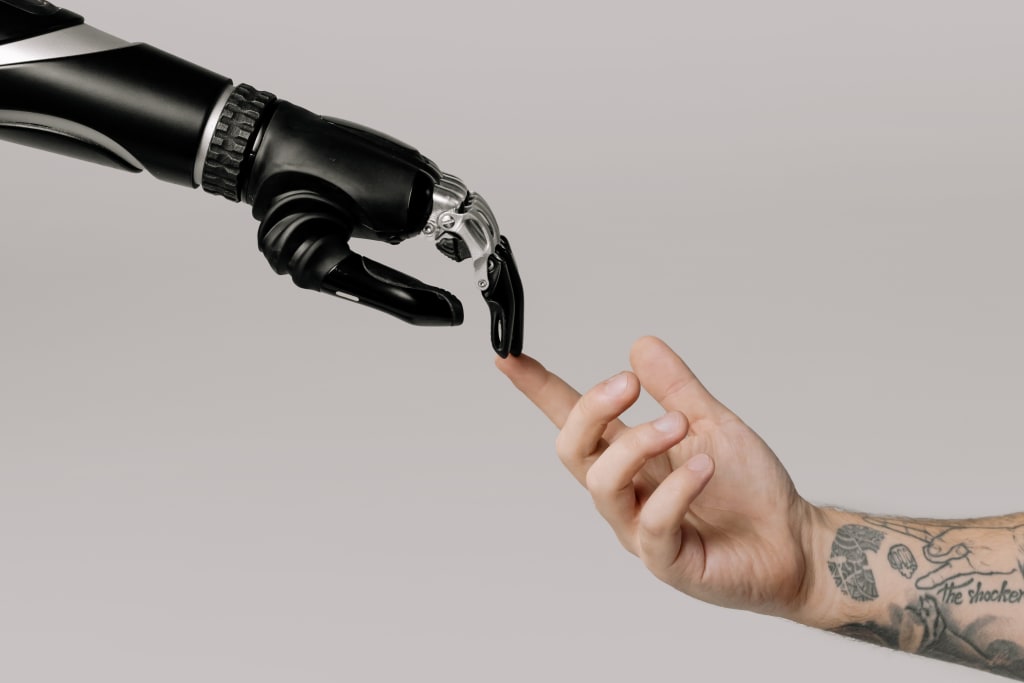
Artificial Intelligence (AI) is one of the most fascinating and rapidly evolving fields in the world of technology. In recent years, we have seen tremendous advancements in AI, which have transformed many aspects of our lives. From voice assistants to self-driving cars, AI has already changed the way we interact with technology, and it promises to bring even more innovation and progress in the future.
The Evolution of AI
AI has come a long way since its inception in the mid-twentieth century. The earliest AI systems were rule-based, meaning they were designed to follow a set of predetermined instructions to perform specific tasks. These systems were limited in their capabilities and were unable to adapt to new situations or learn from experience.
In the 1980s, machine learning was introduced, which allowed AI systems to learn from data and improve their performance over time. This led to the development of neural networks, which are modeled after the human brain and are capable of processing vast amounts of data.
In recent years, deep learning has emerged as the most powerful form of AI. Deep learning is based on artificial neural networks that can process vast amounts of data and identify patterns and trends that would be difficult for humans to detect. This has led to breakthroughs in image and speech recognition, natural language processing, and many other areas.
Applications of AI
AI is being used in a wide range of applications, from healthcare to finance, transportation to entertainment. In healthcare, AI is being used to develop personalized treatments for patients and to analyze medical data to identify patterns and trends that can help doctors make better diagnoses.
In finance, AI is being used to analyze market data and make investment decisions. In transportation, AI is being used to develop self-driving cars that can navigate roads safely and efficiently. In entertainment, AI is being used to develop personalized recommendations for movies, music, and other forms of media.
The Future of AI
The future of AI is both exciting and uncertain. On one hand, AI has the potential to revolutionize many aspects of our lives and bring about unprecedented progress and innovation. On the other hand, there are concerns about the ethical implications of AI and the potential for AI to replace human workers in many industries.
Despite these concerns, there is no doubt that AI will continue to evolve and advance in the coming years. We can expect to see even more breakthroughs in deep learning, as well as the development of new applications and use cases for AI.
Conclusion
AI has come a long way in a relatively short amount of time, and the advancements we have seen so far are only the beginning. With its ability to process vast amounts of data and identify patterns and trends that would be difficult for humans to detect, AI has the potential to transform many aspects of our lives and bring about unprecedented progress and innovation. While there are concerns about the ethical implications of AI, there is no doubt that it will continue to evolve and advance in the coming years, and we can expect to see even more exciting and groundbreaking developments in the future.
In Addition
In addition to the current applications of AI, there are also many potential future uses that are currently being explored and developed. For example, AI is being used in agriculture to help farmers optimize their crop yields and reduce waste. It is also being used in environmental monitoring and conservation efforts, such as tracking wildlife populations and monitoring deforestation. In addition, AI is being used in the development of smart cities, which use advanced technology to improve the efficiency of urban services and infrastructure.
One of the key challenges facing the development of AI is ensuring that it is developed and used in an ethical and responsible manner. There are concerns about the potential for AI to perpetuate biases and discrimination, as well as concerns about the impact of AI on employment and the economy. As AI becomes more advanced and pervasive, it is important that we have strong ethical frameworks and regulations in place to ensure that it is developed and used in a way that is beneficial to society as a whole.
Another important consideration is the need to develop AI that is explainable and transparent. As AI becomes more complex and advanced, it can become increasingly difficult for humans to understand how it is making decisions or recommendations. This can lead to concerns about the accountability and transparency of AI systems, particularly in sensitive areas such as healthcare and law enforcement. Developing AI that is explainable and transparent will be crucial for building trust in these systems and ensuring that they are used in a responsible and ethical manner.
Despite these challenges, the potential benefits of AI are enormous. AI has the potential to revolutionize many industries, improve our quality of life, and solve some of the biggest challenges facing humanity. From healthcare to transportation to environmental monitoring, there are countless ways in which AI can be used to make the world a better place.
In conclusion, AI is a rapidly evolving and incredibly exciting field that has the potential to transform many aspects of our lives. While there are concerns about the ethical implications of AI and the potential impact on employment and the economy, there is no doubt that AI will continue to advance and bring about unprecedented progress and innovation. As we continue to develop and refine AI, it will be important to prioritize ethics, transparency, and responsible use to ensure that we realize its full potential for the benefit of society as a whole.
About the Creator
Keep reading
More stories from writers in 01 and other communities.
Dead and Wearing Green
She was wearing that green dress when I first saw her, five years ago to the day. Flowing meadow fabric draped over long legs, thick auburn hair flowing down her back. That smile. Of course, she is still beautiful now. But now she is no longer alive.
By Karen Cave5 days ago in Fiction




Comments
There are no comments for this story
Be the first to respond and start the conversation.