
Achieving Closed-Loop Recycling in Asphalt Plants
When an asphalt plant processes various wastes generated during production, how does it achieve closed-loop recycling through process design while avoiding negative impacts on the performance of finished mixtures?


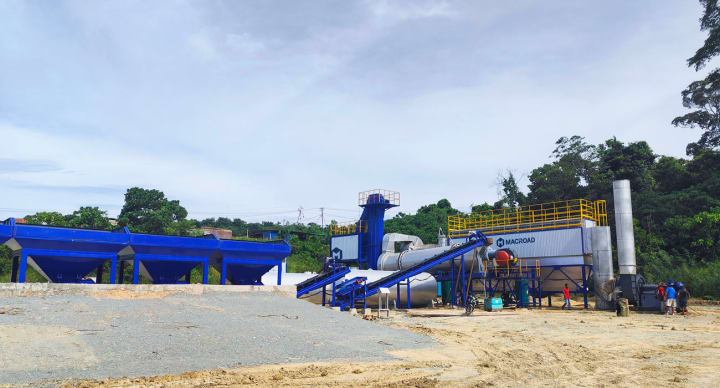
Asphalt plants play a crucial role in sustainable construction practices by processing various wastes generated during production, such as screening residues, cleaning waste residues, and waste asphalt mixtures. Implementing a closed-loop recycling system within the plant's process design not only minimizes waste but also ensures that the performance of finished asphalt mixtures is not negatively impacted. This article explores strategies for effectively recycling crushed coarse aggregate residues and waste asphalt mixtures while maintaining high-quality standards.
Recycling Crushed Coarse Aggregate Residues
One of the most significant challenges in closed-loop recycling is the effective reuse of crushed coarse aggregate residues generated during the screening process. To successfully incorporate these aggregates back into production, it is essential to adjust the crushing granularity and blending ratio to match the original aggregate gradation.
When reusing crushed aggregates, the first step is to analyze the particle size distribution of both the recycled material and the original aggregates used in the asphalt mixture. By conducting thorough gradation tests, operators can determine the appropriate crushing granularity for the residues. This ensures that the recycled aggregates will fit seamlessly into the existing mixture without compromising structural integrity.
Once the granularity is established, the blending ratio must be carefully calibrated. A balanced approach is crucial; too high a ratio of recycled aggregates can lead to performance issues, while too low may fail to leverage the economic benefits of recycling. By experimenting with different blending ratios, asphalt plant can achieve an optimal mix that maintains the desired performance characteristics of the final product.

Coordinating Waste Asphalt Mixtures with New Materials
Another essential aspect of closed-loop recycling involves the use of waste asphalt mixtures. These materials can significantly contribute to sustainability efforts, but their integration must be managed carefully to ensure that the new asphalt's viscosity and the types of modifiers used complement the recycled content.
To balance the recycling economy with pavement performance, it is critical to coordinate the amount of recycled waste asphalt with the viscosity of new asphalt. Typically, the viscosity of new asphalt varies depending on temperature and application requirements. If the recycling amount is too high, it could lead to reduced viscosity, affecting the mixture's ability to perform under load, particularly in high-temperature conditions.
Moreover, the type of modifiers used can further influence how well the mixture performs. For example, when incorporating a higher percentage of waste asphalt, using specific modifiers can enhance the performance characteristics of the final product. By selecting appropriate polymer modifiers that improve elasticity and resistance to deformation, asphalt plants can create a balanced blend that meets performance standards while maximizing recycling efforts.

Ensuring High-Quality Finished Mixtures
Achieving closed-loop recycling in asphalt plants is not just about incorporating waste materials; it also involves maintaining high-quality standards for the finished mixtures. Regular quality control measures should be implemented to monitor the performance of the recycled materials. This includes ongoing assessments of mechanical properties, such as tensile strength and resistance to cracking.
Additionally, continuous testing and adjustments should be made throughout the production process to ensure that the final product meets all regulatory and performance specifications. By establishing a robust quality management system, asphalt plants can confidently utilize recycled materials without compromising the integrity of the finished product.
In conclusion, asphalt plants can successfully achieve closed-loop recycling through strategic process design that incorporates various wastes. By carefully adjusting the crushing granularity and blending ratios of recycled aggregates, as well as coordinating the recycling of waste asphalt mixtures with new materials, plants can maintain the performance quality of their asphalt products. This approach not only promotes sustainability but also enhances the overall efficiency and cost-effectiveness of asphalt production, contributing to a greener construction industry.
About the Creator
Macroad Asphalt Plant
Macroad, a global leading manufacturer in asphalt mixing plants, offers a wide range of specifications to meet diverse project needs. Its high-quality, efficient equipment is widely applied in road construction.
Keep reading
More stories from Macroad Asphalt Plant and writers in 01 and other communities.
Balancing Modular Design and Core Function Integration in Mobile Asphalt Plants
Mobile asphalt plants have revolutionized the construction industry by offering enhanced transportation convenience without sacrificing production efficiency. Their modular splitting design allows for easy transport while ensuring the integration of essential functions such as drying and mixing. This article explores the balance between the modular design of mobile asphalt plants and the need for effective integration of core functionalities, focusing on how this balance affects operational efficiency and complexity.
By Macroad Asphalt Plant7 months ago in 01
The Evolution of Utility Tokens in a Data-Driven Digital Economy
The cryptocurrency market has grown far beyond simple peer-to-peer payments. These days, blockchain projects are all about fixing problems in the real world, like supply chain verification and data validation, as well as decentralized finance and digital identity.
By Muhammad Irfan Afzal5 days ago in 01
Transforming Digital Video Delivery with VPaaS Solutions and Video Platforms
In today’s digital-first world, video has become one of the most powerful tools for communication, marketing, education, and entertainment. Businesses, content creators, and educational institutions rely heavily on video to engage audiences, convey messages, and deliver information efficiently. However, managing, hosting, and distributing video content at scale presents unique challenges, including bandwidth limitations, latency, storage management, and maintaining high-quality playback across different devices. To address these challenges, organizations are increasingly turning to VPaaS solutions (Video Platform as a Service) and video platforms as integrated solutions for end-to-end video management and delivery.
By Bushra Rajpoot7 days ago in 01



Comments
There are no comments for this story
Be the first to respond and start the conversation.