
A Guide to SaaS Pricing Model
Discover key SaaS pricing models like flat-rate, usage-based, and per-user to choose the best fit for your product and customers.


When you're building a SaaS product, having something valuable and well-designed is just the start. One of the most important decisions you'll face is how to price it. Your pricing model can shape who buys your product, how long they stick around, and whether your business actually grows. With so many pricing options out there, it’s important to understand the basics so you can choose a strategy that makes sense for your product and your users both now and in the future.
What is a SaaS Pricing Model?
A SaaS pricing model is simply how you charge people to use your software. Unlike older software that was sold for a one-time fee, SaaS pricing usually involves recurring payments most commonly monthly or yearly.
Your pricing model answers questions like: Do customers pay per user? Per feature? Based on how much they use it?
The way you set this up matters. It affects how much money your business brings in, how often users cancel (churn), and whether your customers feel like they’re getting their money’s worth. Ideally, your pricing should match the value you deliver and give your business room to grow.
Common SaaS Pricing Models

Flat-Rate Pricing
This means charging one fixed price for everything. Everyone pays the same, and gets access to the same set of features.
Pros:
Straightforward and easy to explain
Predictable for both you and your customers
Cons:
Not flexible might be too much for some, or not enough for others
Doesn’t adjust as customers grow

Usage-Based Pricing (Pay-as-You-Go)
Customers pay based on how much they use like storage, API calls, or minutes used.
Pros:
Fair for customers who use less
Makes pricing scale naturally
Cons:
Harder to predict revenue
Might make customers nervous about unexpected costs
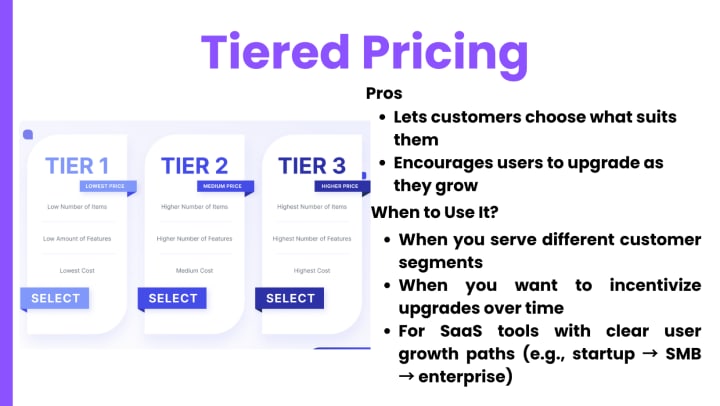
Tiered Pricing
You offer a few pricing packages (like Basic, Pro, and Enterprise), each with different features or limits.
Pros:
Lets customers choose what suits them
Encourages users to upgrade as they grow
Cons:
Needs careful planning so tiers feel balanced
Can be confusing if the differences aren’t clear
Per-User Pricing
Customers pay based on the number of people (or “seats”) using the software.
Pros:
Easy to understand and manage
Scales with team size
Cons:
Can discourage teams from adding new users
Doesn’t account for how actively people use it

Per-Feature Pricing
Customers pay depending on which features they need access to.
Pros:
Highly flexible
Works well for products with lots of use cases
Cons:
Can get complicated quickly
Users may feel overwhelmed by all the options
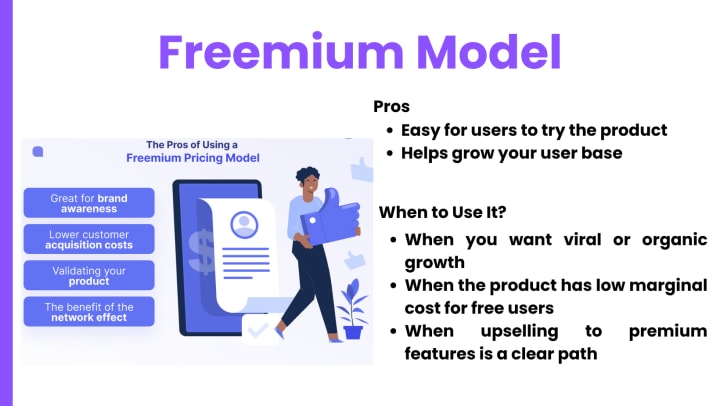
Freemium Model
You offer a free version of your product with basic features, and customers can pay to unlock more functionality.
Pros:
Easy for users to try the product
Helps grow your user base
Cons:
Many users never upgrade
Free users still cost money to support

Hybrid Pricing Models
Combines two or more models for example, a freemium plan with per-user pricing in the paid tiers.
Pros:
Offers flexibility for different customer types
Can lead to higher revenue overall
Cons:
Harder to manage and explain
Needs good systems to track everything
Key Factors That Influence SaaS Pricing
1. Who You're Selling To (Target Audience & Positioning)
You need to know who your ideal customers are. A pricing model that works for solo freelancers probably won’t work for large corporations, and vice versa. If you’re targeting startups, they may want simple plans at lower prices. Big companies, on the other hand, may expect more features, more support, and may be willing to pay more for it.
2. What Your Product Is Worth (Value Proposition)
Also, don’t forget that for many companies, the SaaS development cost is a major consideration early on. That initial investment needs to be balanced with a pricing model that can support ongoing growth and maintenance.
3. What the Market is Doing (Competitor Pricing)
You don’t need to copy your competitors, but you should understand how they price their products. Are they offering free versions? Charging by user? Their pricing can give you clues about what customers are used to and what they might expect from your product.
4. Costs of Getting and Keeping Customers (CAC & LTV)
Customer Acquisition Cost (CAC) is how much you spend to get a new user. Lifetime Value (LTV) is how much that customer pays you over time. A sustainable business usually needs a healthy LTV-to-CAC ratio most aim for something like 3:1. Your pricing needs to support this balance; if it doesn't, your business might struggle even if you have a great product.
Common Mistakes to Avoid
Making Things Too Complicated
If users can’t quickly figure out what they’ll get at each price point, they might not buy at all. Keep it simple.
Pricing Too Low or Too High
Undervaluing your product can hurt your revenue and make it harder to grow. But pricing too high without showing enough value can push users away. It's all about finding the right balance.
Not Listening to Customers
People will often tell you what they think about your pricing directly or indirectly. Pay attention to feedback, support questions, churn reasons, and feature usage. These are all clues that can help you improve.
Conclusion
There’s no perfect pricing model that works for every SaaS business. The best approach depends on what your product does, who it's for, and how your market is evolving. What matters most is that your pricing makes sense to your users, reflects the value they’re getting, and supports your long-term business goals.
Pricing isn't something you set once and forget. It's worth reviewing regularly, testing different options, and adjusting based on what you learn from real users and real-world performance.
About the Creator
Nico Gonzalez
Hi, I'm Nico Gonzalez! I'm passionate about technology, software development, and helping businesses grow. I love writing about the latest trends in tech, including mobile apps, AI and more.
Keep reading
More stories from Nico Gonzalez and writers in 01 and other communities.
How to Use Sabre Flight Search API for Real-Time Booking
In today’s digital travel world, people expect instant access to flight options no delays, no outdated information. To meet this demand, travel platforms need something powerful working behind the scenes. That’s where the Sabre Flight Search API comes in.
By Nico Gonzalez7 months ago in 01
How to Access Cash Without Selling Your Digital Assest
You’ve built a strong crypto portfolio that’s happily compounding. The next thing you know, a real estate closing, an unexpected business expense, or a personal emergency demands fast cash. What sounds like a doomsday is, in reality, a scenario many holders face far more often than they’d like. That’s when you face a choice: how to gain access to instant liquidity without dumping your digital assets?
By Kiran Butt4 days ago in 01
A Planetary Alignment will coincide with Mercury Retrograde
Double phenomena in the heavens Some people say in jest that the planets have aligned in their favor when life works the way they desire. Were you aware that there are seasons when things do line up in the heavens? There will be a planetary alignment AKA a planet parade, on February 28, 2026.
By Cheryl E Preston4 days ago in FYI



Comments
There are no comments for this story
Be the first to respond and start the conversation.