
15 Key Steps to Build a Sustainable Recycling Business in Canada
A Complete Roadmap to Launching a Profitable Green Business in 2025
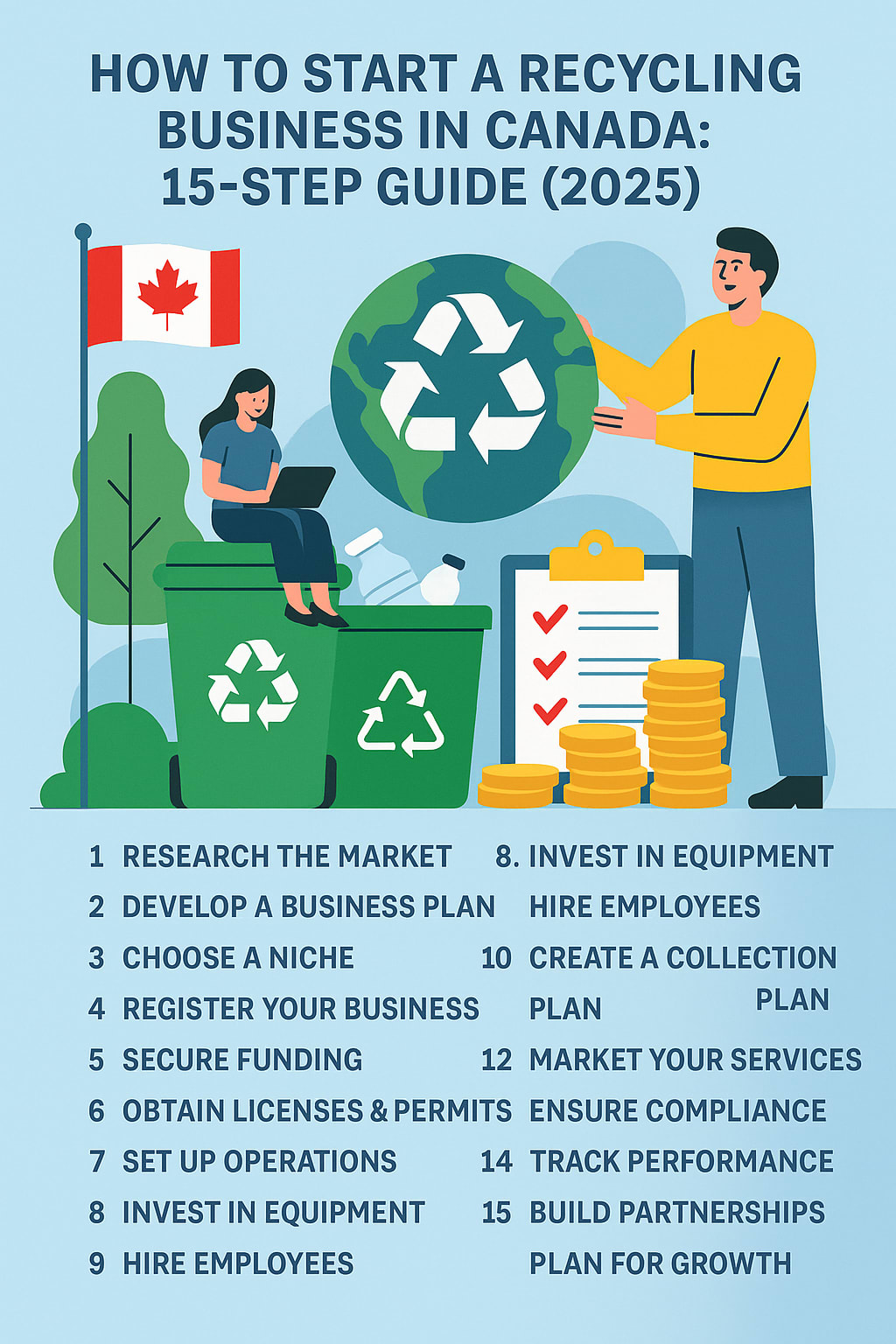
Have you ever dreamed of starting a business that not only turns a profit but also helps the planet? If so, you're in the right place. Launching a recycling company is one of the most promising eco-friendly business ideas in Canada today. With sustainability at the forefront in 2025, it's an ideal time to join the green economy by starting a recycling business of your own.
Canada is blessed with natural beauty, but it faces a serious waste challenge. Canadians generate some of the highest waste per capita in the world, yet only about 28% of our waste is currently recycled. This gap is a huge opportunity for an aspiring entrepreneur to start a recycling business that makes a difference. By diverting waste from landfills and repurposing materials, you can build a green business in Canada that contributes to a cleaner environment while tapping into a growing market.
This comprehensive 15-step guide will walk you through everything you need to know about starting a recycling business in Canada. From choosing your niche and understanding regulations, to securing funding, optimizing operations, and establishing a digital presence, we've got you covered. Follow these steps to turn "trash" into a thriving treasure of a business. Let's get started!
Step 1: Choose Your Recycling Niche – Define Your Focus
Before you dive in, decide what kind of recycling business you'll run. The recycling industry has many niches, and identifying your focus will shape the rest of your plan. Choose a niche that matches your passion and fills a need in your community. For example, you might specialize in:
• Residential Recycling Services: Offering curbside pickup or drop-off recycling for households (the classic blue box program). This could target items that municipal programs don't cover or improve on existing services.
• Commercial & Industrial Recycling: Handling waste streams for businesses, offices, or construction sites. This might involve collecting cardboard, scrap metal, or specific industrial materials from commercial clients.
• Specific Material Focus: Centering your business on one or two types of materials. For instance, you could focus on plastics (Canada currently recycles less than 9% of plastic waste and there's demand for better plastic recycling), electronic waste (e-waste like old computers and phones contain valuable metals and toxins that need proper processing), construction and demolition debris (wood, concrete, metal that can be reclaimed), organic waste/composting (turning food and yard waste into compost), or textiles (recycling fabrics and old clothing).
• Hard-to-Recycle Items: Collecting and processing items that typically end up in landfills because they're tricky to recycle, such as batteries, light bulbs, appliances, or paint. By providing a solution for these, you fill an important gap.
• Recycling Broker/Collector: Acting as a middleman by collecting large volumes of recyclables and selling them to processing facilities. This model is more about connecting supply with demand, and it requires building relationships with both waste producers and recycling plants.
Pro Tip: Research your local area to see which recycling needs are unmet. For example, is there a glut of a certain type of waste in your city that no one is recycling yet? Identifying a gap (like lack of e-waste collection in your town, or no convenient service for recycling glass) can help you carve out a profitable niche.
Step 2: Research Your Market and Competition
Knowledge is power. Once you have a niche in mind, take time to study the recycling landscape in your region. A bit of detective work now will pay off by revealing how to position your business. Key research areas include:
• Local Demand: What recyclable materials or services are most needed in your area? Identify pain points—are residents or businesses struggling to recycle certain items (e.g., electronics or glass)? Understanding local needs will help you tailor your services.
• Existing Competitors: Who is already offering recycling services nearby? Research other green businesses in Canada operating in your city or province. Analyze what they collect, their pricing, and their strengths or weaknesses. This will highlight opportunities for you to offer something different or better.
• Target Customers: Define who will use your service. Will you cater to individual households, apartment complexes, local businesses, construction companies, or perhaps all of the above? Knowing your customer segments helps in designing services and marketing to them effectively.
• End Markets for Recyclables: Recycling isn't just about collection—you also need buyers for the sorted materials. Research where you will send or sell the recyclables after processing. For example, if you're recycling plastics, is there a local plastic reprocessing plant or a manufacturer that will buy your recycled pellets? Ensuring there's demand for the end product is crucial for your business model.
Gathering this market intelligence will help you refine your business idea. It might reveal, for instance, that there's high demand for electronics recycling in your city but few providers. Or you might learn that a major local recycler isn't servicing small businesses, which could be your opportunity. Use these insights to shape a service that stands out.
Step 3: Develop a Solid Business Plan
Every successful business starts with a well-thought-out plan. Your business plan is your roadmap from startup to success, and it's especially important if you need to secure financing. Outline how your recycling business will operate and grow. Key components to include are:
• Executive Summary: A one-page overview of your business idea and why it will succeed.
• Company Description: The mission of your company and an outline of what services you will provide. Explain how your recycling venture will benefit customers and the community.
• Market Analysis: Summarize your findings from Step 2. Who is your target market? What is the demand for your service? Include notes on competitors and what gap in the market you will fill.
• Services & Operations: Detail exactly what recycling services you will offer and how you will deliver them. Will you pick up recyclables door-to-door, operate a drop-off center, or process materials at a facility? Describe your operating process (collection, sorting, processing, etc.), along with any equipment or technology you'll use.
• Marketing & Sales Strategy: Explain how you plan to attract and retain customers. This could include advertising channels, partnerships (for example, with municipalities or schools), pricing strategies, and how you'll promote the environmental benefits of using your service.
• Management & Team: Introduce the people (or types of people) who will run the company. Highlight relevant experience or passion for sustainability. If you're solo to start, note any advisors or mentors, and outline plans to hire key roles as you grow.
• Financial Projections: Crunch the numbers. Estimate your startup costs (vehicles, equipment, permits, etc.), and project your revenue and expenses for at least the first 2-3 years. Include best-case and worst-case scenarios. Show when you expect to break even and how you'll make the business profitable.
A thorough business plan doesn't just help you get organized—it’s also essential if you seek loans or investors. It demonstrates that you've done your homework and have a viable strategy for building a profitable recycling business.
Step 4: Take Care of Legalities – Registration and Permits
Time to make it official. Establish your business legally and ensure you have all the permits to operate a recycling venture in Canada. This step can be a bit paperwork-heavy, but it's crucial to do it right from the start:
• Register Your Business Name: Choose a unique, memorable name that reflects your eco-friendly mission. Register the business name according to your province’s requirements so that it’s legally yours.
• Pick a Business Structure: Decide whether you'll operate as a sole proprietor, partnership, corporation, or co-operative. This choice affects your taxes, liability, and funding options. If you're unsure, consult with a small business advisor or legal professional to determine which structure suits your situation.
• Federal and Provincial Registration: In Canada, you may need to register your business federally (to get a Business Number for taxes) and provincially (to get a license to operate in your province or territory). Check with your province's business registry for specific steps. For example, registering in Ontario is different from registering in Quebec—make sure you follow local requirements.
• Environmental Approvals: Depending on the materials you handle and what you do with them, you might need approval from your provincial environmental authority. For instance, in Ontario you may require an Environmental Compliance Approval (ECA) or need to file on the Environmental Activity and Sector Registry (EASR) to operate a waste management site.
• Waste Handling & Transportation: Make sure you have any permits required for moving and storing waste. If you'll transport recyclables or hazardous materials on public roads, you may need a waste carrier licence and must follow regulations like the federal Transportation of Dangerous Goods (TDG) guidelines.
• Municipal Zoning and Bylaws: Check local city or municipal bylaws. You may need approval for your facility location (zoning for industrial or waste use) and adherence to any local noise, odor, or storage regulations.
Skipping the legal and permit step can lead to heavy fines or even having your operation shut down. It’s worth the effort to get all your paperwork in order now. When in doubt, seek professional legal advice to make sure you're fully compliant with all federal, provincial, and municipal laws.
Step 5: Secure Funding for Your Recycling Business
Starting a recycling operation can require significant upfront investment (vehicles, equipment, facility space, etc.). You'll want to ensure you have enough capital to launch and sustain the business until it becomes profitable. Consider a mix of these funding sources:
• Self-Funding (Bootstrapping): Using your personal savings or assets to fund the business gives you full control and ownership. This route often means starting small and reinvesting early profits to expand.
• Bank Loans: Canadian banks and credit unions offer small business loans and lines of credit. You will typically need a solid business plan (see Step 3) and good credit. A bank loan can spread your startup costs over several years, but remember you'll need to start repaying debt early on.
• Government Grants and Programs: There are various federal, provincial, and municipal programs in Canada to encourage green business initiatives. Research environmental grants or funding programs dedicated to recycling or waste reduction; many government agencies offer support for green initiatives. Look into federal and provincial opportunities (through environment ministries or economic development programs) that your project might qualify for. These grants can be competitive, but essentially they're "free money" if you qualify.
• Investors (Venture Capital/Angels): If you have an innovative model with high growth potential (say a new recycling technology or a plan to scale across many cities), you might attract angel investors or venture capital. In exchange for funding, you'd give up a percentage of ownership in your company. This route requires a polished pitch and a convincing case that your business can grow significantly and provide a return on investment.
• Crowdfunding: Consider launching a campaign on platforms like Kickstarter or Indiegogo to raise capital from the public. A compelling story about how your recycling startup will benefit the community and environment can motivate people to contribute. Crowdfunding can also validate public interest in your idea and serve as early marketing.
Whichever funding mix you choose, be prepared to clearly articulate the benefits of your recycling business — both the financial prospects and the positive environmental impact. Lenders and investors will want to see that you have a plan for profitability, but many are also excited by the idea of supporting an eco-friendly venture that contributes to a cleaner Canada.
Step 6: Set Up Your Equipment and Facilities
With plans and funding in place, you'll need the right tools and space to run your recycling business. Having efficient equipment and a suitable facility will determine how smoothly you can operate. Key considerations include:
• Collection Vehicles: Determine how you'll collect materials. This could be a pickup truck with a trailer, a box truck, or specialized recycling trucks with compartments. The size and type depend on your niche (a curbside collection service might need a small fleet of trucks, whereas a scrap metal broker might just need a flatbed and a forklift).
• Sorting & Processing Equipment: Once you collect recyclables, you'll likely need to sort and compact them for shipment or processing. Equipment might include conveyor belts, sorting tables, balers (for compressing materials like cardboard or plastics into bales), shredders or crushers (for e-waste, glass, etc.), and compactors. Invest in reliable machines that can handle the volume you anticipate.
• Storage Containers & Bins: You'll need an array of bins or containers to store different materials safely and separately. Think of heavy-duty bins or dumpsters for bulk material, pallets or gaylord boxes for smaller sorted items, and covered containers for items that should stay dry. Organize your facility so materials don't pile up haphazardly — designate areas for each type of material.
• Protective Gear and Safety Equipment: Recycling work can involve sharp objects, heavy lifting, and even hazardous materials. Ensure you have safety gear like gloves, safety glasses, high-visibility clothing, hard hats, steel-toe boots, and dust masks or respirators as needed. Also consider equipment like first-aid kits and fire extinguishers in your facility. Safety should be a top priority (more on this in Step 12).
• Facility Space: Secure a location where you will sort and store materials. It could be a small warehouse, a yard, or even a large garage to start with — as long as it's zoned appropriately for waste management activities. Look for a space with good access for your vehicles (e.g., loading docks or wide gates for trucks) and enough room to safely maneuver and store materials. Having your facility close to your sources (where you collect from) and near end markets (where you deliver materials) can save a lot on transportation costs.
Step 7: Build Your Team
You might be starting as a one-person operation, but as the business grows you'll need helping hands. Hiring the right people is critical in a recycling business because the work can be physical and needs to be done correctly (for safety and efficiency). Consider the staff you will need, such as:
• Machine/Equipment Operators: If you have forklifts, balers, shredders, or other processing equipment, you'll need trained operators to run them safely and efficiently.
• Drivers and Collectors: For any collection routes, dedicated drivers (with the appropriate license for your vehicle type) will pick up materials from clients. They may also double as the crew who load and unload materials.
• Sorters: These workers manually sort incoming recyclables by type (plastic, paper, metal, etc.) to ensure low contamination and high quality of output. Sorting can be labor-intensive, so hire individuals who are diligent and can tolerate a repetitive but crucial task.
• Administrative and Customer Service Staff: As you get customers, someone needs to handle inquiries, scheduling pickups, bookkeeping, and possibly preparing compliance paperwork. You might start by doing this yourself, but eventually an office manager or admin assistant can be invaluable.
• Marketing/Sales Personnel: To grow your client base, you may want someone focused on outreach – contacting businesses or municipalities, handling social media, or attending events to promote your services. In the early days, this might be part of your role as the owner, but plan to delegate marketing tasks as you expand.
When hiring, look for people who share your passion for sustainability and who are trustworthy and hardworking. Experience is a plus (e.g., someone who's driven a truck or worked in waste management before), but attitude and reliability are often even more important. Once you have your team, invest in proper training: teach them how to handle materials, use equipment safely, and follow procedures. Emphasize safety from day one by providing all necessary protective gear and training.
Step 8: Establish Your Online Presence
In 2025, every business – even a local recycling company – needs a digital presence. Building a website and leveraging online platforms will help customers find you and trust you. Here's how to get started:
• Create a Professional Website: Your website is your digital storefront. It should clearly explain who you are, what services you offer, where you operate, and how to get in touch. Make sure the design looks clean and eco-friendly (to reflect your brand values). You don't need to be a coding expert to do this – you can use an easy website builder or a content management system like WordPress to create a modern site. Important: Host your site with a reliable Canadian web hosting provider like 4GoodHosting. A host that has servers in Canada will ensure your site loads quickly for local visitors and complies with any data residency preferences. 4GoodHosting, for example, offers fast load times, a 99.9% uptime guarantee, robust security features, and excellent customer support to help your business website run smoothly.
• Optimize for Search Engines (SEO): Think about what customers might search for online when looking for recycling services. Incorporate those terms into your site content so that you rank higher on Google. For example, if you're in Ottawa, mention "electronics recycling in Ottawa" on your site, or if you focus on a certain material, include phrases like "scrap metal pickup Toronto". Creating a blog or FAQ section with recycling tips can also improve your SEO and establish you as a knowledgeable resource.
• Use Social Media: Engage your community on platforms like Facebook, Instagram, LinkedIn – even TikTok if you're up for it. Share helpful recycling tips, show behind-the-scenes peeks at your operation (people love seeing the sorting process or before-and-after photos), and celebrate milestones (like "1,000 kg of e-waste recycled this month!"). Social media is great for building a loyal following and word-of-mouth referrals. It also reinforces that your business is active and passionate.
• Claim Your Google My Business Listing: This is crucial for any local business. Register your company on Google My Business so that when people search "recycling business near me", your business information (address, hours, services) appears on Google Maps and search results. Encourage satisfied customers to leave reviews on Google – positive ratings will boost your credibility for new customers looking you up.
Step 9: Streamline Your Operations for Efficiency
Running a recycling business involves many moving parts – literally. As you get established, look for ways to make your daily operations as efficient and cost-effective as possible. Efficiency boosts profit and also reduces environmental footprint. Here are some tips:
• Use Management Software: Keeping track of everything manually can get overwhelming. Consider using software tailored for waste or recycling businesses to manage your inventory and workflow. These systems can log incoming materials, track what you have in storage, schedule pickups and drop-offs, and even handle billing. By digitizing your records, you'll reduce errors and be able to analyze data (like how much of each material you've processed) to improve your decision-making.
• Optimize Collection Routes: If you offer collection services (e.g., picking up recyclables from businesses or homes), plan your routes carefully to save time and fuel. There are route optimization tools that can help you map the most efficient path to cover all pickups. Efficient routing means your drivers drive fewer kilometers, saving on gas and allowing more pickups per day – which boosts revenue and cuts costs.
• Improve Sorting Processes: The quicker and more accurately you can sort materials, the better. As your volume grows, you might invest in conveyor belts or automated sorting machines that separate metals, plastics, paper, etc., faster and with high accuracy. Even at a small scale, organizing your sorting area logically (with clear labels and designated bins for each material) will speed up the process and reduce mistakes. High-quality sorting leads to higher-value recyclables, which can fetch better prices from buyers.
• Schedule Regular Maintenance: Downtime is the enemy of efficiency. Make sure all your equipment – vehicles, machines, even your facility infrastructure – is well-maintained. Follow a maintenance schedule for things like vehicle oil changes, machine lubrication, and replacing worn parts. It's better to fix a small issue during planned maintenance than to have a major breakdown that halts your operations unexpectedly.
Step 10: Market Your Business and Educate Your Customers
A recycling business does a lot of good, but you need to make sure people know about it and understand the value you offer. Effective marketing will help you attract clients and build a positive reputation in the community. Consider these strategies:
• Partner with the Community: Collaborate with local businesses, schools, or community organizations on recycling initiatives. For example, you could offer a special rate to a neighborhood association for a bulk pickup day, or work with schools to host e-waste drop-off events. When people see you active in the community, it builds goodwill and word-of-mouth.
• Online Advertising: Utilize targeted online ads to reach your audience. Google Ads can display your service when people search for terms like "recycling pickup service" in your area. Social media platforms also allow you to target ads to users in specific locations or with interests in sustainability. A modest budget for pay-per-click ads can significantly boost your visibility, especially when you're just starting out.
• Content Marketing: Establish yourself as a recycling expert by creating useful content. This might be a blog on your website, how-to videos, or infographics about recycling best practices. Topics could include "How to Start a Recycling Program at Your Office" or "10 Tips to Reduce Household Waste." Sharing free, educational content builds trust and keeps potential customers engaged (while also helping your SEO).
• Public Relations (PR): Reach out to local newspapers, radio stations, or community blogs with your story. Perhaps you left a corporate job to start a green business, or you're helping solve a local waste problem – these are newsworthy angles. A feature story or interview can give you exposure to a broad audience for free. Plus, being covered in the media adds credibility to your business.
• Leverage Testimonials and Referrals: Happy customers are your best ambassadors. Encourage clients who appreciate your service to spread the word. You might even implement a referral program (e.g., a discount on their next invoice if they refer a new customer). Positive testimonials on your website or social media pages can also reassure prospective clients that you deliver on your promises.
• Highlight Your Impact: Modern consumers love to support businesses that make a difference. Share the positive impact your recycling business is having. For example, "Thanks to our clients, we recycled 5 tons of plastic in our first year – that's 5 tons kept out of landfill!" or "Our service helped 100 families safely dispose of hazardous batteries this spring." When people see tangible results, they're more likely to trust and choose your company.
Step 11: Build Strong Partnerships (Suppliers and Buyers)
Success in the recycling industry hinges not just on what you collect, but who you know. You'll be acting as a middle link between those who have recyclable materials (your suppliers or sources) and those who need recycled materials (your buyers or end-market). Cultivating relationships on both ends will ensure a steady flow in and out of your business:
• Secure Buyers for Your Recycled Materials: Identify and connect with the companies or facilities that will purchase the recyclables you process. These might be paper mills (for your collected cardboard), metal smelters (for scrap metal), plastic recycling plants, or even overseas buyers if local demand is limited. Aim to diversify your customer base so you're not relying on just one buyer – having multiple outlets protects you if one market slows down. Negotiate contracts when possible to lock in demand. Also, focus on quality: the cleaner and more sorted your recycled output, the more valuable it is to buyers. Consistently meeting specifications will make buyers trust you and seek long-term relationships.
• Work Closely with Waste Suppliers: These are the sources of the recyclable materials – essentially, the clients who give you their waste. They could be local businesses, factories, construction companies, or municipalities. Build trust with them by offering reliable, convenient service and maybe even custom solutions. For example, a manufacturing plant might need a specific schedule for pick-ups and particular bins to collect their scrap. Be flexible and attentive to their needs. Consider signing agreements for regular service to ensure they'll give all their recyclables to you. You might offer volume-based discounts or even revenue-sharing on valuable materials – whatever it takes to secure a loyal supply of recyclables.
• Network within the Industry: The recycling and waste management sector in Canada is a community of its own. Joining it can open up opportunities and knowledge. Attend industry conferences or trade shows (like the annual Waste & Recycling Expo Canada) to meet potential partners and stay on top of trends. Join professional associations such as the Recycling Council of Ontario or your provincial recycling industry council – these groups often have forums, newsletters, and events that keep you informed and connected. Even connecting with other recyclers on LinkedIn or online communities can be valuable; you can share advice, find mentorship, or even collaborate on projects (for instance, teaming up to handle a big contract or sharing transport for cost savings).
Step 12: Ensure Compliance with Regulations and Prioritize Safety
The recycling business is closely tied to environmental and safety regulations. To build a reputable company and avoid penalties, you must operate in full compliance with laws and create a safe workplace for your team. Here’s how to cover your bases:
• Stay on Top of Environmental Regulations: Waste management is heavily regulated in Canada at the federal, provincial, and municipal levels. Ensure you have all required permits (as discussed in Step 4) and that you follow the rules for handling, storing, and transporting materials. Regulations can change as governments push for greener policies – for example, Extended Producer Responsibility (EPR) programs are expanding, which might affect how certain materials need to be recycled or who funds the recycling. Assign someone (possibly yourself at first) to regularly check for updates from bodies like Environment and Climate Change Canada, your provincial Ministry of the Environment, and local municipal waste departments. If you're ever unsure about requirements, consult an environmental compliance expert. It's better to spend time and money on compliance upfront than to face fines or shutdowns later.
• Implement a Strong Safety Program: Your workers' health and safety is paramount. Recycling facilities and collection routes have hazards – heavy machinery, sharp objects, potentially hazardous waste, and large vehicles on the road. Develop clear safety protocols from day one. This includes training every employee on how to do their job safely (e.g., how to lift properly, how to shut down a machine for maintenance). Supply all necessary Personal Protective Equipment (PPE) and enforce its use (gloves, goggles, hard hats, steel-toe boots, high-visibility vests, etc.). Have an emergency plan in place for accidents, fires, or spills, and ensure first-aid kits and fire extinguishers are accessible. Also, foster a safety-first culture – encourage workers to report any hazards or near-misses and take their feedback seriously. A safe operation not only protects your team, it also improves efficiency and morale.
• Keep Detailed Records: Documentation might not be exciting, but it's a crucial part of compliance and good management. Maintain organized records of all your permits and licenses (know when they expire and need renewal). Keep logs of each waste shipment or collection – when, where, what material, how much, and where it was sent. (This is often required by law, especially for hazardous materials.) Document employee training sessions and safety drills. Record any incidents or injuries and how they were resolved. Good recordkeeping will help immensely if you ever undergo an audit or inspection, and it can also help you track performance metrics (like how many tons you're recycling each month). These records provide transparency and accountability, which is important for regulators and for building trust with customers or partners.
Step 13: Innovate and Adapt for the Future
The recycling landscape is always evolving – new technologies emerge, new types of waste appear, and consumer attitudes shift. To ensure your business thrives for years to come, you should be forward-thinking and ready to adapt. Here are some ways to stay ahead:
• Embrace New Technologies: Keep an eye on technological advancements that could make your operations more efficient or open new business opportunities. For example, artificial intelligence (AI) and robotics are now used to automate sorting lines, identifying and separating materials with high precision. There are also emerging recycling methods like chemical recycling for plastics that can't be recycled mechanically – these could become more common and present opportunities for expansion. Investing in new tech might be costly upfront, but it can increase your capacity and reduce labor costs over time. Plus, being tech-forward can set you apart from competitors.
• Expand into Circular Economy Services: Think beyond traditional recycling. Could you incorporate upcycling or reuse into your model? For instance, some items you collect might be reusable after minor repairs (electronics, furniture, etc.), allowing you to resell them or donate them. You could also offer consulting to businesses on waste reduction, or partner with composting initiatives if you handle organics. The idea is to find creative ways to extract more value from waste and provide more eco-friendly services. By staying flexible and seizing new green business opportunities, you keep your company diversified and resilient.
• Continuously Learn and Connect: Don't isolate yourself. Subscribe to industry publications or newsletters (like trade magazines and sustainability blogs) to keep up with the latest news. Attend conferences, webinars, and local meetups focused on waste management – these events highlight trends and can spark ideas. Stay in touch with mentors or fellow eco-entrepreneurs; their perspectives can help you spot opportunities or avoid pitfalls. And importantly, pay attention to government policies (the Canadian government has been moving toward zero plastic waste and introducing bans on certain single-use plastics) – regulatory shifts can create new markets or require you to pivot, and you'll handle them best if you see them coming.
Step 14: Engage with Your Community
A recycling business isn't just another company – it's a community asset. By actively engaging with the community, you build goodwill, educate the public, and strengthen your brand. Being visible and involved will make people more likely to support and partner with you. Here are ways to become your city's eco-hero:
• Educate and Empower: Share your recycling knowledge with others. You could give presentations or workshops at local schools to teach kids about recycling and sustainability (tomorrow's adults will remember who taught them). Host public info sessions or webinars on topics like composting or how to properly dispose of e-waste. Even simpler, create and distribute easy-to-read guides (flyers or blog posts on your site) with recycling tips specific to your city. When you empower people with knowledge, they appreciate your expertise and feel more invested in your mission.
• Volunteer and Participate: Lead by example in community initiatives. Join neighborhood cleanup events (or organize them yourself) where you and your team help pick up litter in parks or along roads. Participate in local environmental campaigns – for instance, if the city runs a "Plastic-Free July" challenge or a tree-planting day, be there (maybe even as a sponsor). Show up at town fairs or farmers' markets with a booth where you collect hard-to-recycle items (like batteries or lightbulbs) for proper handling while educating folks at the same time. This kind of hands-on involvement shows that you're not just a business, but a dedicated community member.
• Support Local Green Projects: Use some of your marketing or charity budget to sponsor events or groups that align with your values. You might sponsor a local eco-club at a school, or provide recycling bins and services for a community festival. If there's a community garden or river cleanup initiative, consider donating or partnering with them. When people see your logo associated with positive environmental efforts, it boosts your brand's reputation. Plus, supporting good causes often expands your network in unexpected ways.
• Respond to Community Needs: Pay attention to the specific waste challenges in your area and look for ways your business can help solve them. For example, if residents complain there's nowhere to take old mattresses or appliances, you could organize a special collection drive for those items (perhaps in partnership with the city or other businesses). If your town has a post-holiday surge of recyclables (like Christmas trees or excess cardboard), step up and offer a solution, such as a discounted pickup service in January. Working with local authorities on these kinds of initiatives not only fills a need but can also lead to future contracts or support.
By weaving your business into the community, you gain loyal supporters and a positive public image. People prefer to do business with companies they recognize and trust, and nothing builds trust better than genuine community engagement. Meanwhile, you'll directly contribute to a greener, more informed local area – which is exactly the impact you set out to achieve.
Step 15: Measure Your Impact and Celebrate Success
As you get your business running, don't forget to take a step back and see the difference you're making. Tracking your progress not only helps you improve, but also gives you great content to share with customers and stakeholders. Here's how to gauge and broadcast your impact:
• Track Key Performance Indicators (KPIs): Identify a few important metrics that align with your business goals and mission. For a recycling business, examples of KPIs include the total tonnage of materials you've recycled (e.g., "X tons of waste diverted from landfills this year"), your landfill diversion rate (what percentage of collected material avoids landfill), the number of clients or households you serve, and perhaps an estimate of greenhouse gas emissions avoided due to your recycling activities. Tracking these figures monthly or quarterly will show your progress and highlight trends (like which material streams are growing).
• Report and Share Achievements: Compile your data into an annual report or a simple infographic that you can share with stakeholders, customers, and on your website. Highlight the positive outcomes – for instance, "In 2025, we recycled 1000 kg of electronics, preventing harmful metals from entering landfills," or "Our community recycling drives collected 3 tons of clothing for reuse." Use charts or before/after stats to make it visually engaging. Also, celebrate milestones publicly: post on social media when you hit a big goal (like 100 customers served or 100 tons recycled). Consider sending a year-end email or newsletter to customers thanking them and showing what their recycling efforts achieved through your service. This not only reinforces the value of your business to them, but also makes them feel part of something impactful.
Ready to Launch Your Green Business?
You've now got a roadmap to start a recycling business in Canada – from the initial idea all the way to making a real impact in your community. It's an ambitious journey, but also an incredibly rewarding one. By following these steps, you'll not only build a profitable venture, but you'll also be part of the solution to Canada's waste challenge and an inspiration for others to join the green economy.
As you put your plan into action, remember to leverage all the tools at your disposal. Stay passionate, stay informed, and don't be afraid to ask for help from mentors or industry peers. Every great business is built one step at a time.
One of the first tangible steps is establishing your online presence. When you're ready to set up a website for your recycling business, choose a hosting provider you can count on. 4GoodHosting offers reliable, high-speed web hosting on Canadian servers, so you can focus on growing your green business online.
Good luck on your entrepreneurial journey! With determination and the right support, you'll be driving positive change and paving the way to a cleaner, more sustainable future for Canada.
About the Creator
Keep reading
More stories from Steve Oscar and writers in 01 and other communities.
Why Vancouver Is a Vegan Business Goldmine in 2025
For an aspiring vegan entrepreneur, Vancouver is the prime place to be. In 2025, the city’s thriving plant-based culture and health-conscious population promise tremendous opportunities for businesses focused on locally sourced, ethically produced, and delicious vegan foods. Vancouver has even been ranked among the top ten most vegan-friendly cities in the world, and the number-one Canadian city for veganism . This means a huge built-in market eager to support inventive plant-based products and services.
By Steve Oscar7 months ago in 01
How to Choose the Best Mobile Application Development Company in 2026
Choosing the right mobile application development company is no longer just a technical decision—it’s a business-critical one. In 2026, mobile apps sit at the intersection of customer experience, brand credibility, and long-term growth. The wrong partner doesn’t just slow development; it can limit scalability, security, and discoverability across modern search and AI-driven platforms.
By alan michael3 days ago in 01
The Art of Slow Travel: How Staying Longer in One Place Creates Deeper Cultural Connections
In a world driven by packed itineraries and bucket list checklists, slow travel offers a refreshing alternative. Instead of racing from landmark to landmark, slow travel invites you to linger. It is about choosing depth over speed and presence over pressure. By staying longer in one place, travelers create space for genuine cultural connections that short visits rarely allow.
By Devon Alexis3 days ago in 01



Comments (1)
Starting a recycling biz in Canada seems like a great idea. The waste challenge there is huge. I like the residential and commercial niches. Gonna check out the guide to learn more.