
10 Common SEO Myths Every Business Owner Should Stop Believing
A Simple Breakdown of SEO Misconceptions That Cost Businesses Time, Money, and Rankings

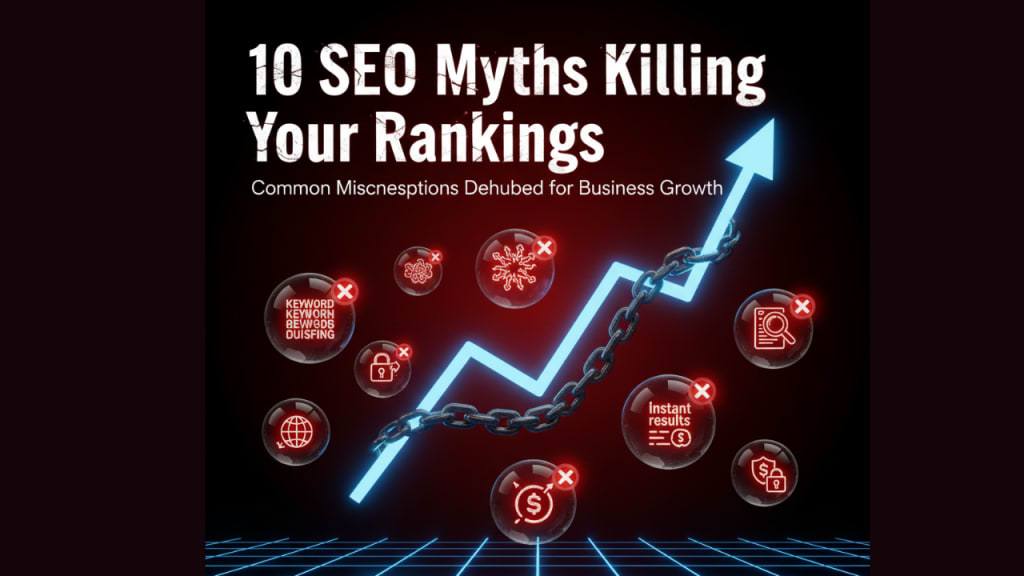
SEO is one of the most talked-about parts of digital marketing and also one of the most misunderstood. Many business owners invest time and money into SEO but walk away disappointed, not because SEO doesn’t work, but because they were working with the wrong expectations.
Over the years, outdated advice, quick-win promises, and half-truths have created confusion around what SEO really is. As search engines evolve, many old beliefs simply don’t apply anymore. Yet, they continue to guide decisions that can slow growth instead of supporting it.
This article breaks down the 10 common SEO myths that still shape how businesses think about search visibility today—and explains what actually matters instead.
Why SEO Myths Still Exist in the Digital World
How outdated advice creates confusion
SEO has been around for a long time, and what worked years ago doesn’t always work today. Early tactics like keyword stuffing, buying links, or setting SEO once and forgetting it may have delivered results in the past. Some of that advice is still floating around online, even though search engines have moved far beyond it.
When business owners follow old information without context, it creates unrealistic expectations—and frustration when results don’t match the promise.
The gap between SEO expectations and reality
Many people expect SEO to work like paid advertising: turn it on, see instant traffic, and generate leads right away. In reality, SEO is more gradual. It’s about building visibility, trust, and relevance over time.
When expectations are based on speed rather than strategy, SEO often gets labeled as ineffective—even when it’s doing exactly what it’s supposed to do.
Why business owners struggle to trust SEO
SEO often feels unclear because results aren’t immediate and the process happens behind the scenes. Rankings change, algorithms update, and progress isn’t always visible day to day.
Without a clear understanding of how SEO works, it’s easy for myths to fill the gap. This leads to doubt, hesitation, or jumping from one tactic to another without giving any approach enough time to work.
10 Common SEO Myths Every Business Owner Should Know
Myth 1 – SEO Gives Instant Results
Many business owners expect SEO to be like a faucet: turn it on today and traffic floods in tomorrow. The truth is, SEO is more like gardening—it takes time to grow. Your website needs to gain authority, earn links, and prove relevance to search engines. Depending on your niche, it can take weeks or even months to see meaningful results. Patience and consistent effort are key.
What actually works: Focus on quality content, proper website structure, and ongoing optimization. Track performance month by month instead of expecting overnight miracles.
Myth 2 – SEO Is a One-Time Setup
Some people think that once they install plugins, optimize a few pages, and submit a sitemap, SEO is done. But SEO is not a “set it and forget it” process. Search engines continuously update their algorithms, competitors constantly optimize their sites, and user behavior changes over time.
What actually works: Treat SEO as an ongoing strategy. Regular audits, content updates, technical fixes, and link building ensure your website remains relevant and visible.
Myth 3 – Keywords No Longer Matter
With all the talk about AI, search intent, and semantic search, some business owners assume keywords are dead. In reality, keywords are still important—they tell search engines what your page is about. But it’s not about stuffing exact phrases anymore; it’s about context, relevance, and natural usage.
What actually works: Focus on user intent and semantic relevance. Incorporate primary and secondary keywords naturally in content, headings, and meta tags without overdoing it.
Myth 4 – More Traffic Always Means Better Results
High traffic can feel like success, but it doesn’t always translate into leads, sales, or engagement. If your visitors aren’t your target audience, all that traffic is essentially wasted.
What actually works: Prioritize qualified traffic. Target keywords your ideal customers use, optimize for conversion, and create content that addresses their real problems. Quality beats quantity every time.
Myth 5 – SEO Is Only About Ranking #1 on Google
Many business owners obsess over being number one for a keyword, thinking that top ranking automatically guarantees success. Ranking matters, but it’s not the full story. Factors like click-through rate, user experience, and conversion rate are equally important.
What actually works: Aim for overall visibility and engagement. A slightly lower position with highly relevant, converting traffic can be far more valuable than ranking first for a generic term.
Myth 6 – Paid Ads Can Replace SEO Completely
Paid advertising can generate quick results, but it’s not a substitute for SEO. Paid ads stop delivering traffic once you stop spending, while SEO builds long-term authority and visibility.
What actually works: Use SEO and paid ads together strategically. SEO builds sustainable traffic, while ads can complement campaigns for immediate reach or retargeting.
Myth 7 – Backlinks Are No Longer Important
Some believe that search engines no longer value backlinks because content quality is emphasised more today. While content matters, backlinks remain a major ranking signal—they show credibility and trustworthiness in your niche.
What actually works: Earn backlinks naturally by producing valuable content, building relationships, and promoting your site through guest posts, collaborations, and PR efforts.
Myth 8 – SEO Is Only for Big Businesses
Small business owners sometimes think SEO is only worth investing in if you have a large marketing budget. That’s not true—small businesses can benefit immensely from smart, targeted SEO.
What actually works: Start small, optimise your website for local search, focus on niche keywords, and grow your online presence gradually. Even modest SEO efforts can produce measurable results for small businesses.
Myth 9 – Content Quantity Matters More Than Quality
Churning out lots of content doesn’t automatically boost rankings. In fact, low-quality content can hurt your site’s authority. Search engines reward content that provides real value to users.
What actually works: Focus on creating comprehensive, useful, and engaging content. One well-written guide can outperform dozens of shallow articles.
Myth 10 – SEO Is Too Technical for Business Owners to Understand
Many business owners assume SEO is only for tech experts. While some technical knowledge helps, understanding the fundamentals—keywords, content, links, and user experience—is entirely achievable.
What actually works: Learn the basics, use simple tools to monitor performance, and collaborate with a professional when needed. Even a basic understanding allows you to make informed decisions and avoid costly mistakes.
How Believing SEO Myths Can Hurt Your Business
Many businesses end up overspending on ineffective strategies instead of investing wisely in professional SEO. Understanding the real SEO service cost helps you plan your budget effectively and avoid unnecessary mistakes.
Missed Growth Opportunities
If you believe SEO gives instant results, you might give up too soon. Many businesses stop investing after a few months, thinking SEO “doesn’t work.” The truth is, consistent effort pays off over time.
- Abandoning SEO too early means missed chances to rank for valuable keywords.
- Competitors who stick with proper strategies will capture your audience.
Wasted Marketing Budget
Chasing SEO myths can lead to spending on the wrong tactics:
- Paying for low-quality backlinks that don’t help rankings.
- Producing high volumes of content without value.
- Relying only on paid ads, thinking they replace organic search.
- Pages lose relevance over time.
- Competitors outrank you for important search terms.
- Your brand misses opportunities to connect with new audiences.
- What problems do they want solved?
- What questions are they asking online?
- How do they prefer to consume information (blogs, videos, guides)?
- Clear, informative, and actionable articles.
- Guides or resources that genuinely help your audience.
- Content that answers questions better than competitors.
- Regularly audit your website for technical issues.
- Update older content with new information.
- Keep creating content that addresses current trends and audience needs.
- Conversion rate and lead generation.
- Engagement metrics such as time on page and bounce rate.
- Organic traffic from relevant keywords.
These missteps not only waste money but can also damage your site’s reputation and authority with search engines.
Poor Long-Term Online Visibility
Believing that SEO is a one-time setup or only about rankings can create a fragile online presence. Your website may see short-term traffic spikes, but without proper ongoing optimization:
What Business Owners Should Focus on Instead of SEO Myths
Instead of chasing myths or shortcuts, the smartest business owners focus on strategies that actually drive results. SEO isn’t about hacks—it’s about building credibility, visibility, and long-term trust with your audience. Here’s where your attention should be:
Understanding Real User Intent
Rather than obsessing over exact keywords or rankings, focus on what your audience is actually searching for:
By aligning your content with user intent, you not only rank better but also create meaningful engagement that leads to conversions.
Building Trust Through Quality Content
High-quality content is still king. Instead of producing content for the sake of publishing, aim for:
When your content provides value, users stay longer, share your pages, and naturally link back—all of which improve SEO.
Consistency Over Shortcuts
SEO is a marathon, not a sprint. One-time fixes or quick hacks rarely produce lasting results. Instead:
Consistency builds authority and trust with search engines and your audience alike, giving your site sustainable growth.
Focus on Metrics That Matter
Forget vanity metrics like total traffic or pageviews. Pay attention to:
These metrics show whether your SEO efforts are actually benefiting your business.
Final Thoughts
SEO can feel confusing, especially with so many myths circulating online. But the truth is simple: effective SEO is about strategy, consistency, and understanding your audience—not chasing shortcuts or outdated advice.
By recognizing and avoiding these common myths, business owners can make smarter decisions, invest their resources wisely, and see real, sustainable growth. Focus on creating valuable content, optimising for user intent, and building long-term credibility. When done right, SEO isn’t just a marketing tactic it’s a powerful tool to connect with the right customers at the right time.
Remember, knowledge and patience are your best allies in navigating the ever-changing world of SEO.
About the Creator
Nico Gonzalez
Hi, I'm Nico Gonzalez! I'm passionate about technology, software development, and helping businesses grow. I love writing about the latest trends in tech, including mobile apps, AI and more.
Keep reading
More stories from Nico Gonzalez and writers in 01 and other communities.
Top Tools and Frameworks for Building Flight Tracking Apps with FlightAware API
In today’s connected world, flight tracking apps have become essential for airlines, travel agencies, and even passengers who want real-time visibility into flight operations. Whether it’s monitoring arrivals, departures, or delays, these apps deliver transparency and reliability that today’s users expect.
By Nico Gonzalez3 months ago in 01
How Businesses Actually Choose the Best SEO Services Today?
Most businesses do not begin their SEO search with excitement. They begin with frustration. They have tried agencies that promised rankings without explaining trade-offs. They have paid for reports that looked impressive but changed nothing. By the time they start looking again, the question is no longer who sounds confident. It is who understands consequences.
By Jane Smitha day ago in 01
Handbags: Function, Fashion, and the Rise of Modern Alternatives
Handbags are among the most enduring accessories in human history. Originally designed for practicality, they have gradually evolved into items that reflect culture, personal taste, and social change. Today, handbags exist across a wide spectrum—from everyday functional pieces to luxury-inspired designs and replicas—each serving a different purpose in modern life.
By charliesamuel5 days ago in 01



Comments
There are no comments for this story
Be the first to respond and start the conversation.