
Your Brain Was Never Supposed to Read: Unblocking the Hidden Limits of Human Cognition
How a man-made invention rewired human cognition

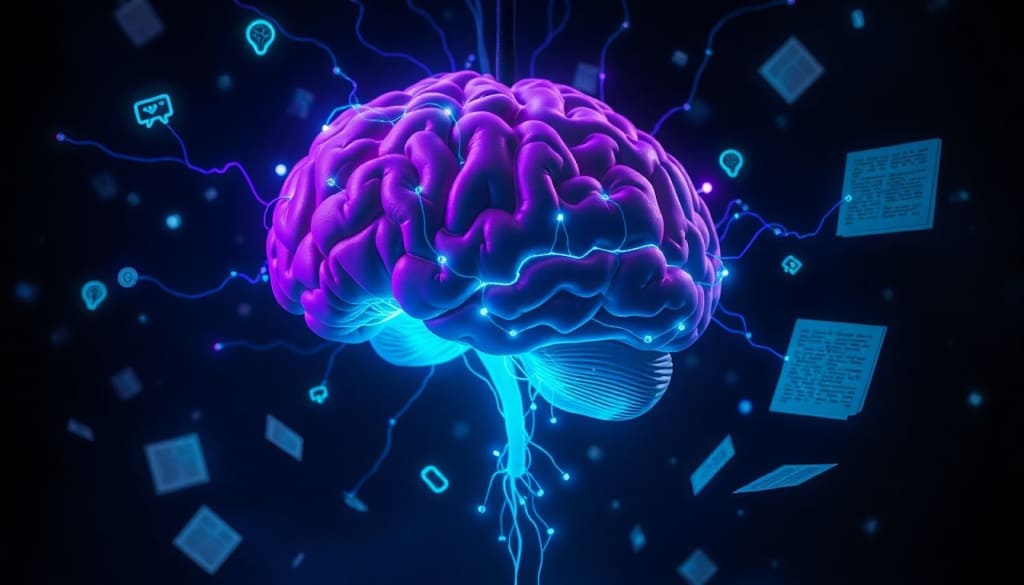
Introduction
In today's world, we're bombarded with words everywhere. From news articles to social media posts, reading has become a daily must. But have you ever wondered if our brains are really meant to handle all this information? Too much reading can wear us down, cause stress, and even hurt our thinking skills. So, ask yourself—are we truly built to consume so much written content? You might be surprised to learn that our brains were never designed for endless reading. Understanding this can help us protect our minds and find better ways to learn and grow.
The Evolutionary Roots of Human Cognition and Reading
How Our Brains Developed Before the Era of Text
Long ago, human brains focused on survival. We needed to find food, protect ourselves, build social bonds, and sense danger. Our senses—seeing, hearing, and feeling—were much more important than reading. Ancient minds had no word to process because writing didn’t exist yet. Instead, they relied on images, sounds, and direct experiences. It’s clear that the brain’s main job was to help us survive, not read books or scroll social feeds.
Brain Structures Involved in Reading and Their Limitations
When we read today, several parts of the brain spring into action. Broca’s and Wernicke’s areas help us understand and produce language. The visual cortex processes words we see on a page or screen. Working memory holds onto information just long enough for us to make sense of it. But these systems have limits. Trying to read for hours at a stretch can cause mental fatigue because our brains weren’t built for endless multitasking.
Why the Brain Is Not Optimized for Extensive Reading
Compare reading to talking with a friend. Our brains handle simple conversations well but struggle with pages of text. Studies show that after a certain point, comprehension drops, and fatigue sets in. Why? Because our neural wiring is meant for brief, meaningful exchanges—not nonstop streams of words. This mismatch makes long reading sessions harder than they seem and can leave us feeling drained.
The Hidden Costs of Excessive Reading
Cognitive Overload and Mental Fatigue
When you cram too much info into your mind, your brain gets overwhelmed. Cognitive load theory explains this: too much info hampers learning. Prolonged reading drains mental energy, leading to exhaustion. Think of your brain like a battery—overuse without recharge will leave you flat and unable to focus.
Decline in Critical Thinking and Retention
Reading a lot doesn’t always mean understanding more. Sometimes, it just leads to surface-level learning. When we skim and browse, our brains don’t make deep connections. Instead, we forget quickly. Academic research shows that superficial reading weakens your ability to analyze and remember important details.
Impact on Mental Health
Constantly consuming information can increase stress and anxiety. The more we scroll or read endlessly, the more overwhelmed we become. Psychologists warn this overload can cause feelings of burnout. Your mind needs peace and space to process, not perpetual streams of words.
The Rise of Digital Distraction and Its Effects
Digital devices flood our minds with notifications, ads, and pop-ups. Endless scrolling eats away at our attention span. Real-world examples reveal that people who spend more time on social media often struggle to focus or remember things. Distraction fragments our minds, making it harder to engage deeply with content.
Recognizing When Reading Becomes a Hindrance
Signs of Cognitive Burnout
Feeling foggy? Struggling to understand simple ideas? Experiencing irritability or headache? These are signs your brain is overwhelmed. When reading causes these feelings, it’s time to slow down.
Situations Where Reading May Harm Productivity
Sometimes, reading pulls you away from real action. Spending hours reading emails or reports can stop you from doing important tasks. Knowing when reading helps and when it hinders is key to managing your time better.
The Role of Digital Media and Social Networks
Scrolling through feeds might seem harmless, but it can steal focus. Instead of structured reading, social media offers quick bites of info. This overload makes it difficult to concentrate or remember what you learned. Too much digital distraction destroys your ability to focus deeply.
Strategies to Protect and Optimize Your Brain’s Reading Capacity
Prioritize Quality Over Quantity
Choose meaningful content that teaches or inspires you. Instead of reading everything, pick a few good sources. Schedule focused reading times without multitasking. This saves mental energy and improves understanding.
Incorporate Visual and Experiential Learning
Use videos, pictures, and hands-on tasks. These methods make ideas stick better. For example, watching a tutorial is often easier than reading instructions. They help your brain remember more and understand faster.
Limit Digital Distractions
Turn off notifications. Use apps to block distracting sites during reading time. Create a quiet, focused environment. Setting rules for your digital habits helps your brain stay sharp and engaged.
Practice Active Reading and Reflection
Take notes, underline key points, or teach what you learned. Summarizing ideas helps cement them in your mind. Reflection turns fleeting information into lasting knowledge.
Embrace Rest and Mental Breaks
Schedule regular pauses during reading. Breaks refresh your mind and prevent fatigue. Research shows downtime helps your brain process and store information better.
Reimagining Reading in the Digital Age
Embracing Changing Media and Information Consumption
Switching between reading, watching videos, and listening can improve learning. Using different formats keeps your mind engaged and reduces overload. Try combining methods for better results.
Developing a Sustainable Reading Practice
Balance reading with action and thoughts. Limit daily reading time and focus on the most useful content. Make sure your reading is purposeful and manageable.
The Future of Cognitive Health and Literacy
New tools like apps and digital platforms can help you avoid overload. Experts suggest setting healthy boundaries around content consumption. Protect your mind from burnout while still gaining knowledge.
Conclusion
Your brain was never built for endless reading. Overloading it leads to fatigue, reduced understanding, and stress. To stay sharp, choose quality content, take breaks, and limit digital distractions. Reframe how you consume information—enjoy more visual and active learning. By understanding your brain’s limits, you can boost your thinking, stay healthy, and learn smarter. Rethink your reading habits today, and give your mind the care it needs in this fast-paced digital world.
About the Creator
vijay sam
🚀 Sharing proven affiliate marketing tips, smartlink strategies, and traffic hacks that convert. Follow for insights, tools, and real results to help you earn smarter—whether you're just starting or scaling up!
Why You Should Write Love Letters to Yourself
The term of endearment hyperbole, ‘I Love You to the Moon and Back’, which I often tell my daughter, with the additional elongated: ‘and back again, beyond infinity’, is believed to have originated from Sam McBratney’s 1994 children’s book: ‘Guess How Much I Love You’.
By Chantal Christie Weiss2 days ago in Writers
Rachel Reviews: The Spiral Archive by Pieter Hendrik
It's difficult for me to know where to start with a review of this book as it was, for me, an entirely unique experience and one that I'll probably never have again. I don't want that to be interpreted as unenjoyable but it has left me scratching my head a little and ruminating on its content, its themes and its characters.
By Rachel Deemingabout 6 hours ago in BookClub




Comments
There are no comments for this story
Be the first to respond and start the conversation.