
Wudang Mountains
The Sacred Heart of Taoism and Birthplace of Tai Chi

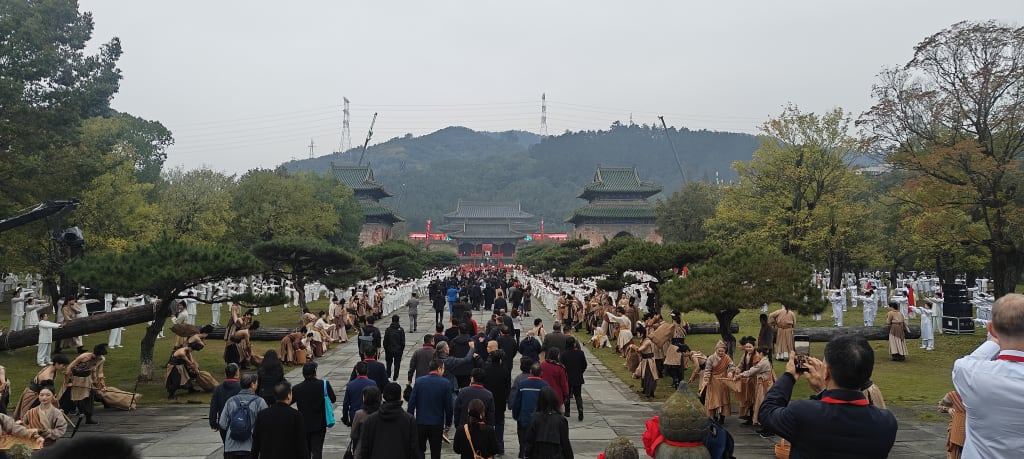
Nestled in the northwestern reaches of Hubei Province lies one of China’s most mystical and spiritually charged destinations — the Wudang Mountains. Rising gracefully above the city of Shiyan, this UNESCO World Heritage Site is celebrated not only as the birthplace of Tai Chi and a center of Taoist philosophy, but also as a sanctuary of natural healing. With peaks soaring over 1,500 meters, Wudang’s high-altitude air offers remarkable benefits for the body, mind, and spirit.
For centuries, pilgrims, scholars, and martial artists have journeyed to Wudang in search of harmony — the core principle of Taoism, which teaches alignment between humanity and the natural world. The mountains are dotted with over 30 ancient temples and monasteries, including the famous Golden Hall, built entirely of bronze during the Ming Dynasty. Here, the mountain air carries the soft echo of wind chimes, chanting monks, and rustling leaves — an atmosphere that feels suspended between heaven and earth.
But beyond its spiritual magnetism, modern visitors are discovering that Wudang’s serene environment has therapeutic qualities rarely found in today’s polluted urban centers. The combination of high elevation, low industrial activity, and dense forest coverage makes the region’s air exceptionally pure. Studies of high-altitude areas in central China have shown significantly lower concentrations of airborne pollutants and allergens, offering relief for those who suffer from respiratory issues, skin irritations, and sleep disorders.
At 1,500 meters above sea level, oxygen levels are slightly reduced, which can help regulate breathing patterns and encourage deeper, slower sleep cycles. Locals often say, “The higher you rest, the clearer your dreams.” For many visitors, even a short stay on Wudang leads to more restful nights, glowing skin, and a sense of rejuvenation that lingers long after returning home.
The mountain’s mineral-rich springs and herbal diversity also play a key role in traditional healing practices. Taoist monks have long used native plants such as lingzhi (reishi mushroom) and ginseng in their elixirs, believing these to promote vitality and inner balance. In recent years, wellness retreats and traditional medicine centers have emerged around the area, combining ancient Taoist knowledge with modern spa therapies.
Of course, no visit to Wudang would be complete without witnessing or practicing Tai Chi — the flowing martial art that originated here more than 600 years ago. Watching practitioners move gracefully at sunrise, surrounded by drifting mist and temple bells, is a reminder that health in Taoist philosophy is not merely physical, but deeply spiritual. Movement, breath, and awareness merge into one seamless expression of life itself.
In an age defined by constant noise and digital overload, the Wudang Mountains stand as a living testament to stillness and balance. Whether you seek spiritual renewal, physical healing, or simply a moment of peace, Wudang offers a rare chance to breathe deeply — to reconnect with nature, and perhaps, with your own center of calm.
About the Creator
The Ireland Sino Institute
All about the Europe China Connection
Keep reading
More stories from writers in Writers and other communities.
When a Request for Evidence Changes the Direction of an Immigration Case
For many people navigating the United States immigration system, a Request for Evidence can arrive unexpectedly. The notice often brings worry, even when the application has been prepared carefully. In reality, an RFE is a pause in the review process, not a rejection. It signals that an officer needs more clarity before moving forward.
By Sheila Danzigabout 22 hours ago in Writers




Comments
There are no comments for this story
Be the first to respond and start the conversation.