
Wonders Of AI in Medicine
How AI technology will effect the whole medicine field
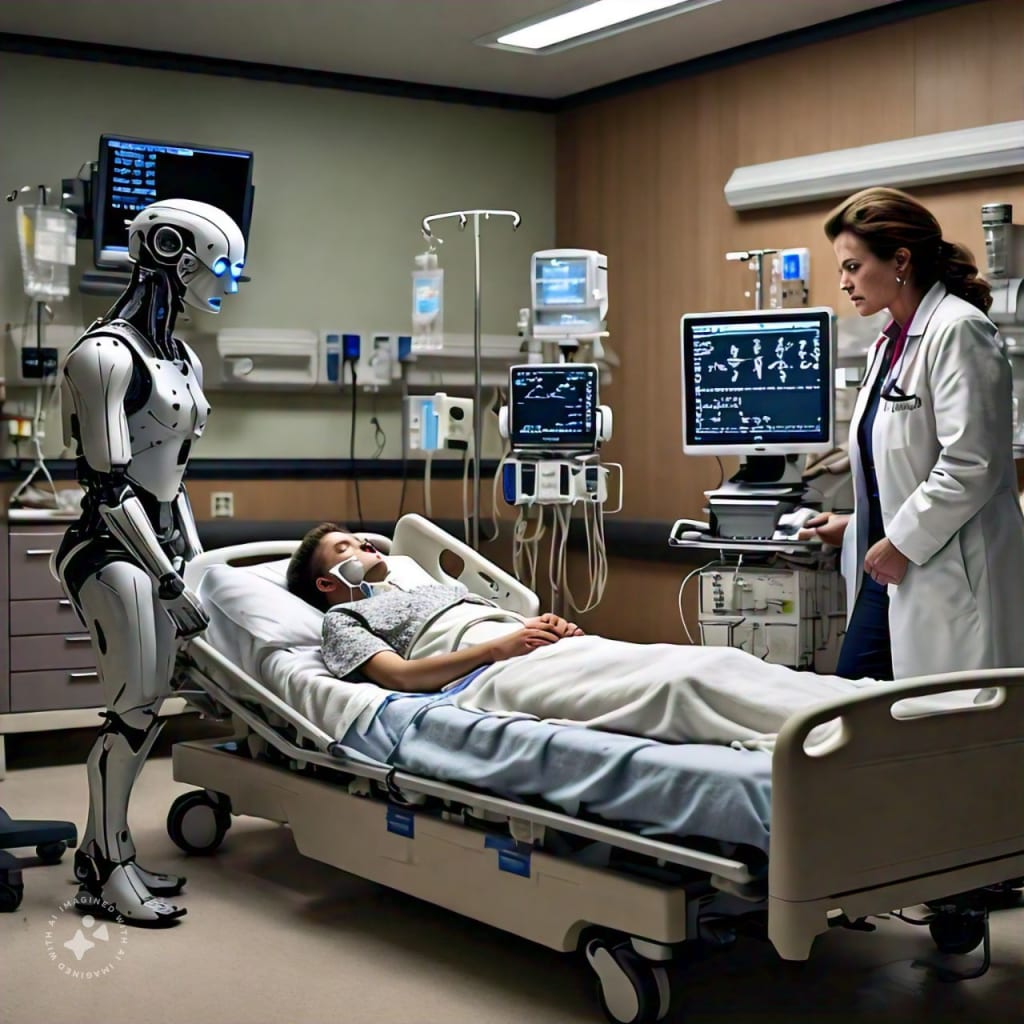
The future of medicine and technology is on the cusp of a revolution, driven by the convergence of artificial intelligence (AI) and robotics. This synergy promises to transform the healthcare landscape, making it more efficient, effective, and patient-centered. In this new era, AI will play a vital role in personalizing medicine, streamlining clinical workflows, and enhancing patient outcomes.
As AI algorithms become increasingly sophisticated, they will enable personalized medicine on an unprecedented scale. By analyzing individual genetic profiles, medical histories, and lifestyle factors, AI will help tailor treatments to specific patient needs. This targeted approach will lead to more effective disease management, reduced side effects, and improved patient satisfaction. Furthermore, AI-assisted diagnostics will enable earlier disease detection, allowing for timely interventions and better health outcomes.
Robotic systems will also play a crucial role in the future of medicine. Next-generation robots will assist surgeons with enhanced precision, dexterity, and minimal invasiveness. These robotic systems will enable complex procedures to be performed with greater accuracy, reducing recovery times and scarring. Additionally, robots will aid in patient care, assisting with tasks such as rehabilitation, mobility, and vital sign monitoring.
The integration of AI and robotics will also transform the field of diagnostics. AI-powered algorithms will analyze medical images, lab results, and patient data to identify patterns and anomalies. This will enable earlier disease detection, more accurate diagnoses, and targeted treatments. Moreover, AI-assisted diagnostics will reduce the workload of healthcare professionals, allowing them to focus on high-value tasks and patient care.
Virtual nursing assistants will become increasingly prevalent, using AI-powered chatbots to monitor patients remotely and provide real-time support. These virtual assistants will help patients manage chronic conditions, adhere to treatment plans, and access medical information. By providing personalized support and guidance, virtual nursing assistants will enhance patient engagement, empowerment, and health outcomes.
The discovery of new medications will also be accelerated by AI. By analyzing vast chemical compounds and identifying potential candidates, AI will streamline the drug development process. This will lead to faster discovery of novel treatments, improved patient outcomes, and enhanced quality of life. Moreover, AI will help optimize clinical trials, identifying the most effective treatments and minimizing side effects.
Robot-assisted rehabilitation will become increasingly important, as robots aid patients in regaining mobility, strength, and function. These robots will provide personalized therapy, adapting to individual patient needs and abilities. By enhancing rehabilitation outcomes, robots will improve patient quality of life, reduce healthcare costs, and minimize long-term disability.
Telemedicine will continue to evolve, with AI-powered platforms enhancing remote consultations and expanding access to healthcare services. AI will enable real-time language translation, emotion recognition, and sentiment analysis, improving patient-provider communication and empathy. Furthermore, AI-powered chatbots will provide patients with personalized health information, support, and guidance, enhancing patient engagement and empowerment.
Predictive analytics will play a vital role in the future of medicine, as AI analyzes medical data to forecast patient outcomes. By identifying high-risk patients and predicting disease progression, AI will enable proactive interventions, reducing hospitalizations and improving health outcomes. Moreover, predictive analytics will optimize resource allocation, streamlining clinical workflows and reducing healthcare costs.
Smart prosthetics will revolutionize the field of rehabilitation, with AI-controlled prosthetics mimicking natural movement and sensation. These advanced prosthetics will enhance patient mobility, independence, and quality of life, restoring individuals to full functionality. Furthermore, AI-powered prosthetics will enable real-time monitoring, adjusting to individual patient needs and preferences.
Fially, continuous monitoring will become the norm, with wearable devices and sensors tracking vital signs, detecting potential health issues before they become severe. AI-powered analytics will analyze this data, identifying patterns and anomalies, and enabling timely interventions. By enhancing patient monitoring and surveillance, AI will reduce hospitalizations, improve health outcomes, and save countless lives.
In conclusion, the future of medicine and technology is exciting and rapidly evolving. The convergence of AI and robotics promises to transform healthcare, making it more efficient, effective, and patient-centered. As these technologies continue to advance, we can expect improved patient outcomes, enhanced quality of life, and a brighter future for all.
About the Creator
Keep reading
More stories from iqra maryyam and writers in Writers and other communities.
The Double-Edged Sword of Technology
Technology has revolutionized our lives, transforming the way we communicate, work, and interact with the world around us. From smartphones to artificial intelligence, technological advancements have made our lives easier, faster, and more convenient. However, as we continue to push the boundaries of innovation, we must also acknowledge the potential risks and consequences.
By iqra maryyamabout a year ago in Writers
It's Winter
Anne Bernays and Pamela Painter — What If? Writing Exercise for Fiction Writers prompts The Exercise —Write a scene involving two characters. Have the point-of-view character presume something entirely different about the situation from what the other character's overt behavior seems to imply. For example, a landlord comes to visit, and the tenant suspects that it isn't a visit but an inspection. Make up several situations in which one character can fantasize or project or suspect or even fear what another character is thinking. The Objective - To show how your characters can use their imaginations to interpret the behavior and dialogue of other characters.
By Denise E Lindquist19 days ago in Writers
The Devil's Cut
“Comrade, finally you’re awake.” The voice was smooth, sensual. A flickering incandescent bar was all that lit the white, sterile room. All Vladimir remembered was everything going black. He tried to move his arms and found them strapped to the gurney.
By Matthew J. Fromm7 days ago in Fiction



Comments (1)
Wonderful tech.