
William Shakespeare Beyond the Stage: A Journey Through His Poems
How Shakespeare’s Poetry Shaped Later Writers

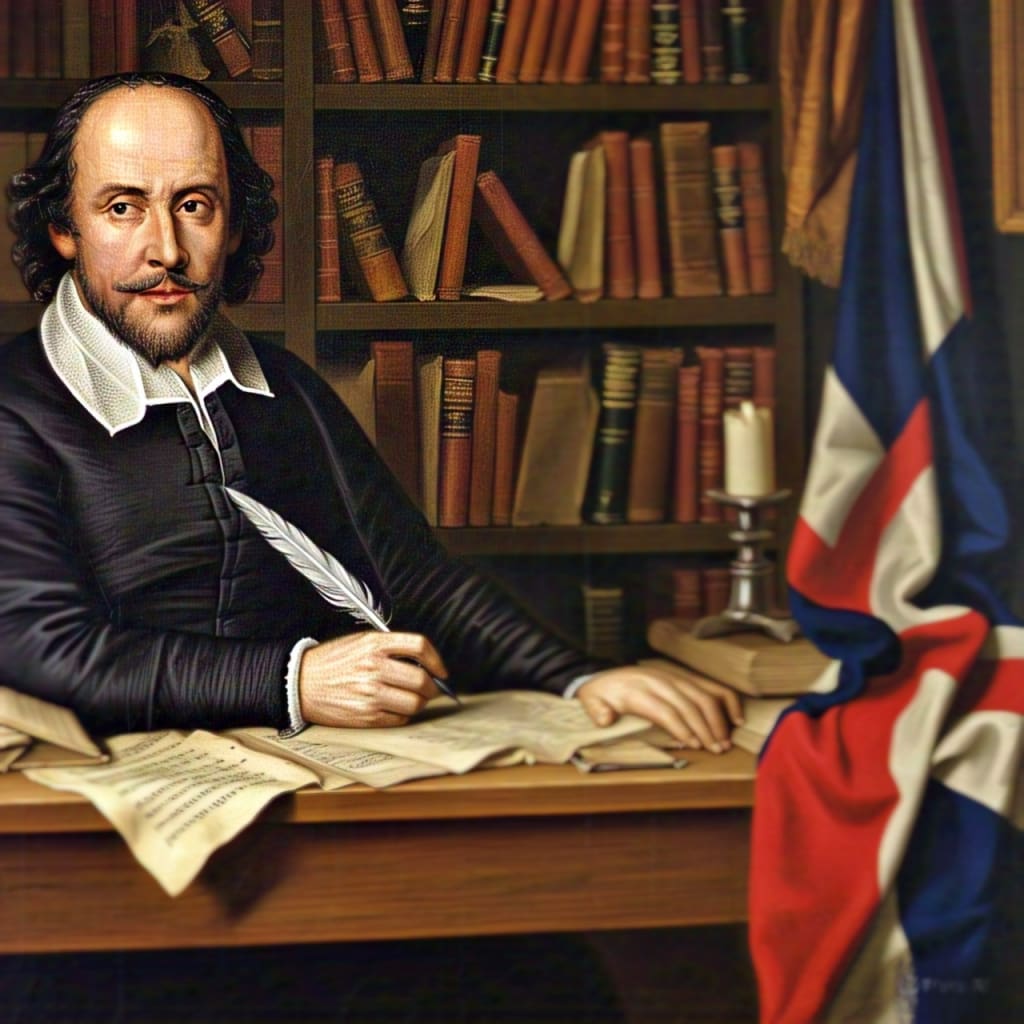
How Shakespeare's Poetry Affected Later Writers
William Shakespeare is world-famous as the greatest playwright of the English language, but his reputation extends far beyond the stage. His poetry—particularly his sonnets and narrative poems—exhibits a depth of feeling, mastery of language, and philosophical insight that has influenced generations of writers over centuries. While Hamlet, Macbeth, and Romeo and Juliet command theatre stages, his poems have quietly shaped the literary world, inspiring poets and novelists.
The Enduring Radiance of Shakespeare's Sonnets
Shakespeare's 154 sonnets are the most studied and admired poems in English language and literature. Written in iambic pentameter and exhibiting the ABABCDCDEFEFGG pattern of rhyme, they consider love, beauty, time, death, and artistic legacy.
Consider Sonnet 18, more famously known as "Shall I compare thee to a summer's day?":
Shall I compare thee to a summer's day?
Thou art more lovely and more temperate:
Rude winds do blow the fair-haired buds of May,
And often whiten summer's lease too early date.
Shakespeare here immortalizes his beloved in poetry, saying that poetry is capable of overcoming time itself. This, that art gives one immortality, was something later Romantic poets like John Keats used again in Ode on a Grecian Urn: "Beauty is truth, truth beauty,—that is all / Ye know on earth, and all ye need to know."
The Dark Lady and the Fair Youth: A Mystery That Inspired Generations
Shakespeare's sonnets introduce two enigmatic figures: the Fair Youth, a dashing young man, and the Dark Lady, a dark, sensual woman. The emotional turmoil in these poems—between devotion and resentment—has driven boundless interpretation.
Sonnet 130 ("My mistress' eyes are nothing like the sun") subverts traditional love poetry by avoiding false comparison:
My mistress' eyes are nothing like the sun;
Coral is far more red than her lips' red;
If snow be white, why are her breasts dun;
If hairs be wires, black wires do grow on her head.
This realistic, near-satirical reading of love influenced the later work of writers like Lord Byron and even present-day poets who avoid idealized romance for sheer candor.
"Mature" narrative
"Venus and Adonis" and "The Rape of Lucrece": Mastery of narrative
Apart from sonnets, Shakespeare composed two significant narrative poems: Venus and Adonis (1593) and The Rape of Lucrece (1594). These poems demonstrate his narrative ability beyond drama.
Venus and Adonis, that sensual and tragic reworking of the mythological tale, blends eroticism and despair. Its sensual imagery and emotional force influenced John Milton and the Metaphysical poets. Meanwhile, The Rape of Lucrece, darker in its investigation of virtue and violation, anticipates the psychological complexity of later poems like Alexander Pope's The Rape of the Lock and even modern feminist reinterpretations of classical myths.
Shakespeare's Influence on the Romantics
These four 19th-century Romantic poets—Wordsworth, Coleridge, Keats, and Shelley—shared Shakespeare's concerns with nature and human folly and were also reminiscent of Shakespeare in their use of Shakespearean structure and style.
Keats' "When I Have Fears That I May Cease to Be" recalled the mortal dread in Shakespearean sonnets, and Wordsworth's "The World Is Too Much With Us" recalled the Shakespearean fascination with nature.
Modern and Contemporary Echoes
Shakespeare's verse still shapes modern literature. T.S. Eliot's The Waste Land borrows fragmented, introspective voices in the style of Shakespeare's soliloquies. Sylvia Plath and Ted Hughes were obsessed with his love and misery. Even today, authors like Carol Ann Duffy rework Shakespearean motifs for contemporary readers.
Conclusion: A Legacy in Verse
Though best known for his plays, Shakespeare's own poetry is a cornerstone of literary legacy. His exploration of the strength of human emotion, the fleeting nature of life, and the power of words to endure the passage of time has left an indelible stamp on the quills of writers throughout the centuries. From the Romantic to the modernist, his poems have remained a source of inspiration, illustrating Shakespeare's genius was not solely confined to the theatre—but thrived in the close, enduring beauty of his poems.
About the Creator
Am@n Khan
I'm educational storyteller passionate about turning knowledge into engaging narratives.
I write about topics like science, history and life skills.
Contact
WhatsApp : +923336369634
Worth the Wait: Puerto Viejo, Costa Rica
Beach bumming in a small Caribbean beach town sounded like a perfect way to end our 6-month trip through Mexico and Central America. Or so we thought. The foul, fishy stench of rotten seaweed hit our nostrils as we stepped from the cramped bus and looked out at a rather depressing, empty, and underwhelming black sand beach. It was pouring with rain, and we had to quickly fish out our ponchos. We thought, this couldn’t be it, could it?
By Sh*t Happens - Lost Girl Travel6 days ago in Wander




Comments
There are no comments for this story
Be the first to respond and start the conversation.