
What Facilities Trainees Get While Undergoing Medical and Surgical Training?
Health

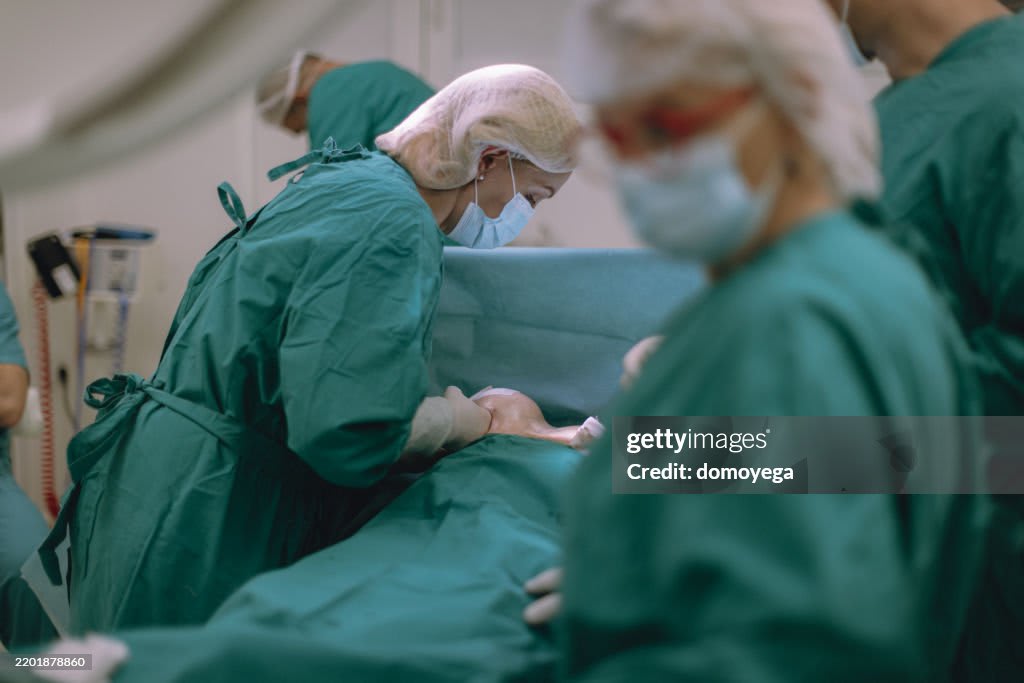
Healthcare workers can get the information, abilities, and real-world experience when they undergo the right medical and surgical training. Providers ensure competent and secure patient care. Indeed, this training is a complex procedure that depends on a range of specialized facilities. The upcoming generation of health professionals will reap a host of benefits due to these facilities. The services range from conventional learning settings to state-of-the-art simulation centers.
Different Types of Laboratories
Medical colleges and universities are the foundation of surgical and medical education. These institutions offer the fundamental scientific information and theoretical framework needed for clinical practice. Usually, these establishments have a number of important laboratories.
Lecture halls and classrooms are essential venues for didactic instruction. Participants can learn about anatomy, physiology, pharmacology, pathology, and other core medical sciences.
Anatomy Labs
These laboratories are essential for comprehending the human body's complex structure. They typically entail the cadavers’ dissection, which offers priceless practical experience in recognizing and comprehending anatomical linkages. To improve learning, contemporary anatomy labs also use 3D imaging and virtual dissection tables.
Microscopy Labs
In these labs, students gain fundamental knowledge of pathology, histology, and microbiology while learning how to utilize microscopes to study tissues, cells, and microbes.
Physiology & Biochemistry Labs
These labs give students the chance to perform various experiments. They can gain knowledge about the chemical reactions that take place within living things. You will acquire in-depth information about the organ, tissue, and cellular functions of the human body.
Which are the Main Units for Specialized Surgical Training?
Surgical training necessitates specialized facilities. The objective is to help trainees enhance their decision-making, analytical, and technical skills.
• Surgical Skills Labs: These labs give surgical trainees a place to practice basic surgical techniques. Aside from cadaver hands on training labs, the use of animal tissues and VR simulators is common. They have operating tables, surgical instruments, and video recording technology for evaluation and feedback.
• Wet Labs: Using perfused cadavers or animal models, these labs enable more sophisticated surgical training. They offer a more realistic setting for practicing intricate surgical techniques and procedures under strict supervision.
• Training Centers for Minimally Invasive Surgery (MIS): Laparoscopic and robotic surgery have become more prevalent than ever. The specialized centers concentrate on teaching doctors these cutting-edge methods utilizing inanimate models and simulators.
• Cadaver Surgical Dissection Labs: These labs give surgical trainees the opportunity to practice surgical techniques and procedures on human cadavers. Many aspirants undergo EMT fire department Paramedics cadaver training. They gain expertise in spatial orientation and tissue handling. In contrast, anatomy laboratories concentrate on teaching normal anatomy.
A wide range of advanced facilities are necessary to train surgical and medical experts. Every kind of facility is essential to ensure that healthcare providers are equipped to handle intricate problems.
Trainees gain the basic knowledge taught in anatomy labs and lecture halls and practical skills developed in simulation centers and teaching hospitals. They learn the effective use of contemporary medicine and provide patients with top-notch care. These training settings are still being shaped by the fusion of cutting-edge technologies and conventional approaches, which eventually advance healthcare.
About the Creator
Keep reading
More stories from writers in Writers and other communities.
How AI Training Datasets Are Transforming Business Intelligence, Brand Control, and Revenue Growth
Artificial intelligence is no longer a differentiator—it’s a baseline. What separates high-growth companies from average performers in 2026 is how well their AI is trained.
By Retail Gators4 days ago in Writers
Instructions Included Challenge Winners
For the Instructions Included challenge, we asked writers to tell a story through instructions and to trust the form to carry what could not be said outright. Across the top entries, that trust paid off in many different ways.
By Vocal Curation Team3 days ago in Resources




Comments
There are no comments for this story
Be the first to respond and start the conversation.