
What Are the Different Types of Editing, and Which Does My Book Need?
Essential Guide to Perfecting Your Manuscript: Choosing the Right Editing Services for Your Book

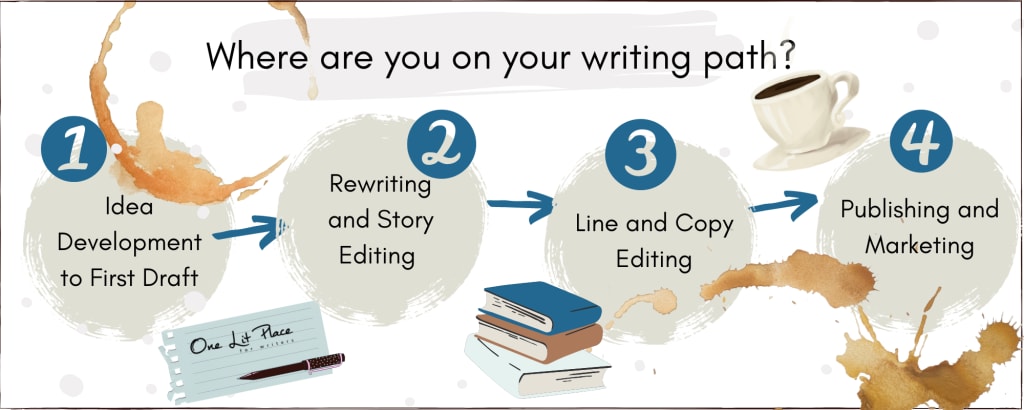
Embarking on the journey of writing a book is an exhilarating endeavor, filled with creative expression and personal growth. However, once the initial manuscript is complete, the next critical step is editing—a stage that ensures the refinement and clarity of your work. Understanding the different types of editing and identifying the right one for your book can dramatically enhance its quality and reader reception. Here's an overview of the main types of editing and guidance on determining the best fit for your manuscript.
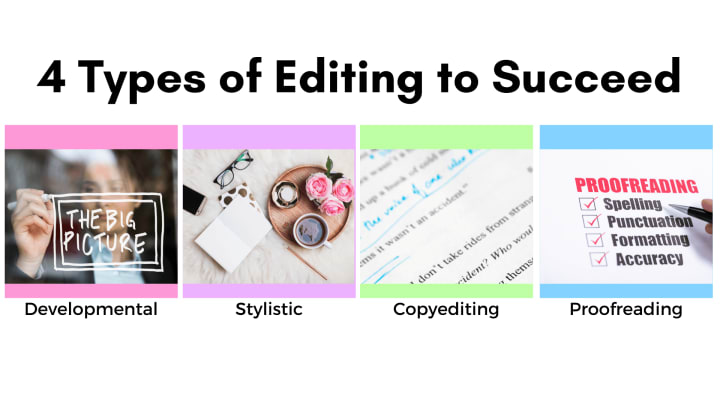
1. Developmental Editing
What it is: Developmental editing, also known as structural or substantive editing, involves evaluating and shaping the manuscript to improve its organization and content. This type of editing addresses big-picture elements such as plot structure, character development, pacing, and thematic coherence in fiction. For non-fiction, it focuses on argument structure, clarity of ideas, and logical progression.
When you need it: This type of editing is crucial during the early drafts if you find that your manuscript lacks a clear direction or if feedback from beta readers suggests that parts of your book are confusing or underdeveloped. Developmental editing is essential for manuscripts that need significant reworking of the narrative structure or argument flow.
2. Line Editing
What it is: Line editing sharpens your manuscript's language by focusing on paragraph structure, sentence flow, word choice, and the overall style of writing. It enhances the way you communicate your story or information without altering the manuscript's meaning.
When you need it: Opt for line editing if your manuscript is well-structured but needs refinement to ensure clarity, tone, and style are consistent and engaging. It's particularly helpful if you're looking to enhance the voice and readability of your text.
3. Copy Editing
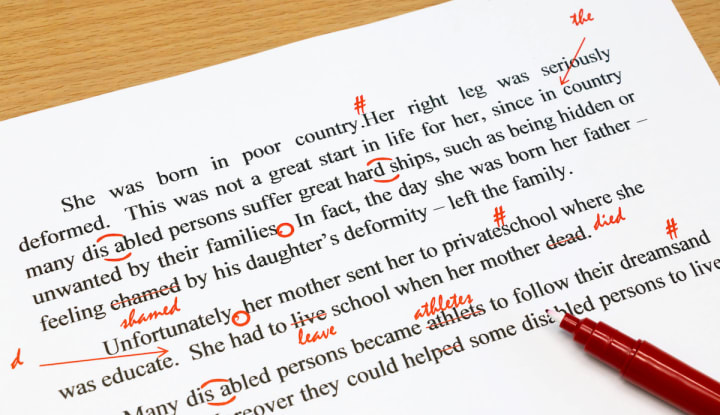
What it is: Copy editing is a detailed process that involves correcting spelling, grammar, punctuation, and syntax errors. It also ensures consistency in terminology, names, and locations as well as a consistent style and format.
When you need it: Copy editing is suitable for manuscripts that have been organized and stylized effectively but need a final polish to eliminate errors and inconsistencies. This step is crucial before proofreading and should not be skipped if you aim for a professional-quality text.
4. Proofreading
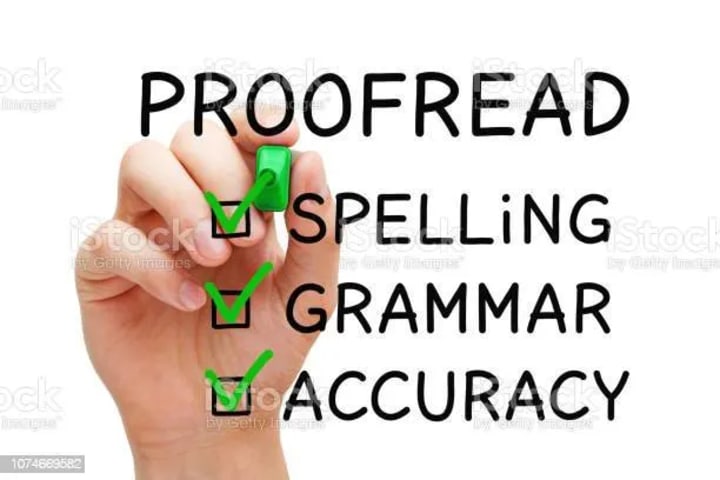
What it is: Proofreading is the final stage of editing, focusing on catching surface errors such as misspellings, typographical mistakes, and issues with punctuation and grammar. It’s the last line of defense to ensure that the manuscript is ready for publication.
When you need it: Every manuscript should go through proofreading after all other edits have been made. It’s essential for ensuring that no minor errors are left in the text, which could detract from the manuscript’s professionalism.
5. Fact-Checking
What it is: For non-fiction works, especially those that deal with technical subjects, historical narratives, or specific data, fact-checking is vital. This process verifies the factual accuracy of the information presented in the manuscript.
When you need it: Engage in fact-checking if your book relies heavily on accurate details. This is critical for maintaining credibility, especially for works that aim to educate or inform.
Choosing the Right Type of Editing
Selecting the right type of editing depends largely on the current state of your manuscript and your goals as an author. Here are some tips to help you decide:
Early Drafts: If you’re still shaping your manuscript, developmental editing can provide you with valuable insights into how to improve the structure and content.
Later Drafts: For manuscripts that are well-developed but could benefit from language enhancement, line editing and copy editing are appropriate.
Pre-Publication: Prior to publishing, every manuscript should undergo at least one copy editing and proofreading round to polish the text and ensure it is error-free.
Conclusion
Editing is not a one-size-fits-all process. Each type of editing serves a unique purpose in the lifecycle of a manuscript. By understanding the distinct roles of developmental editing, line editing, copy editing, proofreading, and fact-checking, you can better prepare your book for the journey from manuscript to published work. Engaging the right type of editing at the appropriate stage not only enhances the quality of your book but also ensures that it communicates your vision effectively and professionally to your readers.
About the Creator
Hannah miller
I’m an author dedicated to weaving engaging narratives across a variety of genres to resonate with readers.
Keep reading
More stories from Hannah miller and writers in Writers and other communities.
What Makes a Book Cover Stand Out in a Competitive Market?
In today’s overcrowded publishing landscape, where countless titles vie for readers' attention, a book cover serves as a vital tool for both branding and marketing. A standout book cover must effectively combine several critical elements: originality, clarity, emotional resonance, and appropriateness for the genre, as well as a professional finish.
By Hannah millerabout a year ago in Writers
Silent Struggle
No one noticed the moment his life began to feel heavy. There was no single disaster, no dramatic fall. Everything happened slowly—quietly—like dust settling on furniture no one cared to clean. From the outside, his life looked normal. He woke up, went to work, smiled when needed, and returned home exhausted. But inside, a silent struggle was growing every single day. His name was Hamza. Hamza used to believe effort was always rewarded. As a child, he was told that if you worked hard, life would eventually open its doors for you. For a long time, he held onto that belief. He studied late into the night, sacrificed weekends, and stayed disciplined when others took shortcuts. But as years passed, reality felt cruelly different. People with less effort moved ahead. Opportunities passed him by. Promises turned into excuses. At work, Hamza was dependable—but invisible. When projects succeeded, others were praised. When mistakes happened, eyes quietly turned toward him. He never complained. He didn’t want to be seen as weak or ungrateful. Instead, he stayed silent. That silence slowly became his habit. At home, expectations followed him like a shadow. Everyone assumed he was “doing fine” because he never spoke about his struggles. Friends stopped asking how he was. Conversations became shallow. No one knew how many nights he lay awake staring at the ceiling, wondering if something was wrong with him. The hardest part wasn’t failure. It was feeling unseen. One night, after another exhausting day, Hamza sat alone in his room. The city outside was loud, full of people chasing dreams, celebrating small wins, living loudly. Inside his room, everything felt still. He picked up his phone and scrolled through social media. Success stories. Smiling faces. Motivational quotes. Each post felt like a reminder of how far behind he was. His chest tightened. A thought crept into his mind—soft, dangerous, and persistent. “Maybe I’m not meant for more.” That thought scared him. Not because it hurt—but because it felt believable. For the first time, Hamza considered giving up. Not dramatically. Not by quitting everything. Just… stopping the effort. Doing the bare minimum. Accepting an ordinary life without expectations. No one would notice anyway. But something held him back. It wasn’t hope. It wasn’t motivation. It was stubbornness. A quiet refusal to completely let go. The next morning, nothing changed externally. The same routine. The same people. The same silence. But inside Hamza made a small decision: “I’ll keep going—even if nothing changes.” He stopped waiting for encouragement. He stopped seeking validation. He focused only on improving himself, one small step at a time. He learned after work when others relaxed. He practiced skills no one asked him to learn. He failed quietly and corrected himself without announcing it. Some days, he felt strong. Most days, he felt tired. But he showed up anyway. Weeks turned into months. There were still no rewards. No applause. No sudden success. But something subtle was happening—something Hamza didn’t notice at first. He was becoming resilient. Things that once broke his confidence no longer shook him as much. Rejection still hurt, but it didn’t stop him. Criticism no longer crushed him; it taught him. Silence, once painful, became his training ground. One evening, a major issue arose at his workplace. A complicated problem that others avoided because failure would be visible. Managers were tense. Deadlines were tight. Blame was already being prepared. Hamza didn’t speak up immediately. He simply started working. He stayed late. He researched. He tested ideas. He made mistakes and fixed them. There were moments he doubted himself. Moments when fear whispered, “You’re not good enough for this.” But he answered back with action. Days later, the problem was solved—not perfectly, but effectively. This time, people noticed. Not with applause. Not with excitement. But with curiosity. “Who handled this?” “When did he learn that?” “Why didn’t we see this before?” Hamza didn’t feel proud in the way he expected. Instead, he felt calm. Grounded. Secure in a way that didn’t depend on others. When his manager finally called him in and acknowledged his work, Hamza thanked him politely. But inside, he knew the truth: This moment wasn’t built overnight. It was built during silent nights. Unseen effort. Unrecognized discipline. Life hadn’t ignored him. Life had been watching. Testing whether he would keep going without praise. Years later, Hamza looked back at the version of himself who almost quit. The man who felt invisible. The man who believed silence meant failure. He wished he could tell him one thing: “Your struggle wasn’t wasted. It was shaping you.” Not everyone’s journey is loud. Not every victory is celebrated. Some people are built quietly—strong enough to stand when others fall. If you are struggling silently today, know this: You are not behind. You are not invisible. You are not weak. You are being prepared. And one day, without warning, life will notice. Final Line (Powerful Ending): The strongest people are often the ones no one sees fighting—but they keep going anyway.
By Inayat khanabout 14 hours ago in Writers




Comments
There are no comments for this story
Be the first to respond and start the conversation.