
What are the different stages of editing, and how do they improve the manuscript?
Transforming Ideas into Polished Publications: A Guide to the Essential Editing Phases

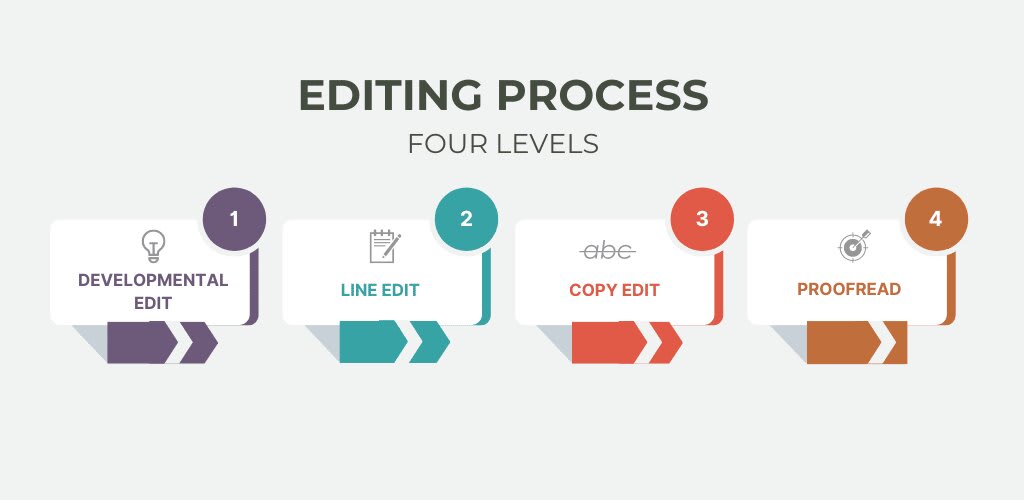
Editing is an essential part of the publication process, ensuring that a manuscript is coherent, engaging, and free of errors before it reaches its audience. This process is typically divided into several distinct stages, each focusing on different aspects of the text. Understanding these stages can help authors and editors alike refine a manuscript effectively. Here’s a detailed look at the different stages of editing and how each contributes to improving a manuscript:
1. Developmental Editing
Purpose: To shape the big picture.
Focus: Developmental editing occurs at the beginning of the editing process, focusing on the structure, content, and flow of the manuscript. This stage addresses questions like:
- Does the plot make sense?
- Are the characters well-developed and believable?
- Is the narrative compelling and consistent?
- Are there any gaps in logic or unresolved storylines?
Impact: This type of editing helps authors solidify their ideas and organize their thoughts cohesively. It can involve major changes such as reordering chapters, expanding or trimming sections of the text, and refining the narrative voice.
2. Content Editing (or Substantive Editing)
Purpose: To refine the structure and content.
Focus: Content editing digs deeper into the way information is presented within the manuscript. It assesses the clarity, accuracy, and potential legal implications of the content. Editors at this stage look at:
- Redundancies and repetitiveness
- Clarity and flow of individual paragraphs and sentences
- Overall tone and style consistency
- Factual accuracy and inconsistencies
Impact: Content editing ensures the manuscript communicates its message clearly and effectively. This stage is crucial for maintaining the manuscript’s integrity and aligning it with the audience’s expectations and the author’s goals.
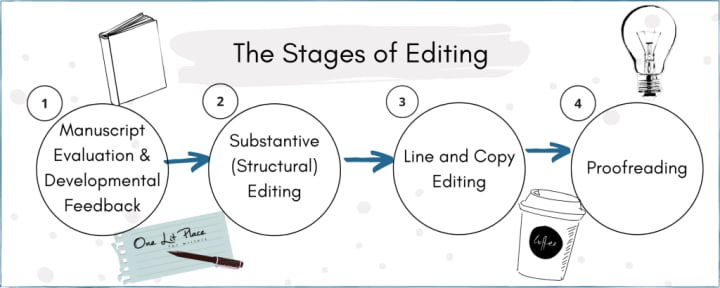
3. Line Editing
Purpose: To enhance language and expression.
Focus: Line editing is a sentence-level examination that enhances the way written content reads. A line editor refines the syntax and rhythm of sentences, improving readability and polish. Key areas of focus include:
- Word choice and vocabulary
- Sentence structure and length
- Dialogue effectiveness
- Removal of clichés and unnecessary adverbs
Impact: Line editing makes the prose more dynamic and enjoyable to read. It smooths out awkward phrasing and sharpens dull language, bringing the author’s voice into clear focus.
4. Copy Editing
Purpose: To correct grammar, punctuation, and spelling errors.
Focus: Copy editing is perhaps what most people think of when they hear "editing." This stage involves a meticulous review of grammar, punctuation, spelling, and consistency. Copy editors also check:
- Consistency in spelling, hyphenation, and numerals
- Internal consistency of facts
- Caption accuracy
- Table of contents and headers/footers alignment
Impact: Copy editing is vital for polishing a manuscript and preparing it for publication. It ensures the text is free of errors that could distract or confuse readers, thus enhancing the reader’s experience.

5. Proofreading
Purpose: To catch any remaining errors.
Focus: Proofreading is the final stage of editing, conducted on the formatted output before the work is published. Proofreaders scan the text for typos, formatting issues, and minor errors missed in previous edits, such as:
- Misplaced letters or words
- Incorrect page numbers
- Inconsistent fonts or layout issues
- Final check for any grammatical slip-ups
Impact: This final scrutiny ensures that the manuscript is completely polished and ready for publication, presenting a professional and error-free product to the audience.
Conclusion
Each stage of editing plays a critical role in refining a manuscript. Starting from broad structural issues and narrowing down to specific textual errors, the editing process builds a solid foundation for publication. For authors, engaging with these stages means a significantly improved manuscript, enhancing both its readability and its likelihood of success in a competitive market. By thoroughly understanding and utilizing these stages, both editors and authors can ensure that a manuscript is not only free of errors but also compelling and enjoyable to read.
About the Creator
Hannah miller
I’m an author dedicated to weaving engaging narratives across a variety of genres to resonate with readers.
Keep reading
More stories from Hannah miller and writers in Writers and other communities.
How do I format my book for different eBook and print-on-demand services?
When preparing a book for publication, formatting is a critical step that ensures your content is readable and professional across various platforms. Whether you’re publishing an eBook or using print-on-demand (POD) services, each format requires specific considerations to meet both technical requirements and reader expectations. This guide provides a step-by-step approach to formatting your book for different eBook and print-on-demand services, ensuring your work looks its best no matter how readers choose to engage with it.
By Hannah millerabout a year ago in Writers
Untitled
I pat my brows with a handkerchief I fancy, and I think about the plight we are in today; it makes me squirm. In all my words you seek to find a formula, but your ledgers are filled with trending tabs (ephemeral tallies). You make me feel like I should be held in a box. It is impossible for someone to grow or be better than they were yesterday; simply by choice, they wish to step back and publish a little slower, less frequently.
By Caitlin Charltonabout a month ago in Writers
What Sets Top Mobile App Development in Atlanta Apart?
On paper, many app development teams in Atlanta look similar. Comparable tech stacks. Similar portfolios. Confident timelines. The difference only becomes visible after work begins, when decisions pile up, trade-offs appear, and pressure replaces planning. That is where top teams quietly separate themselves from the rest.
By Mike Pichai3 days ago in Writers
The Devil's Cut
“Comrade, finally you’re awake.” The voice was smooth, sensual. A flickering incandescent bar was all that lit the white, sterile room. All Vladimir remembered was everything going black. He tried to move his arms and found them strapped to the gurney.
By Matthew J. Fromm5 days ago in Fiction




Comments (2)
Oh I also love editing. I am on the way learning it. Thanks. I subscribed you and If you wish you can do it to me as well
This is an excellent breakdown of the editing process. It provides a clear and concise explanation of each stage, making it easy to understand for both authors and readers. I particularly appreciate the emphasis on the importance of developmental editing, as it often gets overlooked. This stage is crucial for shaping the overall structure and direction of a manuscript.