
Unveiling the Soul of Existence
A Journey Through the Eternal Wisdom Hidden in Life's Ancient Rhythms

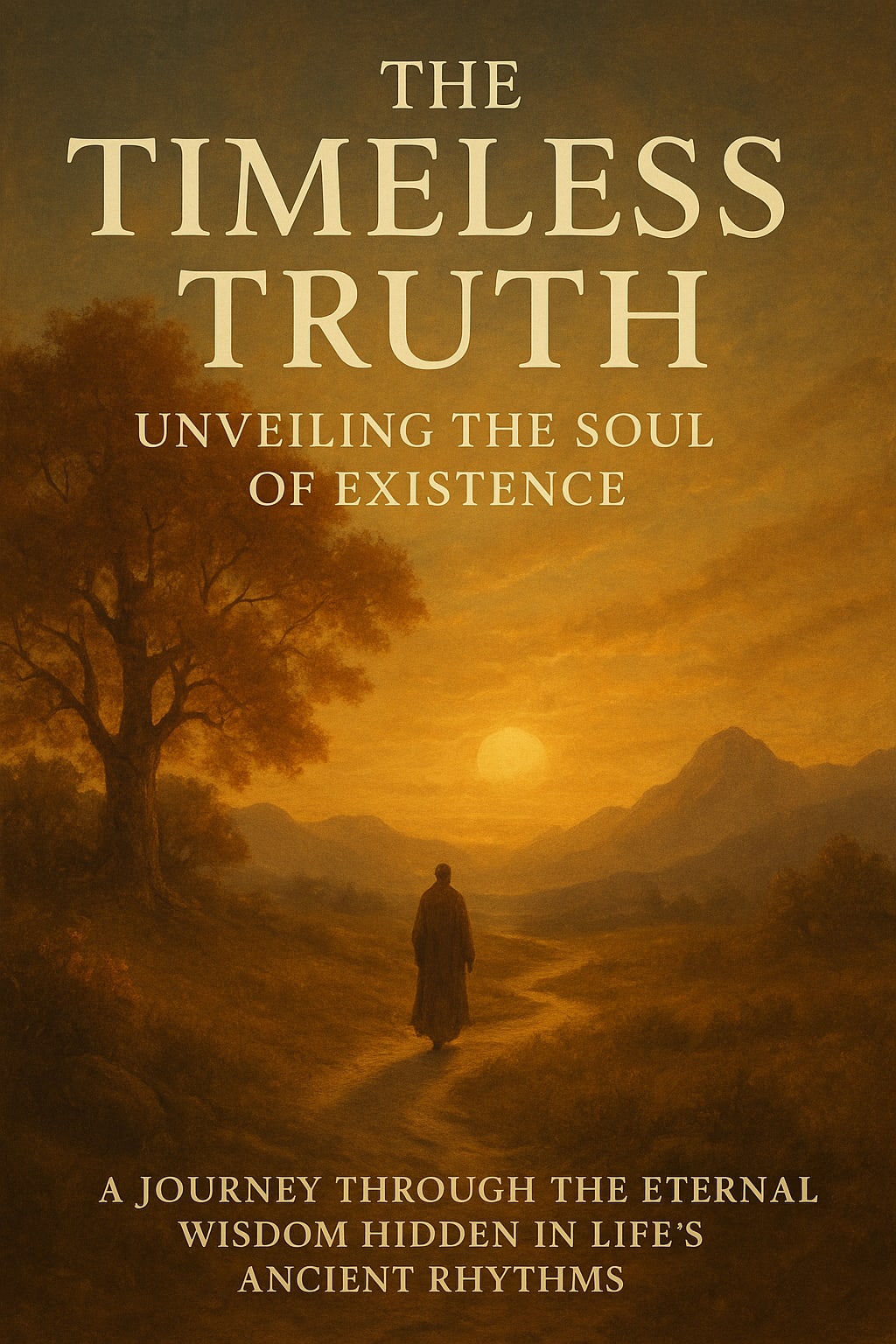
The Timeless Truth: Unveiling the Soul of Existence!
In a forgotten valley hidden between ancient mountains, there lived a man named Eshan. He was neither old nor young, wise nor foolish—just a seeker. For as long as he could remember, he felt the weight of a question tugging at his soul: “What is the truth behind this life?”
The villagers called him a wanderer. While others built homes and chased trade, Eshan wandered the forests, sat by rivers, and stared at the stars. He believed that somewhere, in the silence of the world, the truth whispered, waiting to be heard.
One morning, under a soft golden sunrise, an old monk arrived at the village. He walked with the grace of wind and eyes full of stillness. The villagers greeted him with respect, offering food and fire. Eshan, hearing of his arrival, rushed to meet him.
“Master,” Eshan said, bowing low, “I seek the truth of life. Not the truth that fills books or lips, but the one that breathes beneath all things.”
The monk looked into Eshan’s eyes and nodded. “Then walk with me,” he said.
And so began a journey—days turned to weeks, weeks into seasons. They walked through valleys where the wind sang old songs. They climbed cliffs where the earth touched the sky. The monk rarely spoke, but every silence was a lesson. When he did speak, it was like water dripping onto stone—soft, but shaping.
“Do not chase truth like a hunter,” he once said. “Let it reveal itself like the dawn.”
One evening, as they rested by an ancient fig tree, the monk turned to Eshan.
“What do you see?” he asked, pointing to the horizon.
“I see the sky turning gold,” Eshan said. “I see mountains outlined in light. I see beauty.”
The monk smiled. “And do you know what lies behind beauty?”
Eshan shook his head.
“Impermanence,” the monk whispered. “The beauty you see is not separate from the truth. All that fades is real. And all that is real, fades.”
That night, Eshan did not sleep. He watched the stars and pondered the monk’s words. He began to notice how even the stars flickered and died. How rivers never stopped flowing. How breath came and went like a tide.
And then it happened—not in a blaze, but in a whisper. A moment of deep silence wrapped itself around his heart, and he understood.
Life was not a puzzle to solve. It was a rhythm to feel. It was not made of answers, but of presence. The trees did not question their roots. The moon did not ask for meaning. They simply were, and in that being, they were perfect.
The next morning, Eshan stood before the monk.
“I feel it,” he said. “The soul of existence is not hidden. It has always been here. In breath. In silence. In death and in birth.”
The monk’s eyes shimmered with approval. “You have begun to see. But know this—the truth is not a destination. It is a path. You must now walk it.”
So Eshan returned to the valley—not as a seeker, but as a vessel. He taught not with words, but with listening. He helped not with knowledge, but with presence. Children would sit at his feet and feel peace. Elders would speak their pain and feel heard.
He no longer sought the meaning of life, for he had learned to live it. In every sunrise, he saw impermanence. In every tear, he saw connection. And in every breath, he saw a glimpse of the eternal.
Years passed. Eshan aged. His beard grew silver, and his steps slowed. One quiet evening, as the sun sank behind the same mountains he once wandered, Eshan lay beneath the old fig tree.
A young boy came to him and asked, “Eshan, what is the truth of life?”
Eshan smiled, his eyes soft and bright. “The truth,” he whispered, “is that everything changes. And yet, something timeless watches it all. It is not a thing, but a presence. It cannot be spoken, only lived. It is the soul behind the breath, the silence between your thoughts. Live close to it, and you will never be lost.”
As the boy listened, a breeze moved through the valley, gentle as a blessing. Eshan closed his eyes, his breath fading like a song at the end of a long, beautiful day.
He was gone.
But in the years that followed, his presence remained. Not in statues or books—but in how the villagers walked barefoot on the earth, in how they listened to the wind, and in how they lived each moment as if it were sacred.
And so the timeless truth lived on—not as a secret to be discovered, but as a light within every heart willing to pause, to feel, and to be.
About the Creator
Rahmat Khan
I write stories that touch the heart and stir the soul tales of quiet heroes, hidden strength, and everyday moments that leave lasting echoes. Through fiction and reflection, I aim to share pieces of truth, light, and hope in a noisy world.
Keep reading
More stories from Rahmat Khan and writers in Writers and other communities.
The Lantern in the Dust
In a quiet village surrounded by wind-swept hills, there lived a boy named Amir. He was not rich, not strong, and certainly not someone the villagers would call important. Yet there was something about him — a light in his eyes that even the darkest night could not dim.
By Rahmat Khan9 months ago in Motivation
Raising Kids Is Like Maintaining a Battery: Finding the Right Charge for Growth
Raising children is a lot like maintaining a battery — they need the right balance of energy, discipline, love, and guidance to function at their best. Too much positive charge, and they overheat, becoming overwhelmed or overstimulated. Too much negative charge, and they feel drained, unmotivated, or disconnected. As parents, our role is to keep their battery charged just right so they can grow into resilient, confident individuals.
By Elizabeth Healy6 days ago in Writers




Comments
There are no comments for this story
Be the first to respond and start the conversation.