
The woman who wrote through silence
When woman words thought
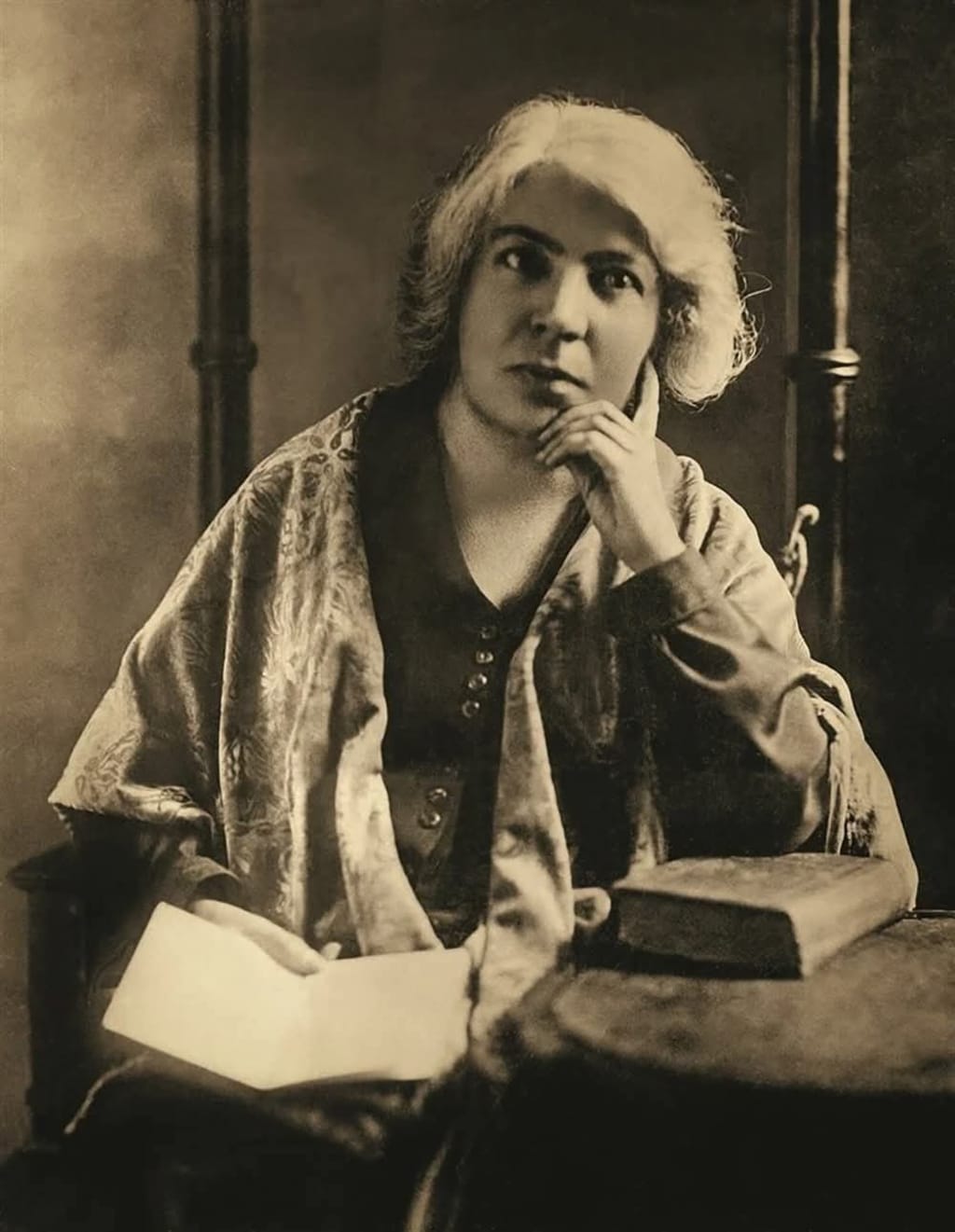
Do you see this woman?
She was mocked, dismissed, humiliated, and cast aside…
simply because she was born a woman.
Her name was Grazia Deledda.
Born in the rugged hills of Nuoro, Sardinia — a land where girls were taught to sew, not to dream.
At just nine years old, she was pulled out of school.
Education, they said, was unnecessary for a girl.
But Grazia didn’t agree.
She studied in secret — feeding her mind with borrowed books and filling her soul with unwritten stories.
In the dusty hills of Nuoro, a small Sardinian village surrounded by stone paths and ancient traditions, a girl named Grazia was born — quiet, curious, and already too different for comfort
From the moment she could hold a pencil, Grazia began scribbling onscraps of paper. Her world wasn’t made for dreamers, especially not female ones. Here, girls were taught to cook, clean, and marry — never to think too deeply or speak too loudly. Writing was for men. Dreams were for boys
By age nine, Grazia’s formal education ended. Her parents pulled her from school, like most girls, believing that reading and writing were a waste of time for someone destined to be a wife.
But Grazia disagreed — quietly.
When her family thought she was sewing, she was reading. When they thought she was asleep, she was writing by candlelight. She borrowed books from anyone who’d lend them — dusty novels, forgotten poems, even newspapers — anything with words.
Her first story was published in a magazine while she was still a teenager. She should’ve been proud. But in Nuoro, it was a scandal.
“A girl? Writing in public?” the neighbors hissed.
“She’ll bring shame,” the priest warned.
Her family, once proud, grew distant
Grazia walked through her village with whispers behind her and disapproval in front. Yet every evening, she returned home, picked up her pen, and kept writing.
Because writing wasn’t a choice for Grazia — it was breath.
Years passed. The rejections came fast, followed by letters from editors who told her to “write about more feminine things,” or worse, “stop altogether.”
Still, she wrote.
Her stories were not soft. They were rugged like the Sardinian mountains — full of strong women, flawed men, wild weather, and emotions too deep to name. Her writing was different because *she* was different. And that difference, at first mocked, became her power.
In her late twenties, she married a man named Palmiro Madesani — a customs officer from the mainland. He was unlike the men of Nuoro. Where others dismissed her, he admired her. Where others tried to silence her, he urged her on.
Together, they moved to Rome — a world away from her childhood home. There, Grazia finally had the space, support, and freedom to become who she truly was.
She wrote tirelessly. Novels, short stories, essays. In every word, she poured her defiance, her dreams, her memories of a land that tried to cage her — and the fire inside that refused to be extinguished.
Then, in 1926, the impossible happened.
The Nobel Committee in Stockholm announced its newest laureate in literature
*Grazia Deledda.
The girl who was told she didn’t need an education.
The woman who was mocked for picking up a pen.
The soul who wrote through silence, shame, and solitude.
Now, the world applauded.
She stood on the Nobel stage in a modest dress, tears held back, pride not for herself — but for every girl who had been told “no.”
At her side stood Palmiro, silent and proud. A man secure enough to let his wife shine. A partner who never feared her strength, but fueled it.
The world had tried to write her story for her.
She took the pen back.
And rewrote everything.
Even today, Grazia Deledda’s name doesn’t echo as loudly as others — not because her words were weaker, but because she was a woman in a world that wasn’t ready.
But those who know her story — remember.
They remember a girl who read in secret.
A woman who wrote through rejection.
A soul who turned silence into sentences that would live forever.
And now, her story belongs not just to Sardinia, not just to Italy, but to every girl who’s ever been told she couldn’t.
Because Grazia proved something powerful:
*Being born a woman is not a weakness.*
*It’s a different kind of strength. One that whispers first… then changes the world.*
About the Creator
Keep reading
More stories from Muhammad sufyan and writers in Writers and other communities.
Books: The Silent Companions of Life
*The Boy Who Found His Voice in Books* In a quiet village nestled between green hills and flowing rivers, lived a boy named Arman. He was shy, always the quiet one in the classroom, the kind that teachers forgot to call on and classmates barely noticed. While others played cricket in the sun or shouted answers in class, Arman sat silently, scribbling in his notebook or gazing out the window. He wasn't dumb — far from it. But the world moved too fast, and his thoughts too deep. Speaking out loud made his throat tighten, and his voice barely left his lips. He feared being wrong, laughed at, or simply unheard. So, he withdrew into himself. One rainy afternoon, while seeking shelter, Arman entered the village library for the first time. The air was filled with the scent of old pages and polished wood. The librarian, an old man named Mr. Raza, looked up and gave him a kind smile. “First time?” he asked. Arman nodded. Mr. Raza pointed to a shelf. “Start wherever your heart tells you.” He picked a worn-out book titled *“The Adventures of Taimur”* — a tale of a boy who, like him, felt invisible but discovered his courage through incredible journeys. As Arman turned the pages, something awakened in him. It was as if the words reached into the places no one else could. He read the entire book by sunset. From that day, the library became his second home. Every day after school, he’d dive into stories — of warriors, thinkers, travelers, and dreamers. With each book, he gained not only knowledge but bits of confidence. The characters became his friends, their struggles his lessons, their triumphs his hope. One day, Mr. Raza noticed the spark in his eyes. “Why don’t you write your own story?” he asked. Arman was startled. “Me? I’m no writer.” Mr. Raza chuckled. “You’re already a reader. That’s how it starts.” Taking the advice seriously, Arman began to write. His first story was rough. The second, a little better. He kept going. In his quiet world, he now had a voice — through ink and paper. Months passed. Then came the annual school competition: *“Voices of Tomorrow”*, where students could share essays, poems, or stories. For the first time, Arman signed up. His classmates were shocked. “You? You’re entering?” one of them whispered. He nodded, heart pounding but steady. That night, he barely slept. Not because of fear — but because he knew this story mattered. On stage, his hands trembled holding the paper. But as he read, the words flowed. His voice was soft but sure. The hall, once full of noise, was silent — listening. When he finished, a few students clapped. Then more. Then all. Arman didn’t win first prize. But he won something far greater: respect, courage, and the realization that *his voice mattered*. Later, Mr. Raza gifted him a leather notebook. “Fill it,” he said. “The world needs your words.” Years went by. Arman became a writer. His books weren’t just stories — they were *lifelines* for kids like him, who felt small and silent. And in every author’s note, he wrote the same line: *“Books were my voice before I found my own.”*
By Muhammad sufyan6 months ago in BookClub
It's Winter
Anne Bernays and Pamela Painter — What If? Writing Exercise for Fiction Writers prompts The Exercise —Write a scene involving two characters. Have the point-of-view character presume something entirely different about the situation from what the other character's overt behavior seems to imply. For example, a landlord comes to visit, and the tenant suspects that it isn't a visit but an inspection. Make up several situations in which one character can fantasize or project or suspect or even fear what another character is thinking. The Objective - To show how your characters can use their imaginations to interpret the behavior and dialogue of other characters.
By Denise E Lindquist18 days ago in Writers
Bruce Lee and the Bullet: The Warrior and the Way of Peaceful Resolution
Fist“Why doesn’t somebody pull out a 45 and, bang, settle it?” -- Bruce Lee asks in "Enter the Dragon" Fist of Fury Bruce Lee had a hard time selling the idea of kung fu fighting in action films in Hollywood. What can beat a bullet? With Kato, his first Hollywood role as a superhero, the idea seemed plausible. Having a superhero fight without weapons works out fine.
By WILD WAYNE : The Dragon King3 days ago in Writers
Rachel Reviews: The Spiral Archive by Pieter Hendrik
It's difficult for me to know where to start with a review of this book as it was, for me, an entirely unique experience and one that I'll probably never have again. I don't want that to be interpreted as unenjoyable but it has left me scratching my head a little and ruminating on its content, its themes and its characters.
By Rachel Deeming2 days ago in BookClub


Comments
There are no comments for this story
Be the first to respond and start the conversation.