
The Timeless Journey of the Tortoise
Slow and Steady: The Life of a Tortoise

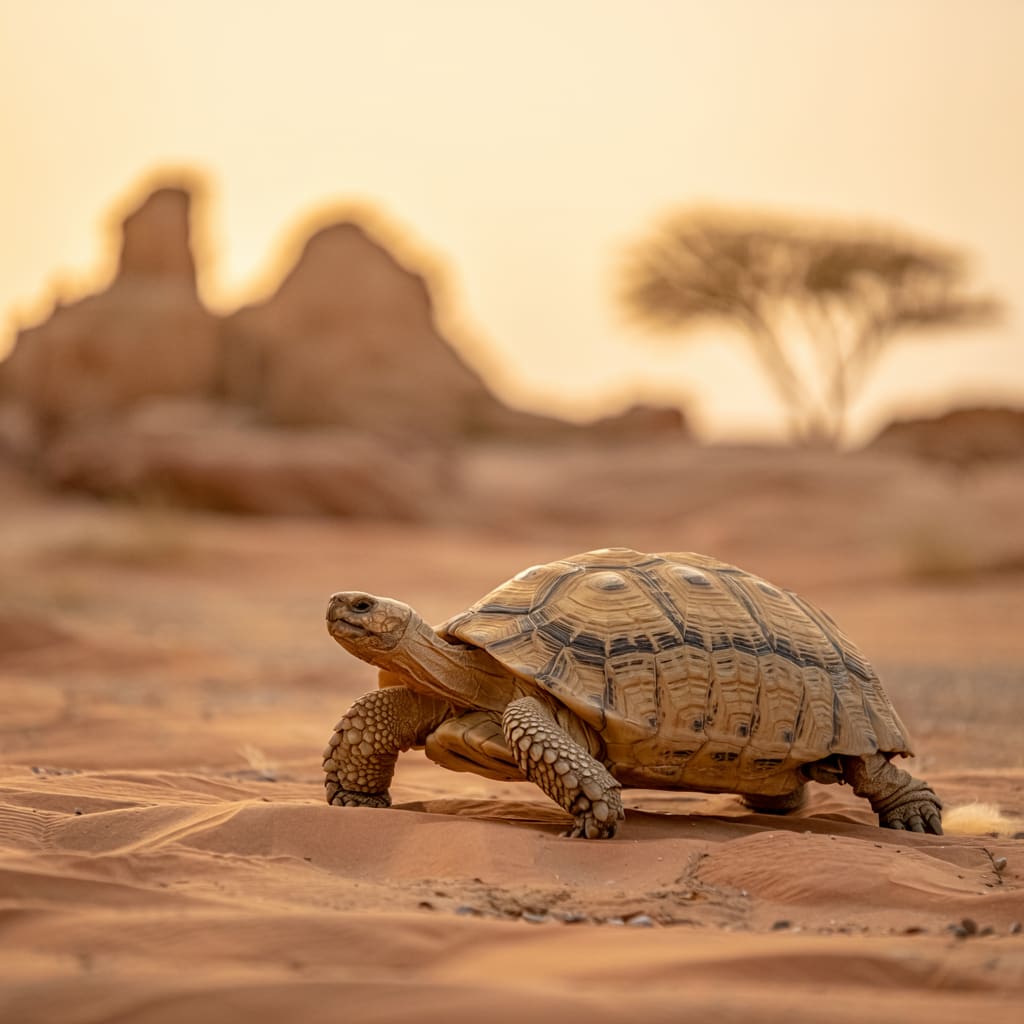
The tortoise is one of the most fascinating and misunderstood animals on Earth. With its slow gait, ancient lineage, and protective shell, it has captured the imagination of humans for centuries. Across myths, religions, and scientific studies, the tortoise continues to symbolize wisdom, longevity, and resilience. But beyond symbolism, this unique reptile plays a vital role in the ecosystems it inhabits—and today, it faces many challenges in a rapidly changing world.
An Ancient Lineage
Tortoises belong to the family Testudinidae and are land-dwelling reptiles. They are a type of turtle, but unlike their aquatic relatives, tortoises are adapted to life on dry land. What makes them especially remarkable is their evolutionary history. Tortoises have been around for millions of years, with fossil evidence dating back to the time of the dinosaurs—over 200 million years ago.
This long history makes the tortoise one of the oldest living species on the planet. Their unique anatomy, particularly the protective shell, has remained largely unchanged over time, a testament to its effectiveness. The shell is not just a home or a defense mechanism—it’s a part of the tortoise’s skeleton, made up of fused ribs and vertebrae. This natural armor has allowed tortoises to survive predators and environmental threats for millennia.
Physical Traits and Behavior
Tortoises are easily recognized by their high-domed shells, stumpy legs, and slow, deliberate movements. Their legs are strong and sturdy, adapted to walking over rough terrain, while their shells vary in color and texture depending on the species and environment.
They are primarily herbivores, feeding on grasses, leaves, fruits, and flowers. Their slow metabolism allows them to go without food or water for long periods, which is especially useful in dry, arid environments like deserts or savannahs.
Interestingly, despite their slowness, tortoises are excellent navigators and can travel long distances over time to find food, water, or mates. Some species, like the Galápagos tortoise, can live for more than 100 years, with a few individuals recorded to live up to 180 years in captivity. These long lifespans contribute to their image as ancient, wise creatures.
Cultural Symbolism
The tortoise holds a powerful place in human culture and mythology. In many traditions, it represents stability, protection, and endurance. In Hindu mythology, the world is said to rest on the back of a giant tortoise named Kurma, who supported the cosmos during the churning of the ocean. In Chinese folklore, the tortoise is one of the four sacred animals, symbolizing wisdom and longevity.
The famous fable “The Tortoise and the Hare,” attributed to Aesop, uses the tortoise to teach a moral lesson about patience and perseverance. In the story, the tortoise’s slow but steady pace wins the race against the overconfident hare. This story has endured across cultures, emphasizing that success often comes through consistency and resilience rather than speed.
Conservation and Threats
Despite their ancient survival skills, tortoises today face numerous threats—many caused by human activity. Habitat loss is a major issue, as urbanization, agriculture, and deforestation reduce the natural environments where tortoises live and breed. Poaching and illegal pet trade also put pressure on many species. Tortoises are often collected for their shells or sold as exotic pets, even though they are difficult to care for properly in captivity.
Climate change adds another layer of danger. Rising temperatures can affect nesting sites, food availability, and even the sex of hatchlings in some species, since temperature can influence whether a tortoise egg becomes male or female.
Conservation efforts are underway in many parts of the world. Organizations work to protect tortoise habitats, enforce anti-poaching laws, and educate the public about the importance of these creatures. Captive breeding programs have helped restore populations of critically endangered species, such as the ploughshare tortoise of Madagascar and the radiated tortoise, which are both threatened due to illegal trade and habitat loss.
Why Tortoises Matter
Tortoises are more than just interesting animals or symbols in stories—they play important ecological roles. As herbivores, they help control plant growth and disperse seeds, contributing to the health of ecosystems. Their burrows provide shelter for other animals, especially in hot desert regions.
Beyond that, tortoises remind us of the value of slowness in a fast-paced world. In an age of instant results and rapid change, the tortoise teaches us about patience, resilience, and the importance of protecting what’s old and valuable. Its slow steps echo through time, asking us to reflect on our own relationship with the Earth and how we care for the creatures that have shared it with us for so long.
Conclusion
The tortoise is a living link to Earth’s distant past—a survivor, a symbol, and a silent guardian of the land. Its story is one of quiet endurance, ancient wisdom, and modern challenges. As we look to the future, protecting tortoises and their habitats isn’t just about saving a species—it’s about preserving a part of our planet’s legacy and embracing the timeless lessons that only a creature like the tortoise can teach.




Comments (1)
The way you’ve captured the tortoise’s deep connection to history, culture, and the natural world is truly captivating.