
The Time I Didn’t Cry at My Grandmother’s Funeral
An exploration of grief that didn’t show up the way people expected—and why that’s okay.
I stood at the edge of the grave, my hands in my coat pockets, the December wind folding around my ankles like cold silk. People around me cried—quiet sobs, open weeping, shoulders shaking beneath black wool. I didn’t cry.
I didn’t cry when the priest spoke of her warmth and generosity. I didn’t cry when my cousin read that poem she wrote on a wrinkled piece of paper. I didn’t cry even when they lowered the casket into the earth, when the dirt made that hollow sound on the wood, final and strange.
Instead, I watched the trees sway gently above the graveyard, bare and still somehow full of movement. I remembered the way my grandmother used to tie her apron behind her back—crooked every time—and how she always smelled faintly of cinnamon and Dove soap. I felt like I should be crying. But I wasn't.
Later that day, in the quiet hum of post-funeral tea and stale biscuits, someone leaned toward me and whispered, “You’re taking this really well.” Their tone was almost accusing, like I’d broken an unspoken rule of mourning. I gave them a polite smile and sipped my tea.
What they didn’t know was that I had already cried.
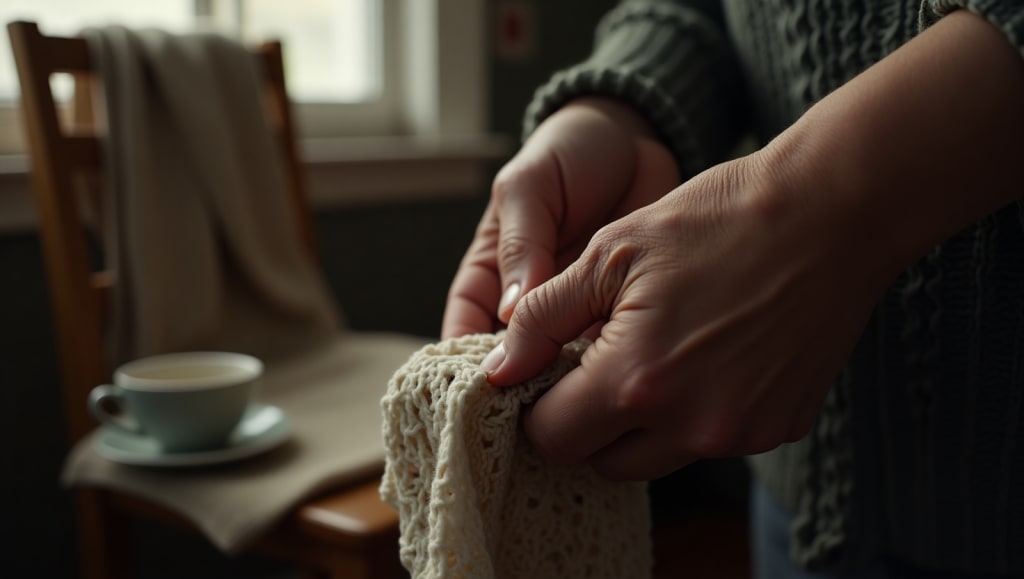
Not in the church. Not at the graveyard. But in the laundry room a week before, when I found a cardigan she’d left at our house months earlier. It still smelled like her. That warm, homey mix of spices and detergent. I sat on the cold tile floor, hugging that cardigan, and cried until my stomach ached. I had cried again, silently, while folding napkins for the memorial lunch. And I cried when I walked past the kitchen and instinctively thought, “I should tell Grandma about this recipe,” before remembering.
Grief is strange. It doesn’t always obey the schedule of the world.
People expect grief to look like tears on cue. But sometimes, it’s silence. Sometimes, it’s laughter that bubbles up unexpectedly because you remembered something funny she used to say. Sometimes, it’s numbness—a dull ache rather than a sharp cry.
The truth is, I didn’t need to cry at the funeral to prove that I loved her.
I loved her in the quiet things: in the way I still can’t throw away her old recipes, though they’re stained and mostly illegible. In how I keep an extra teacup in the cupboard she used to use. In the way I touch my wrist whenever I feel overwhelmed—because she used to hold my wrist when I panicked, saying softly, “I’m here. Right here.”
I felt her absence that day more than I could express. But my grief was private. And that should be okay.
No one tells you that grief can be patient. It can wait until the room is empty and the lights are off. Until the dishes are done and the guests have gone. Grief waits until your guard is down, and then it folds you in its arms like an old friend who overstayed their welcome.
I mourned her in my own way.
Later that night, when I got home, I sat in her chair—the green one with the fading embroidery. I pulled a blanket around myself and let the silence hum. There were no tears. Just presence. Just memory. Just love.
If I had cried at her funeral, people would have nodded knowingly. They would’ve said, “There it is, there’s the pain.” But pain doesn’t always present itself in performance. Sometimes it whispers, sometimes it rests behind the eyes. And sometimes, it looks like someone holding back tears—not because they aren’t feeling anything, but because they’ve already felt too much.
So no, I didn’t cry at my grandmother’s funeral. And I’m not ashamed of that anymore.
Grief isn’t a ceremony. It’s not a performance for the world to judge.
It’s a personal language. One only the heart speaks, and only the soul understands.
About the Creator
Keep reading
More stories from Muhammad Ahmad and writers in Writers and other communities.
Things I Wish I Had Said Before She Left
I still remember the exact day she left. It wasn’t dramatic, like a door slammed shut or words screamed in anger. It was quieter. Quieter than I expected. One of those endings that doesn't feel like an ending until you look back and realize you never spoke again.
By Muhammad Ahmad7 months ago in Writers




Comments
There are no comments for this story
Be the first to respond and start the conversation.