
The Story of Alex Haley
The story of the author behind "Roots", "Queen" and "The Autobiography of Malcolm X"

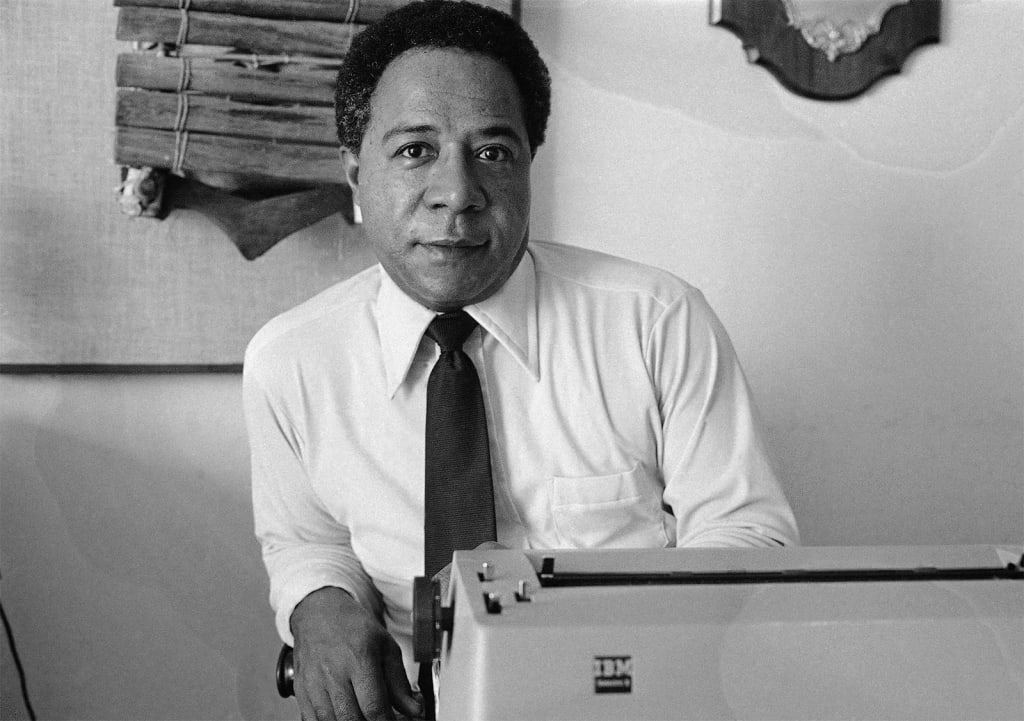
This is a story of the author behind the black stories that were adapted in films and televisions that became a staple for black culture entertainment based on true events on black history. Alex Haley was a veteran groundbreaking writer who co-wrote The Autobiography of Malcolm X, Roots, and Queen. His historical work adapted into film and miniseries garnering accolades and Emmy and Image awards.
Born as Alexander Murray Palmer Haley on August 11, 1921, in Ithaca, New York, to his parents: Simon Haley and Bertha George Haley. His father was a veteran and professor of agriculture at Alabama A&M University and his mother was a musician and teacher. For the first five years of his life, Haley lived with his mother and grandparents in Henning, Tennessee, while his father finished his studies. When Simon Haley completed his degree, he joined the family in Tennessee and taught as a professor of agriculture at various southern universities. Alex Haley was always remarkably proud of his father, whom he said had overcome the immense obstacles of racism to achieve high levels of success and provide better opportunities for his children.
Haley graduated from high school at the age of 15 and enrolled at Alcorn A&M College (Alcorn State University) in Mississippi. After one year at Alcorn, he transferred to Elizabeth City State Teachers College in North Carolina. Haley had a difficult time at school, much to the harsh consternation of his father.

Haley enlist in the armed force as a mess attendant. Later he was promoted to the rate of petty officer third-class in the rating of steward, one of the few ratings open to black personnel at that time. It was during his service in the Pacific theater of operations that Haley taught himself the craft of writing stories. During his enlistment other sailors often paid him to write love letters to their girlfriends. He said that the greatest enemy he and his crew faced during their long voyages was not the Japanese forces but rather boredom.
After World War II, Haley petitioned the U.S. Coast Guard to allow him to transfer into the field of journalism. By 1949 he had become a petty officer first-class in the rating of a journalist. He later advanced to chief petty officer and held this rank until his retirement from the Coast Guard in 1959. He was the first chief journalist in the Coast Guard, the rating having been expressly created for him in recognition of his literary ability.
First Writing Career
After retiring from the U.S. Coast Guard, Haley began his writing career in journalism. He became a senior editor for Reader's Digest magazine. Haley wrote an article for the magazine about his brother George's struggles to succeed as one of the first black students at a Southern law school. Haley wrote an article for the magazine about his brother George's struggles to succeed as one of the first black students at a Southern law school.
In 1962, Haley got his big break when an interview he conducted with famous trumpeter Miles Davis was published in Hugh Hefner's Playboy magazine. The story was such a success that Haley embarked on a series of write-ups for the publication that would eventually be known as "The Playboy Interviews," in which he talked to such prominent African American figures as Martin Luther King Jr., Leontyne Price, Sammy Davis Jr., Quincy Jones and Malcolm X.
The Autobigraphy of Malcolm X
After Haley's interview with Malcolm X, Haley asked Malcolm X if he could write a book on his life. Malcolm initially reluctant to do the project, concerned it would detract from the Nation of Islam and its leader, Elijah Muhammad. He eventually agreed after journalist Alex Haley secured Elijah Muhammad's personal blessing for the collaboration. Malcolm usually arrived at Haley’s New York apartment at nine in the evening, exhausted after a day’s work. The two men then talked late into the night, discussing politics, religion and race over an endless stream of cheap coffee. The next morning, a bleary-eyed Haley would adapt his notes into a rough manuscript, trying to recreate Malcolm’s distinctive voice. This draft would eventually become The Autobiography of Malcolm X (1965), a landmark of American literature and one of the best-selling biographies of all time. Malcolm’s words have inspired protests and political campaigns across the world, and been incorporated into music and artworks from New York to Nairobi. In recent years, however, historians have begun to criticize his ghostwriter’s influence over the text. Haley claimed to be a ‘dispassionate chronicler’ but, they point out, he exaggerated parts of Malcolm’s life and ignored others. Before Malcolm's autobiography, Malcolm X was assassinated on February 21, 1965. Nine Months after his death, The Autobiography of Malcolm X was published on October 29, 1965.
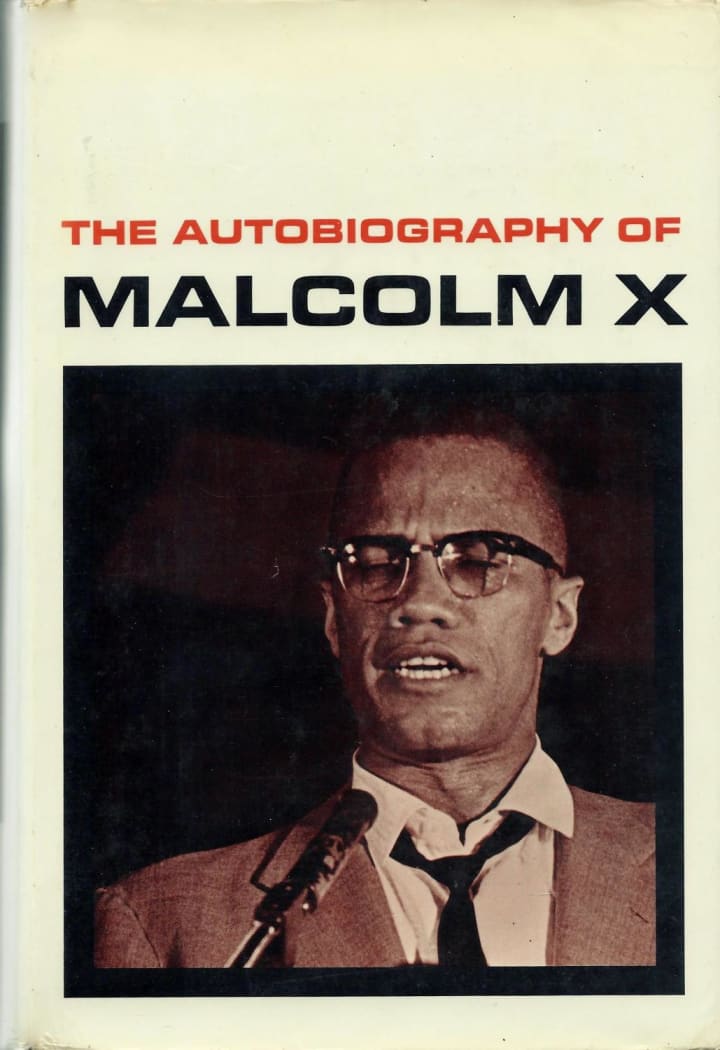
When the Autobiography was published, The New York Times reviewer Eliot Fremont-Smith described it as a "brilliant, painful, important book". In 1967, historian John William Ward wrote that it would become a classic American autobiography. In 1966, Haley received the Anisfield-Wolf Book Award for The Autobiography of Malcolm X. Playwright David Mamet, novelist David Bradley, author Charles Fuller, and screenwriter Calder Willingham had attempts to adapt the book. Director Spike Lee revised the Baldwin-Perl script for his 1992 film Malcolm X. The film starred Denzel Washington as Malcolm X.
Malcolm X premiered on November 18, 1992. The same year, Denzel Washington won the New York Film Critics Circle Award for Best Actor for his performance. At the 65th Academy Awards, the film was nominated for two Oscars including the Best Actor for Washington and Best Costume Design for Ruth E. Carter. In 2010, the film was selected for preservation in the United States National Film Registry by the Library of Congress as being "culturally, historically, or aesthetically significant".
Roots
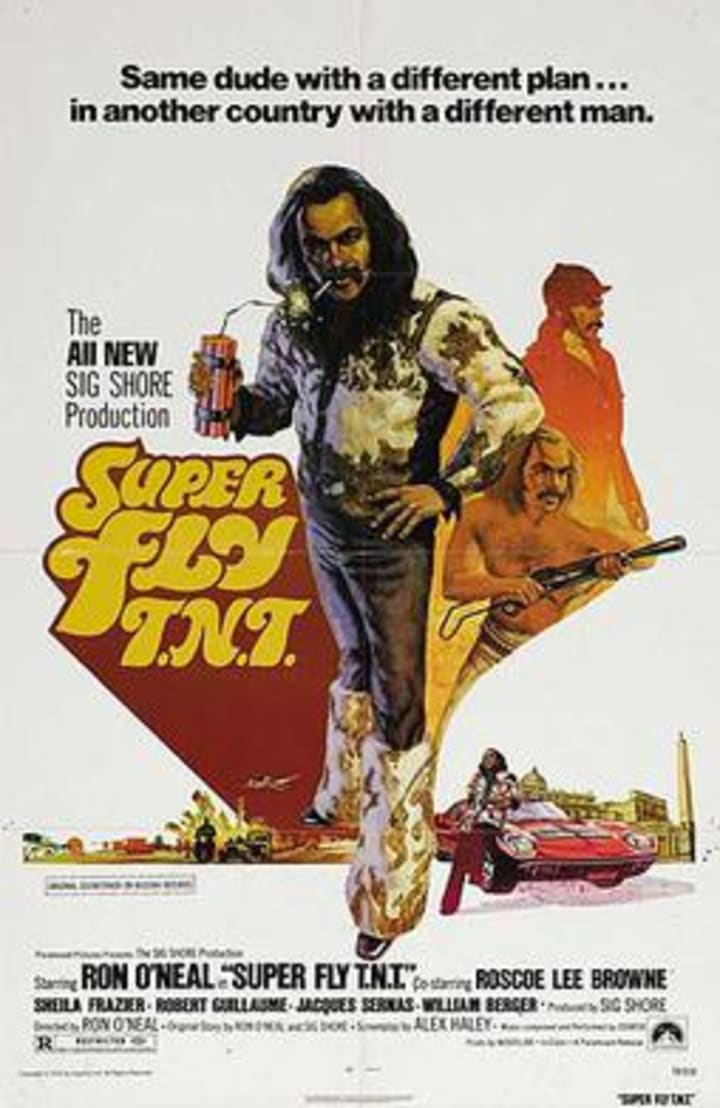
In the aftermath of The Autobiography of Malcolm X, Haley wrote his only screenplay, Super Fly T.N.T. The film starred and was directed by Ron O'Neal.The film was both a critical and commercial failure.
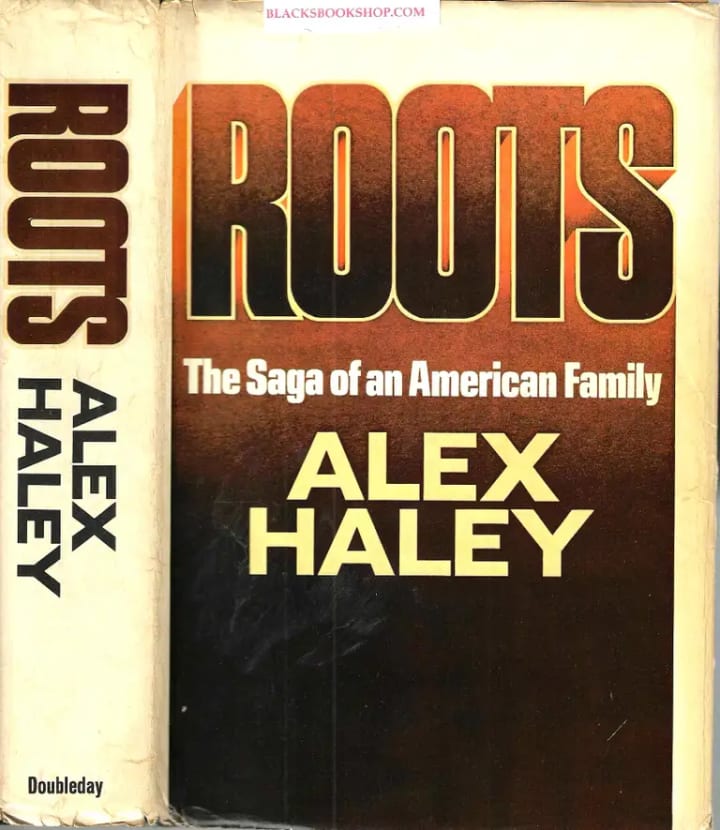
Writing and lecturing offers for Haley began pouring in, and he could have easily lived out his lifelong dream of being a successful independent scribe. Instead, Haley embarked on a hugely ambitious new project to trace and retell the story of his ancestors' journey from Africa to America as enslaved people, and then their rise from slavery to freedom. During a decade of research on three continents, Haley examined enslaved ship records at archives in the United States and England and traveled to Gambia, the believed home of his ancestors in West Africa. The novel tells the story of Kunta Kinte, who was kidnapped in The Gambia in 1767 and transported to the Province of Maryland to be sold as a slave. Haley claimed to be a seventh-generation descendant of Kunta Kinte, and his work on the novel involved twelve years of research, intercontinental travel, and writing. He went to the village of Juffure, where Kunta Kinte grew up and listened to a tribal historian (griot) tell the story of Kinte's capture. Haley also traced the records of the ship, The Lord Ligonier, which he said carried his ancestor to the Americas. Haley stated that the most emotional moment of his life occurred on September 29, 1967, when he stood at the site in Annapolis, Maryland, where his ancestor had arrived from Africa in chains exactly 200 years before. A memorial depicting Haley reading a story to young children gathered at his feet has since been erected in the center of Annapolis, Maryland. Roots was published in 1976.
A year after Roots was published, Roots was adapted as a television miniseries. The cast of the miniseries included LeVar Burton as Kunta Kinte, John Amos as adult Kunte, Leslie Uggams as Kizzy, James Earl Jones as Alex Haley, and Ben Vereen as Chicken George. A fourteen-hour sequel, Roots: The Next Generations, aired in 1979, featuring the leading black actors of the day. Approximately 130 million Americans tuned in at some time during the eight broadcasts. The concluding episode on January 30, 1977, has been ranked as the third most watched telecast of all time by the Nielsen corporation. The miniseries earned a Golden Globe win and some Emmy nominations.
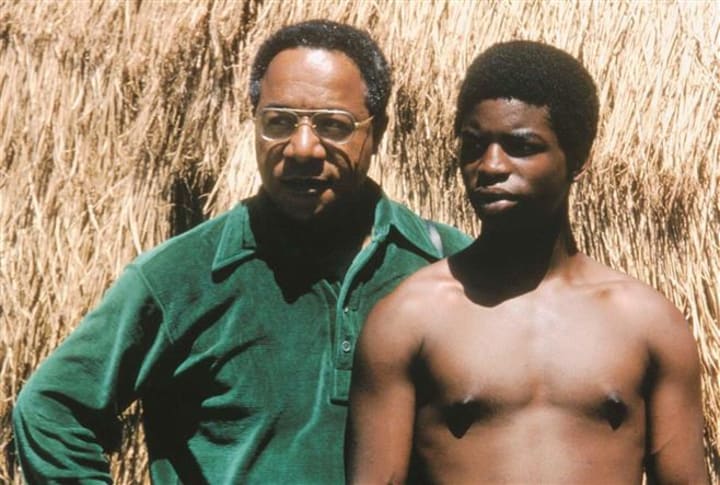
In December 1988, ABC aired a two-hour made-for-TV movie: Roots: The Gift.
Queen
During the 80s and 90s, Haley continues to write tv series, stories, and two novels. He worked on a novel called Mama's Flora Family and another novel called Queen. The novel recounts Queen's anguished early years as an enslaved girl, longing to know who her father was, and how it gradually dawned on her that he was her owner. Haleys mother Easter died sometime around 1860, and was buried in the Forks of Cypress Cemetery. After the American Civil War of 1861 to 1865 and the subsequent abolition of slavery, Queen was cast out. Jass Jackson would not acknowledge her as his daughter, afraid of compromising the inheritance of his legitimate children and goaded by his wife, who despised Queen. After many adventures, often unpleasant, she married a reasonably successful formerly enslaved man by the name of Alec Haley, and had one son with him. The novel was published by 1993.
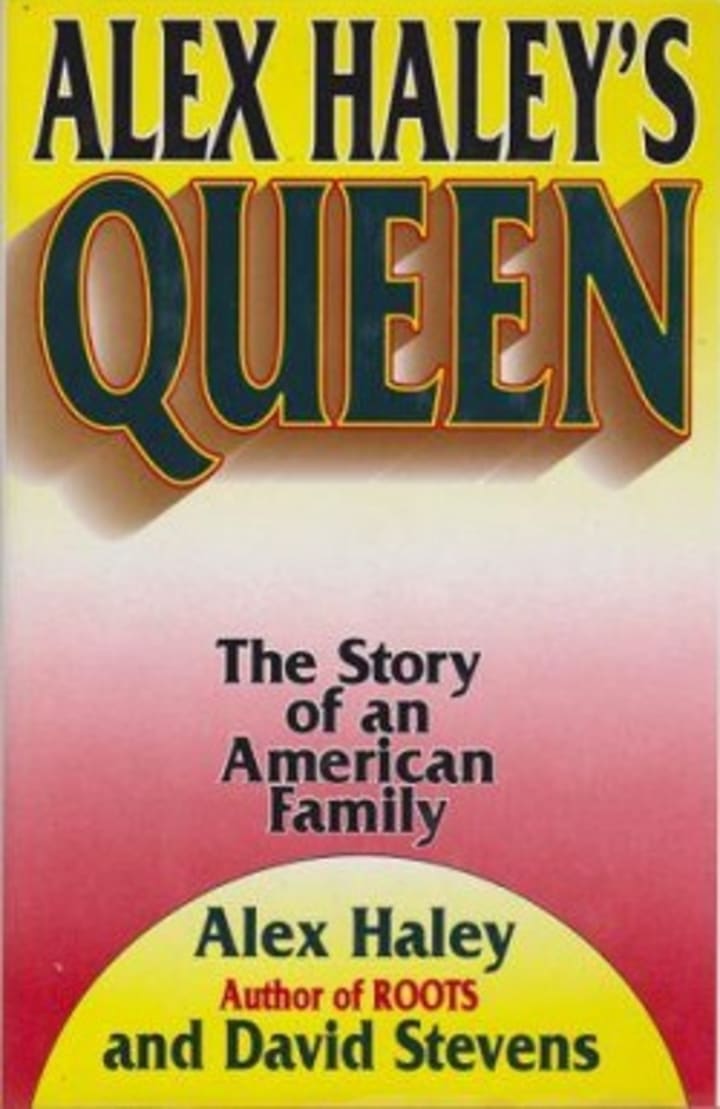
It would be Haley's final novel had written. The adapted miniseries starred Halle Berry as Queen, then five year old Raven Symone as young Queen, Victor Garber as Digby, Ossie Davis as Parson Dick, and Danny Glover as Alec Haley.
The series received acclaim and accolades including Emmy nominations and Image nominations.
Last Moments
Before his death, Haley worked with the Walt Disney Company to develop an Equatorial Africa pavilion for its Epcot Center theme park. Haley appeared on a CBS broadcast of Epcot Center's opening day celebration, discussing the plans and exhibiting concept art with host Danny Kaye. Ultimately, the pavilion was not built due to political and financial issues.
February 10, 1992
Just when Haley was about to finish his novel, Haley suffered a heart attack in his home. He died at the age of 70. Haley left behind his children and his stories behind. Levar Burton who portrayed Kunte Kinte in Roots and his goddaughter and the daughter of Malcolm X, Attallah Shabazz were among the attendees.
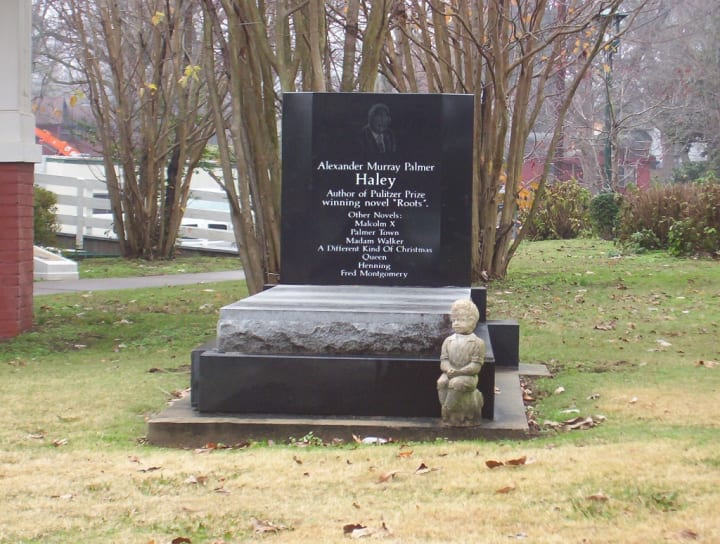
Haley was buried outside of his childhood home. Haley died before finishing Queen, and it was completed by David Stevens. While Stevens benefited from the many boxes of research notes and a 700-page outline of the story left behind by Haley, he would later say that his writing was guided mainly by their many long conversations.
Haley's Legacy
In May 1993, the Alex Haley Memorial Project in Ithaca, New York created a memorial pocket park at Alex Haley's birthplace in town, 212 Cascadilla Street; the park contains a carved granite marker and a hand-wrought iron bench with individual iron leaves made by community members. Funded by the Legacy Foundation of Tompkins County, the Alex Haley Memorial Project members also acquired a New York Historical Marker for the site, placed outside the 212 Cascadilla Street home in August 2020. Located nearby at 408 North Albany Street is the Alex Haley Municipal Pool, which also opened in 1993, immediately across the street from the Greater Ithaca Activities Center (GIAC), one of the area's prominent community centers.Decades later, in 2016, the History Channel aired a remake of the original 1977 miniseries, with Levar Burton (the original Kunta Kinte) serving as executive producer. The cast included Malachi Kirby as Kinte, Jonathan Rhys Meyers, Regé-Jean Page, Anna Paquin, Anika Noni Rose, T.I., Forest Whitaker and Laurence Fishburne as Haley. In 1999 the Coast Guard honored Haley by naming the cutter USCGC Alex Haley after him.The U.S. Coast Guard annually awards the Chief Journalist Alex Haley Award, which is named in honor of the writer as the Coast Guard's first chief journalist (the first Coast Guardsman in the rating of journalist to be advanced to the rate of chief petty officer). It rewards individual authors and photographers who have had articles or photographs communicating the Coast Guard story published in internal newsletters or external publications.In 2002 the Republic of Korea (South Korea) posthumously awarded Haley its Korean War Service Medal (created in 1951), which the U.S. government did not allow its service members to accept until 1999. Haley was honored with a statue in Knoxville, Tennessee.
Sources
https://aeon.co/essays/how-alex-haley-wrote-and-reframed-the-life-of-malcolm-x
https://www.biography.com/authors-writers/alex-haley
YouTube
Wikipedia
COMING SOON I am working on TALES & CONFESSIONS OF HIGH SCHOOL, a one woman show based on my adolescence during high school. I am in need of funds to develop my one woman show. I plan to premiere Tales and Confessions at Black Rock Center for the Arts in May 2026. I am planning to create another campaign page soon please leave a tip or go on my paetron page.
About the Creator
Gladys W. Muturi
Hello, My name is Gladys W. Muturi. I am an Actress, Writer, Filmmaker, Producer, and Mother of 1.
Instagram: @gladys_muturi95
Facebook: facebook.com/gladystheactress
YouTube: @gladys_muturi
COMING SOON TALES & CONFESSIONS OF HIGH SCHOOL
Keep reading
More stories from Gladys W. Muturi and writers in Writers and other communities.
Polly is Coming to Broadway However I am not Writing the Musical
This could have been my dream; however, that dream was dissolved. Although I am sad, I am pretty excited about it. Polly is coming to Broadway; however, I will not be writing the book for the Polly musical. According to TheatreMaina, Producer Brian Anthony Moreland has announced the development of Polly: The Musical, a new Broadway-bound production based on the 1989 Disney television movie with teleplay by William Blinn and the novel by Eleanor H. Porter. Debbie Allen, who originally directed and choreographed the television film, will direct this musical with Emmy winner Lena Waithe and Michael Benjamin Washington writing the book and Grammy Award winner Siedah Garrett and Joriah Kwamé writing music and lyrics.
By Gladys W. Muturi7 months ago in Writers




Comments
There are no comments for this story
Be the first to respond and start the conversation.