
The Secret to Writing Pacing That Hooks Readers
And Keeping Them Hooked


“Good pacing doesn’t mean writing fast. It means writing right.”
Pacing is one of those elusive craft elements that can make or break a reader’s experience. Get it wrong, and even your most explosive scenes will feel like a slog. Get it right, and you’ll have readers losing sleep over your story — just one more chapter, they swear. So what is pacing, really? And how do you master it without bulldozing your voice?
📚 What Is Pacing, Really?
Pacing is the rhythm of your narrative. It’s the speed at which your story unfolds, but more importantly, it’s the way that speed feels to the reader. A well-paced novel knows when to sprint and when to stroll. It balances tension and release, breathless action and quiet reflection.
Good pacing isn’t just about short chapters or fast scenes. It’s about control. It’s about understanding the emotional and structural rhythm of your story, and guiding your reader through it with confidence.
✨ The Three Speeds of Storytelling
Think of your story like a piece of music. You don’t want to play it at one tempo the whole time. Here are the three basic modes of pacing you should know:
- Fast Pace — Short sentences, high tension, snappy dialogue. This is where the stakes skyrocket. Think chase scenes, arguments, or sudden reveals.
- Moderate Pace — The steady heartbeat of your story. This is where most of the plot lives. You’re advancing the narrative, building tension, developing characters.
- Slow Pace — Time to breathe. Use this for introspection, worldbuilding, or emotional resonance. These are your quiet moments, and they matter just as much as the thrilling ones.
✅ Tips to Improve Your Pacing
- Start in the middle of the action. Dump the info-dump. Drop readers into movement.
- Cut the fluff. Look at every scene and ask: is this moving the plot, the character, or both?
- Vary your sentence structure. Rhythm matters. Mix short, punchy lines with longer, flowing ones.
- Use paragraph breaks intentionally. Big blocks of text slow the pace. Strategic spacing can change how a reader breathes.
- Tension is your best friend. Even in slow scenes, give readers something to anticipate.
🔹 Don’t Confuse Fast with Good
Fast pacing isn’t always the goal. A novel that goes 100 mph from page one will leave readers exhausted or emotionally numb. Slow scenes, when done well, hook too. They give your characters depth and your readers room to care.
Instead, focus on contrast. Let your pacing ebb and flow with purpose. A quiet moment before the storm. A pause in the aftermath. These shifts are what keep readers hooked.
💬 Final Thoughts
I’ve learned (sometimes the hard way) that pacing is less about speed and more about timing. You don’t need to rush. You just need to lead your reader, always giving them a reason to keep turning the page.
So don’t fear the slow burn, or the sudden sprint. Master the mix. That’s the secret to writing pacing that truly hooks readers.
About the Creator
Georgia
Fantasy writer. Romantasy addict. Here to help you craft unforgettable worlds, slow-burn tension, and characters who make readers ache. Expect writing tips, trope deep-dives, and the occasional spicy take.
Writing To Succeed
If you want to find something that will help readers find your writing, possibly expand your audience, and maybe even get you noticed for other things, then you’re not alone. But how can you get it done in a world full of want-to-be writers? Look less at what you’re writing now, and more at what other writers have used to boost their views and reads.
By Jason Ray Morton a day ago in Writers
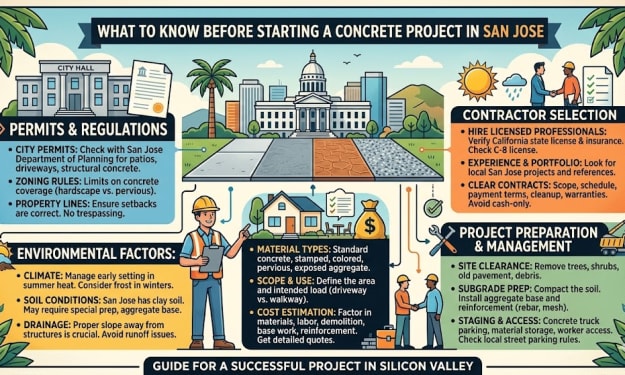
What to Know Before Starting a Concrete Project in San Jose
Concrete is often seen as a simple building material — gray, strong, and permanent. But once you begin planning a driveway, patio, or foundation, you quickly realize that concrete work is far more technical than it appears. In a place like San Jose, where property values are high and curb appeal matters, making informed decisions about your concrete project can significantly impact both durability and long-term value.
By Abbasi Publisher7 days ago in Writers



Comments
There are no comments for this story
Be the first to respond and start the conversation.