
The Quest For Creativity
Or why chickens hate omelettes.

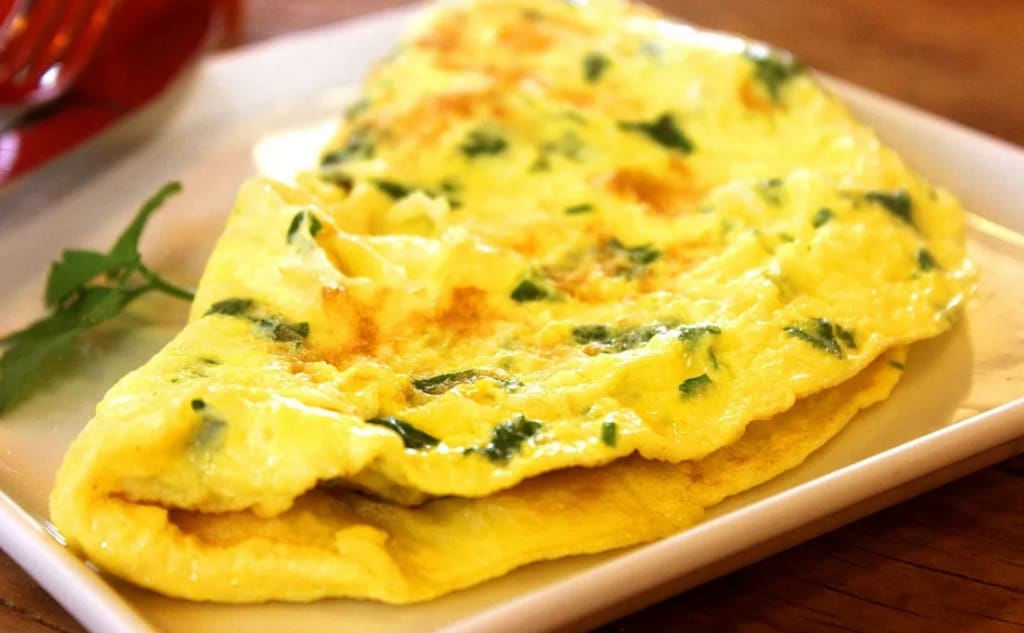
Creativity is a very abstract concept. But there’s no doubt that it relates to innovation. It also relates to creating, hence the word, ‘Creativity’.
However, it isn’t arrived at without some skill. Something can be simple and quick to produce — two qualities that may not ordinarily be applied to the term ‘Creativity’ — but it cannot lack some level of skill or innovative sense.
Take those artists who make seemingly simple and pointless works of art — they may spill ketchup on a napkin and call it art, or leave their bed unmade.
On the surface it can seem like it’s not at all creative — “It’s too simple,” some would say. This is true in one sense. But the artist has deeply thought about the piece. There’s symbolism. There’s life. There’s a sort of hidden skill by the artist. In these pieces, the artist tries to capture something about the daily occurrence that we don’t ordinarily see.
Creativity, therefore, is remarkably expansive — from uniquely highlighting elements of daily events to producing incredibly bold and unusual pieces of art (in various mediums).
But how can we access a true sense of creativity?
Skill, Observation, Intuition, and Experience
Using skill, observation, intuition, and experience can really allow us to create, understand, and appraise the products of our creativity (ideas, poems, artwork etc).
We can know whether our creativity is truly creative if we are applying principles of innovation and skill to the thing we are wanting to be creative with. In addition, bringing in our observation, intuition, and experience can lead to better creative choices. In fact, these latter three things can be considered ‘skill’ in themselves.
When I am editing my poetry, I am always considering how the poem could be structured better (here I am using skills of observation [reading] and intuition [feeling what might work instead]). I am also simultaneously using my past experience to inform current creative choices in wording and structure.
Personally, I like to favour a sort of poetic creativity that is close to those normal experiences (daily occurrences). But I use words to make these things more otherworldly and surreal. Making an omelette is a normal activity, but in the stanza below, I turn it into something unusual by using a surreal sense of comedy:
“I’ve hatched a plan to make an omelette with red cheese and blue onions. A chicken sits crying in the hospital, she’s just lost her kids.”
Here, I’ve made making an omelette deeper and more creative by calling upon an extra emotional/moral dimension of food by humanising the chicken. I’m allowing the reader to consider the weight of eating eggs. I do this intentionally through comedy. There’s a specific choice of words present too. You see how I use ‘hatched’ rather than something like ‘found’. Hatched flows better with the imagery of chickens and eggs. It gives the stanza a greater sense of unity, which allows the reader to absorb it better.
I want to clarify, I do eat eggs, meat, and fish…so the moral dimension of this stanza is only a poetic curiosity for me. But for a vegetarian or vegan, it will perhaps have deeper emotional resonance.
The Future Journey
Considering the things we’ve discussed, how do we move forward on our quest for creativity?
By consistent, considered creative action.
In other words, by continuing to follow a creative life — by writing, painting, producing. By revising work, learning, and evolving as a creative. By trying to create more novel and creative pieces through a greater relationship with skill and innovation.
I hope that I have inspired you to consider your creative work deeply and with clear intent. This is the best way to ensure the highest levels of quality. Keep working, keep revising your work, and keep evolving.
Thanks for reading,
Adz
About the Creator
Adz Robinson
Poet, short story writer, and aspiring essayist with a passion for anything spiritual, psychological, and surreal.
Keep reading
More stories from Adz Robinson and writers in Writers and other communities.
I Chose Self-Publishing Because 70% Royalties Sounded Better. Then 70% Of Zero Changed My Mind.
I have a self-published book, and it was a flop. Only sold 10 copies type of flop. But I didn't choose self-publishing after careful consideration of both paths. I chose it because it seemed obviously better, and I didn't want to interrogate that assumption.
By Ellen Frances6 days ago in Writers
The Forsyth House Fire
Since 1851, Forsyth House has stood on the corner of Union Street and Gordon Street in the heart of Glasgow. Its iconic, or was... because on Sunday 8th of March, 2026, a fire broke out in a small, seemingly un-named shop in the building and tore all that history down. As I write, the rubble is still unsettled and the street is still blocked off. Central Station is quiet on the upper level, and around 30 small businesses have quite literally gone up in smoke.
By S. A. Crawford3 days ago in The Swamp




Comments
There are no comments for this story
Be the first to respond and start the conversation.