
The Power of Data-Driven Strategies (By: Streak Ranker)
The Power of Data-Driven Strategies

In today's dynamic digital landscape, social media is more than just a platform for interaction; it's a goldmine of invaluable data. Leveraging social media analytics effectively is paramount for businesses and individuals aiming to enhance their online presence, engage target audiences, and achieve measurable business objectives. By systematically gathering, interpreting, and acting on data from platforms like Facebook, Instagram, TikTok, and YouTube, organizations can make informed decisions, optimize content, and refine strategies to drive engagement and conversions. The process moves beyond simply tracking likes and shares, delving into deeper insights such as audience sentiment, optimal posting times, and the performance of various content formats.
Key Insights into Effective Social Media Analytics
Strategic Alignment: Effective social media analytics begins with clearly defined, measurable objectives that align with overarching business goals, ensuring every metric tracked contributes to tangible outcomes.
Comprehensive Measurement: Success hinges on selecting and consistently monitoring a diverse set of metrics—from engagement and reach to conversions and sentiment—using robust, integrated analytics tools to gain a holistic view of performance.
Continuous Optimization: Data analysis is not a one-time task but an ongoing cycle of monitoring, testing, benchmarking, and refining strategies to adapt to evolving trends and audience behaviors, maximizing ROI and driving sustained growth.
Laying the Foundation: Defining Objectives and Metrics
The cornerstone of effective social media analytics is establishing clear, specific, and measurable objectives. Without well-defined goals, the data collected can be overwhelming and lack actionable relevance. Your analytics efforts should directly support these objectives, whether they involve increasing brand awareness, boosting engagement, driving website traffic, or generating direct sales.
Setting Specific, Measurable Goals
Before diving into data, articulate what you aim to achieve. Are you looking to expand your audience, improve brand perception, or increase conversions? Each objective requires a different set of metrics to track its success accurately. For instance, if brand awareness is the primary goal, metrics like reach and impressions become crucial. If the aim is to drive website traffic, click-through rates and website referrals will be more indicative of success. Aligning your analytics approach with these objectives ensures that every piece of data you analyze serves a purpose.
Choosing the Right Metrics for Your Goals
Selecting appropriate metrics is vital to avoid data overload and focus on insights that truly matter. Here are common categories and their relevance:
Brand Awareness:
Reach: The number of unique users who saw your content.
Impressions: The total number of times your content was displayed.
Follower Growth: Tracking the increase in your audience over time.
Engagement:
Likes, Comments, Shares: Indicate how well your content resonates and is amplified by your audience.
Engagement Rate: A measure of interactions relative to reach or followers, providing context on content effectiveness.
Sentiment Analysis: Understanding the emotional tone of comments and mentions to gauge brand perception.
Website Traffic & Conversions:
Click-Through Rates (CTR): The percentage of people who clicked on a link in your post.
Referrals: Traffic driven to your website directly from social media, often tracked using UTM parameters.
Conversion Rates: The percentage of social media visitors who complete a desired action (e.g., purchase, sign-up).

Customer Insights:
Audience Demographics: Age, gender, location, and interests help tailor content and targeting.
Audience Behavior: Understanding how different segments interact with your content and preferred platforms.
Implementing and Leveraging Analytics Tools
To effectively gather, analyze, and report on social media data, investing in the right analytics tools is crucial. While native platform insights offer basic data, dedicated third-party tools provide a more comprehensive, consolidated, and actionable view across multiple channels.
Selecting Appropriate Tools
A wide array of social media analytics tools are available, each with varying capabilities. Popular options include Sprout Social, Hootsuite, Buffer, Meltwater, and Metricool. When choosing a tool, consider its ability to:
- Consolidate data from various social platforms into a single view.
- Provide real-time data and automated reporting.
- Offer social listening capabilities for brand mentions and sentiment analysis.
- Facilitate competitor benchmarking.
- Integrate with other marketing platforms like Google Analytics for end-to-end ROI tracking.
- Support advanced features like content planning and A/B testing.
The right tool streamlines the analytics process, allowing you to focus on interpreting insights rather than manual data collection.
Integrating Tools for Holistic Insights
For a complete picture of your social media performance and its impact on overall business objectives, it's essential to integrate social media analytics with other data sources. For example, connecting your social media analytics platform with Google Analytics allows you to trace user journeys from social media clicks to website conversions, clearly demonstrating social media's return on investment (ROI).

An example of a comprehensive social media performance dashboard, illustrating how various metrics can be consolidated for a holistic view.
The Analytical Process: Gathering, Interpreting, and Benchmarking Data
Once your objectives are set and tools are in place, the core of effective social media analytics involves systematically gathering data, interpreting its meaning, and comparing your performance against relevant benchmarks.
Collecting and Analyzing Data
Regular data collection is critical. Don't just glance at numbers; delve into what they signify. Look for trends over time, such as shifts in audience engagement with specific content types or changes in peak posting times. Data visualization tools can make complex insights more digestible, allowing for clearer understanding of performance patterns.
Look for Trends: Analyze historical data to identify long-term patterns in content performance, audience interaction, and platform effectiveness. This helps in understanding what content formats, posting times, and messaging resonate most effectively.
Sentiment Analysis: Go beyond quantitative metrics by analyzing the sentiment of comments and mentions. This provides qualitative insights into how your audience perceives your brand and content.
Audience Segmentation: Understand how different demographic segments interact with your content. Tailor messages and posting times to specific groups for better engagement.
Benchmarking and Competitor Analysis
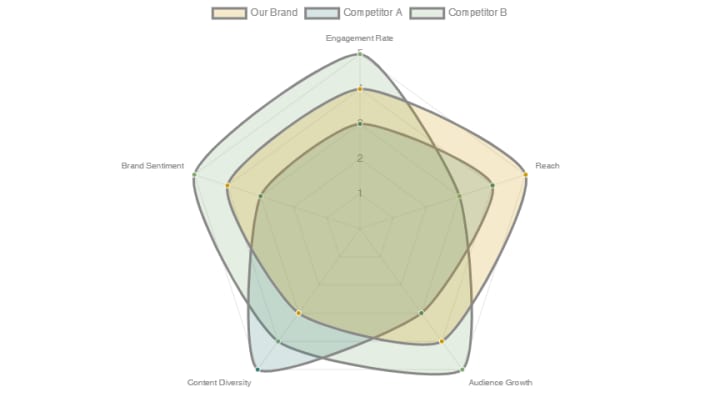
Benchmarking your performance against past campaigns and industry averages helps put your results into perspective. Comparing your social media efforts with those of competitors reveals strengths, weaknesses, and opportunities for improvement. This competitive intelligence can inspire new strategies and highlight successful approaches employed by others.
Consider this radar chart illustrating a hypothetical competitive analysis of social media performance attributes for different brands. Each spoke represents a key performance indicator, allowing for a quick visual comparison of how brands stack up against each other in various areas.
Refining Your Strategy Based on Insights
The ultimate goal of social media analytics is to translate data into actionable strategies that improve your social media performance and drive business outcomes. This involves a continuous cycle of optimization, testing, and adaptation.
Optimizing Content and Timing
Use insights about what works best to refine your content strategy. If videos consistently outperform images in terms of engagement, prioritize video content. If your audience is most active on a particular platform during specific hours, adjust your posting schedule accordingly. Real-time analytics allow for quick adjustments to capitalize on trending topics or optimize campaign performance.
Targeting Audiences and Personalizing Content
Analytics can reveal deep insights into your audience demographics, preferences, and interaction patterns. This enables you to develop highly targeted content and strategies that resonate with specific segments. For example, if data indicates that a particular age group responds well to interactive polls, you can create more such content tailored to their interests.
Measuring ROI and Demonstrating Impact
Connecting social media activity to tangible business outcomes is crucial for demonstrating the value of your efforts to stakeholders. By tracking conversions, leads, or sales generated directly from social media, you can clearly illustrate ROI. This data-backed approach builds trust and justifies further investment in social media marketing.
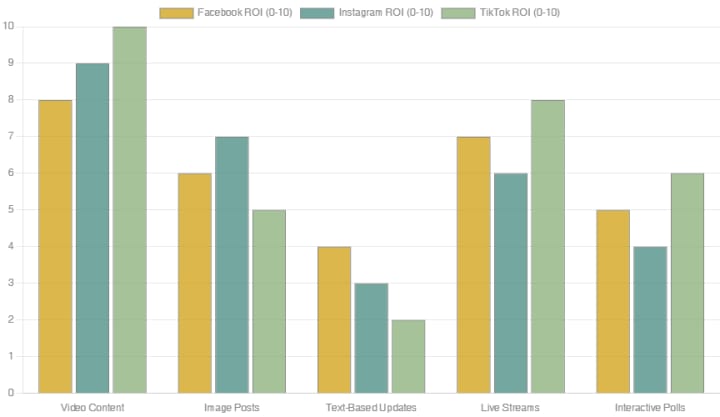
This bar chart illustrates the hypothetical ROI of different content types across various social media platforms, providing an overview of where marketing efforts yield the highest returns.
A/B Testing and Continuous Experimentation
The social media landscape is constantly evolving. To stay ahead, regularly experiment with new content types, campaign ideas, and even emerging platforms. Use A/B testing to compare different content elements—such as images, text, calls to action, or offers—to discover what resonates best with your audience. Adjust your strategies based on these test results to continuously improve performance.
Optimizing Social Ad Spend
For those running paid social media campaigns, analytics is invaluable for optimizing ad budgets. Analyze paid and organic content side-by-side to identify high-performing posts that can be strategically boosted. Reallocate ad spend dynamically to campaigns or ads delivering better engagement or conversions, and pause underperforming ads to maximize ROI and avoid wasted expenditure.
Conclusion
Effectively harnessing social media analytics is no longer an option but a necessity for any entity operating in the digital sphere. It transforms raw data into a strategic compass, guiding decisions on content creation, audience targeting, and resource allocation. By defining clear objectives, selecting relevant metrics, leveraging robust analytics tools, and maintaining a cycle of continuous analysis and refinement, organizations can unlock the full potential of their social media presence. This data-driven approach not only enhances engagement and refines campaigns but also provides concrete proof of social media's tangible impact on overarching business outcomes, fostering a culture of informed decision-making and sustainable growth in an ever-evolving digital landscape.
About the Creator
Streak Ranker
Grow Faster with the Top-Rated Digital Marketing Agency (Streak Ranker) – Trusted for Real Results and Expert Support.
Keep reading
More stories from Streak Ranker and writers in Writers and other communities.
The Definitive Guide to High-Quality Backlinks (By: Streak Ranker)
In the dynamic realm of search engine optimization (SEO), high-quality backlinks remain an indispensable pillar for enhancing a website's authority, improving search engine rankings, and driving organic traffic. As of mid-2025, the emphasis has shifted even more firmly towards ethical, "white-hat" link-building practices that prioritize relevance, trustworthiness, and authenticity over sheer volume. A single authoritative backlink from a highly respected and relevant domain can significantly outweigh numerous low-quality or manipulative links, which search engines actively penalize.
By Streak Ranker7 months ago in Writers
The Language of Luxury in Women’s Handbags
In fashion, handbags exist beyond function. They are cultural objects: carriers of identity, taste, and personal philosophy. Long before they hold essentials, they communicate restraint or boldness, heritage or modernity, intention or instinct. In luxury fashion, this language is spoken quietly, through form, material, and detail rather than excess.
By Abbasi Publisher5 minutes ago in Writers




Comments
There are no comments for this story
Be the first to respond and start the conversation.