
The Older Generation Thinks We’re Angry — We’re Actually Done
A quiet goodbye to broken promises and outdated leadership

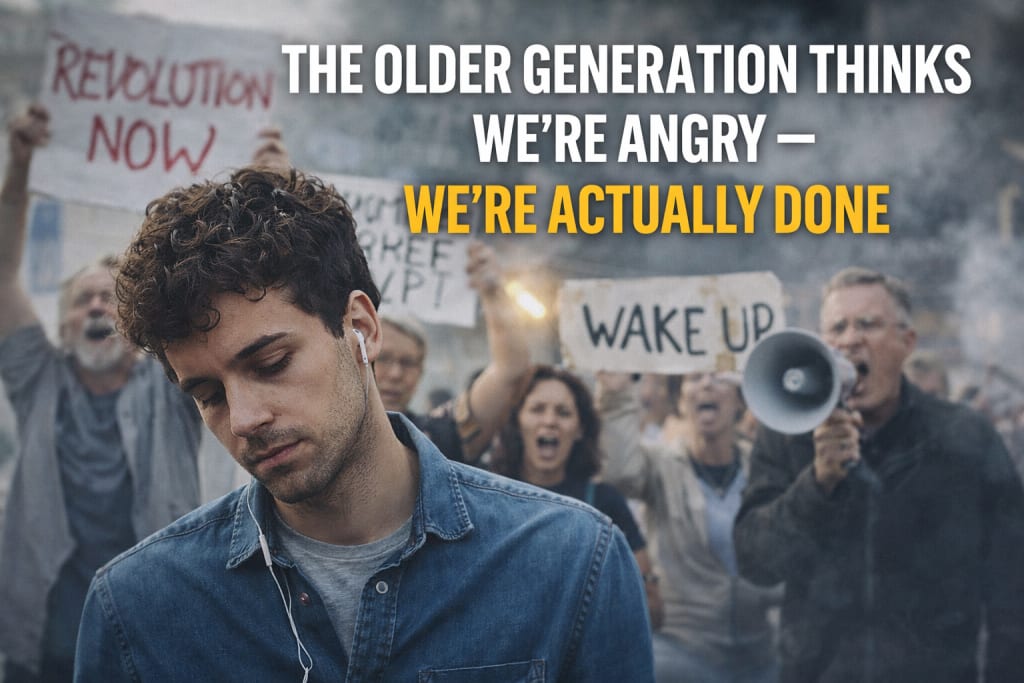
They think we’re angry.
They think we’re rebellious, impatient, entitled, or ungrateful.
They think we’re loud because we want attention.
The truth is simpler—and far more dangerous for those in power.
We’re not angry anymore.
We’re done.
Anger demands energy. Anger wants change. Anger still believes someone is listening. What we’re seeing now, especially among Gen Z and younger millennials, isn’t rage. It’s withdrawal. It’s emotional detachment. It’s the quiet decision to stop participating in a system that keeps taking and never delivers.
For decades, younger generations were promised a basic deal: work hard, follow the rules, and life will eventually stabilize. You’ll afford a home. You’ll have access to healthcare. You’ll feel secure enough to plan a future. That deal has collapsed—slowly at first, then all at once.
In the UK, housing feels permanently out of reach. In the US, healthcare feels like a gamble. Across both, education is expensive, wages lag behind inflation, and “entry-level” jobs demand experience no one has. This isn’t a temporary rough patch. It’s the environment people grew up in.
And yet, when young people express frustration, they’re told they’re overreacting. That every generation struggled. That patience is a virtue. That things will improve if they just wait their turn.
But waiting only works when progress is visible. What happens when each year feels worse than the last?
So people adapt—not by protesting endlessly, not by shouting into the void, but by quietly disengaging. They stop watching political debates that feel disconnected from real life. They stop trusting institutions that protect themselves before citizens. They stop believing that participation guarantees representation.
This is where many older leaders misread the moment. They interpret silence as acceptance. They confuse low turnout, fewer protests, and less visible resistance with stability. In reality, it’s resignation.
Younger generations learned early that speaking up often comes with consequences. Careers stall. Voices are dismissed. Algorithms bury nuance. Friends who questioned authority were labeled difficult, radical, or irresponsible. Watching that happen repeatedly teaches a lesson: survival comes before idealism.
So instead of fighting, people leave. Sometimes physically—moving cities or countries. Sometimes mentally—checking out while staying put. Sometimes digitally—living more online than offline, where community still feels possible.
This isn’t laziness. It’s self-preservation.
There’s also a growing gap in priorities that no longer overlaps. Younger people want flexibility, affordable technology, and open access to global work. Those in power often respond with tighter controls, higher taxes on basic tools, and increased surveillance. One side is trying to move forward; the other is trying to slow everything down.
That disconnect creates something irreversible: indifference.
You can argue with anger. You can negotiate with demands. But indifference doesn’t respond. It doesn’t push back—it simply walks away.
That’s why memes now carry more weight than speeches. Humor spreads faster than policy. Podcasts feel more honest than press conferences. Stand-up comedians explain reality better than panels of experts who’ve never worried about rent.
Mainstream narratives haven’t lost young people because they were attacked. They lost them because they stopped making sense.
And here’s the part few want to acknowledge: many of those in power don’t feel the consequences. Their children live abroad. Their savings protect them. Their healthcare is private. Their discomfort is theoretical.
But influence depends on attention. And attention is gone.
One day, they’ll notice something has shifted. Not because people are shouting, but because no one is listening. Campaigns will fall flat. Messages will feel empty. Authority will exist on paper, not in culture.
By then, it won’t be a rebellion—it will be an absence.
So no, this isn’t anger.
Anger still hopes.
This is closure.
This is a generation quietly saying goodbye to promises that were never kept—and choosing to build meaning elsewhere.
About the Creator
Waqar Khan
Passionate storyteller sharing life, travel & culture. Building smiles, insights, and real connections—one story at a time. 🌍
Every read means the world—thanks for your support! 💬🖋️
Keep reading
More stories from Waqar Khan and writers in Writers and other communities.
It’s Over
By Zorain Nizamani (Rewritten in simple English for UK & US readers) For the older men and women still holding power, it’s over. The younger generation isn’t buying what you’re selling anymore. No matter how many speeches you give, no matter how many seminars you arrange in schools and colleges to promote patriotism, it’s not working.
By Waqar Khan11 days ago in Writers
The Role of Community Behaviour in Crypto Market Movements
Crypto markets are unpredictable, loud, and full of people convinced they have tomorrow figured out. Beginners often mistake chaos for meaning. But most of the time the noise is just that. The community behind a coin drives a huge amount of market motion. That means anyone trying to read prices without reading people is flying half blind.
By Abbasi Publisher7 days ago in Writers



Comments
There are no comments for this story
Be the first to respond and start the conversation.