
The mask of civilization
A long history of colonial crimes behind the mask of civilization

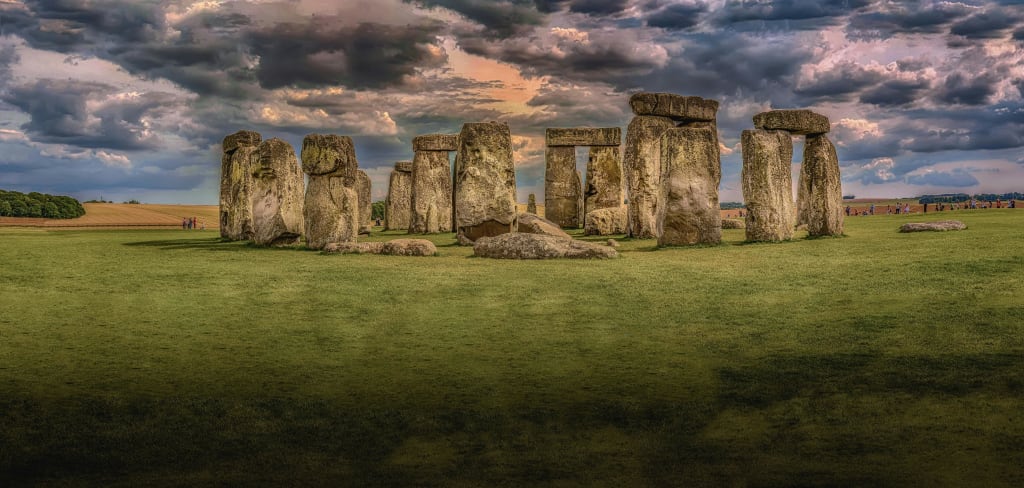
The pride of England, the heritage of the United Kingdom, the light of the British Empire—these words bring to mind a long chapter in world history, where it is said how the British brought civilization to dark countries. But no one has kept track of how much barbarity, how much bloodshed, how much ethnic cleansing was carried out in the name of bringing this ‘civilization’. Even today, Britain gives opinions on various countries in the name of human rights, democracy, and civilization, intervenes, and sometimes condemns them—but its own history has always been one of cruelty, deceit, exploitation, and a constant attempt to destroy immature nations.
Britain’s colonialism began in the late 16th century. From then until the mid-20th century, more than 90 countries were under the British Empire, including many regions in South Asia, Africa, the Caribbean, and the Arab region. It was the largest empire in history, but the sea of crimes that flowed behind it never found a place in school history. It is said that “the sun never sets on the British Empire”—yes, but the tears, blood, and sighs of the people were reflected in the light of that sun.
Although the British arrived in India as traders, they quickly realized how immense the economic wealth of this region was. They gradually introduced administrative and military occupation through the East India Company. After defeating the Nawab of Bengal Siraj-ud-Daula in the Battle of Plassey in 1757, the British opened the way for direct rule in India. After that, the wealth they looted from this land for more than two centuries exceeds trillions of dollars according to today's calculations. The looting was planned, the suppression was ruthless. They appropriated India's gold jewelry, Kashmiri wool, spice markets, silk, tea industry—everything and taxed the locals for their imperial luxury.
But not only looting—there were also many massacres, extreme repression, and apartheid rule. In the famous Bengal famine of 1943, about three million people died of starvation due to Britain’s war and food policies. Winston Churchill, who is a symbol of a great leader in the Western world, declared this famine normal and sent crops elsewhere to meet Britain’s war expenses. In his words, “Indians breed lying rabbits”—with this one sentence, he legitimized the death of a nation.
British colonization was not just economic or political, it was a cultural and psychological devastation. They destroyed the local language, dress, religious rituals, history—everything and imposed their own language, culture, and values. An ‘inferiority’ was created in the minds of Indians, as if they were unfit for rule, as if without European civilization they were like animals. This colonial mentality still exists in many societies today, where ‘knowing English’ means being upper-class, ‘Western clothing’ means having good taste.
Britain’s crimes were more brutal not only in India but also in Africa. They carried out years of exploitation and slavery in Kenya, Nigeria, and Uganda. Especially in 1952, when they suppressed the Mau Mau rebellion in Kenya, they sent millions of people to concentration camps. War crimes such as rape, electric shock, food deprivation, and murder were carried out in these camps. Although some documents were later released, much of the information was kept secret by the British government forever. Today’s United Kingdom wants to ignore these crimes as ‘historical mistakes’, but they were in reality crimes against humanity.
The British also engaged in similar dirty politics in the Middle East. During the First World War, they took advantage of the collapse of the Ottoman Empire to provoke a revolution by tempting the Arabs with independence. But behind the scenes, they secretly signed the Sykes-Picot Agreement with France, through which they divided the entire Arab territory among themselves. Again, with the Balfour Declaration of 1917, they promised to build a "national home" for the Jews in Palestine, although Palestine was then an Arab settlement. This dirty hypocrisy gave rise to the Israel-Palestine crisis, for which the Middle East is still bloody to this day.
Even when Britain withdrew from colonial rule after World War II, they continued to expand their influence. In Afghanistan, Iraq, Syria, and Iran—they sometimes sent troops directly, sometimes created internal chaos through diplomatic maneuvers. They overthrew democratic governments and installed pro-Western rulers. In Iran, they overthrew Mossadegh's government in 1953, in collaboration with the CIA, because Mossadegh wanted to nationalize British oil companies.
Today's Britain continues to promote human rights, freedom of speech, freedom of the press, but in reality, when a Muslim country raises these demands, Britain is silenced. They always stand by Israel on the Palestinian genocide. They are silent on Kashmir. Despite showing sympathy for the Uyghur Muslims, when questions arise about authoritarian Muslim rulers like Saudi Arabia or Egypt, Britain makes arms deals with them.
Britain's human rights position is actually divided by class and religion. To them, the Muslim people's demand for freedom is 'militancy', Palestinian resistance is 'terrorism', and Western aggression is 'peacemaking'. This hypocrisy is carried out so subtly that many do not understand - Britain no longer forms colonies by sending armies like the old colonial states, but rather continues neo-colonial suppression through economy, culture, diplomacy, and media.
This is Britain—a nation that has written its criminal history as a ‘success’, and still speaks its motto to the world as if its hands were never stained with blood. But history is not silent—it is history that once revealed the true faces of those who legitimized genocide in the name of civilization.
About the Creator
Keep reading
More stories from Abdul Barik and writers in Writers and other communities.
“Isn’t Islam’s command to wage war against non-Muslims terrorism?”
This is a widely discussed accusation by atheists and non-Muslims, where it is said that Islam is a violent religion; its Quran and Hadith command war against non-Muslims, it is said to kill infidels, and Muslims take up arms in the name of jihad. This accusation arises from ignorance on the one hand, and on the other hand it is also spread through Islamophobic propaganda. But the reality is that Islam has never allowed followers of any religion or belief to attack or kill just for their beliefs. Rather, Islam has defined war and peace as a complete way of life based on a balance of self-defense, humanity and justice.
By Abdul Barik8 months ago in Writers
How Local Regulations Impact Mobile Apps in Milwaukee?
Regulations rarely feel urgent during early planning. They surface quietly, usually as footnotes in proposals or brief mentions during discovery calls. Then development begins, real data flows through the system, and suddenly those footnotes become constraints that reshape timelines, architecture, and cost.
By Mike Pichai7 days ago in Writers
Ludacris and Nelly draw backlash over bookings at MAGA-coded music festival
Ludacris and Nelly headlining a mostly right-wing event is good for them. It’s also great for the genre of hip hop. The two rap veterans have showcased their talents on other stages. Why can’t they perform for mostly MAGA folks and grab that bag?
By Skyler Saunders4 days ago in Beat


Comments
There are no comments for this story
Be the first to respond and start the conversation.