
The Legacy of FOR COLORED GIRLS
The legacy story of choreopoem that changed Broadway history and stage play history.

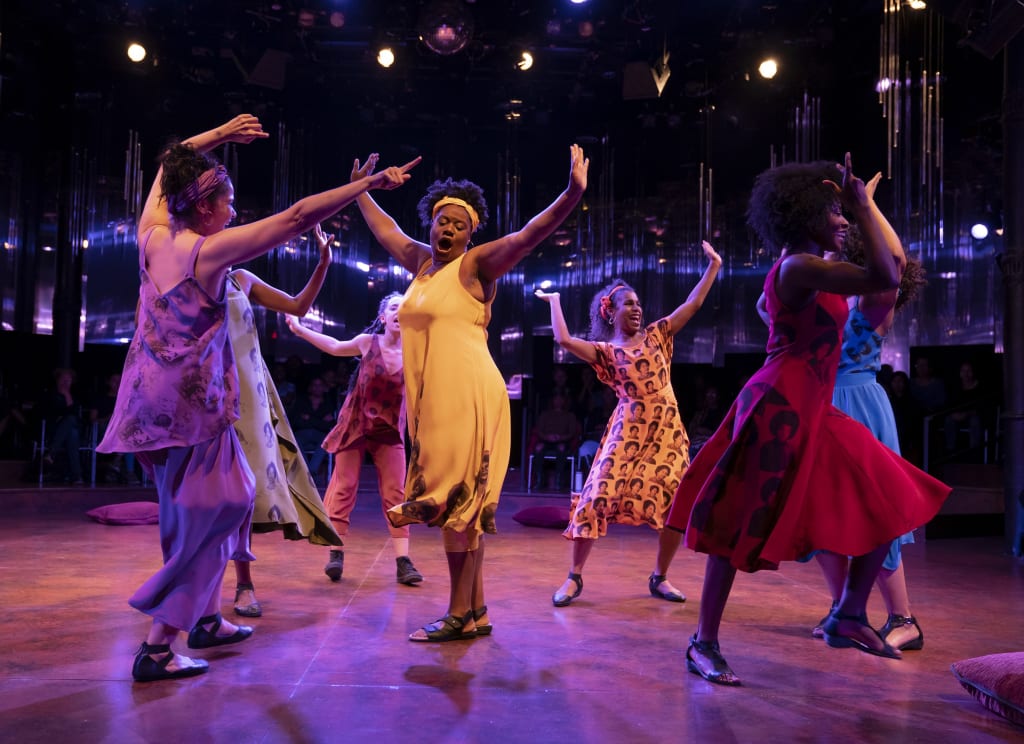
For Colored Girls Who Have Considered Suicide / When the Rainbow Is Enuf is a series of poetic monologues that shares a conversation about black women only identified by the colors they are assigned like red, blue, green, brown, yellow, orange, and purple telling their stories of the seven women who have suffered oppression in a racist and sexist society focusing on the subject of domestic violence, abortion, r*pe, and abandonment. Since its debut, the play was nominated for Tony Award and won an Obie Award. Actress recited poetic monologues as a performance piece, performance at universities a television adaptation, a flim adaptation, and a Broadway revival making it a lasting legacy.
For Colored Girls Who Have Considered Suicide When the Rainbow is Enuf or for short “for colored girls” was written by Ntozake Shange.
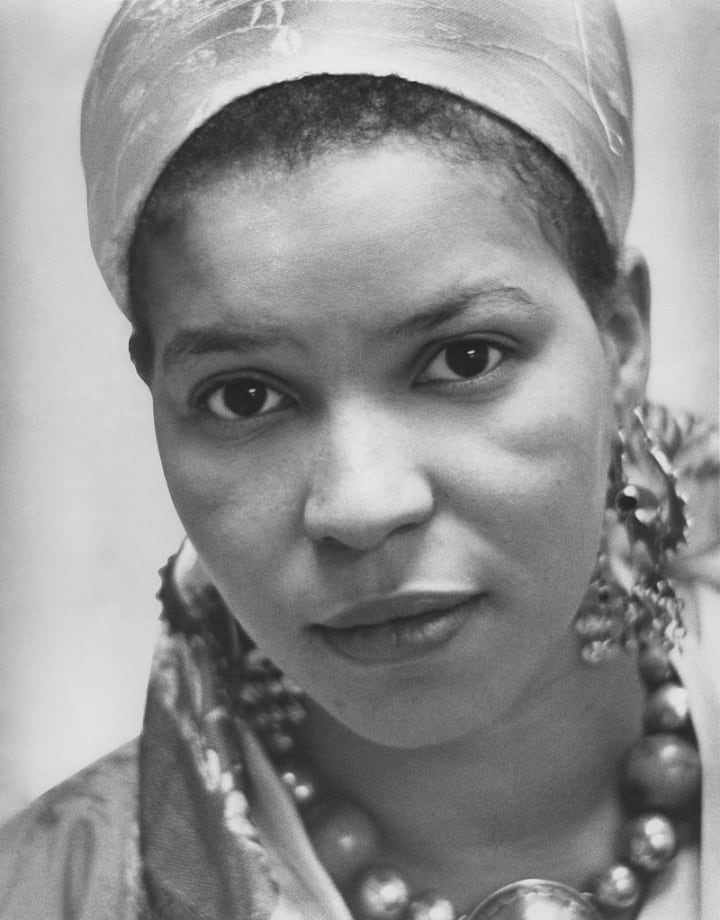
Born as Paulette Linda Williams in Trenton, New Jersey. Williams was born to upper middle class family. Her father, Paul T. Williams, was a surgeon, and her mother, Eloise Williams, was an educator and a psychiatric social worker. When she was aged eight, Shange's family moved to the racially segregated city of St. Louis. As a result of the Brown v. Board of Education court decision, Shange was bused to a white school where she endured racism and racist attacks. Shange’s family had a strong interest in the arts and encouraged her artistic education. Among the guests at their home were Dizzy Gillespie, Miles Davis, Chuck Berry, Paul Robeson, and W. E. B. Du Bois. At a young age, she expresses her interest for poetry. While growing up with her family in Trenton, Shange attended poetry readings with her younger sister Wanda aka Ifa Bayeza. These poetry readings fostered an early interest for Shange in the South in particular, and the loss it represented to young Black children who migrated to the North with their parents. In 1956, Shange's family moved to St. Louis, Missouri, where Shange was sent several miles away from home to a non-segregated school that allowed her to receive "gifted" education. While attending this non-segregated school, Shange faced overt racism and harassment. These experiences would later go on to heavily influence her work.
When Shange was 13, she returned to Lawrence Township, Mercer County, New Jersey where she graduated in 1966 from Trenton Central High School. In 1966, Shange enrolled at Barnard College. During her time at Barnard, Shange met fellow Barnard student and would-be poet Thulani Davis. The two poets would later go on to collaborate on various works. Shange graduated cum laude in American Studies, then earned a master's degree in the same field from the University of Southern California in Los Angeles. However, her college years were not all pleasant. She married during her first year in college, but the marriage did not last long. Depressed over her separation and with a strong sense of bitterness and alienation, she attempted suicide. In 1970 in San Francisco, having come to terms with her depression and alienation, Shange decided to change her name from “Paulette Linda Williams” to Ntozake Shange as her Permanent name and pen name.
In 1975, after receiving her masters degree, Shange started writing and performing her poetry at a womens bar in California. She moved back to New York.
It was when it gave her the idea to write a choreopoem performance called for colored girls.
Define choreopoem
A choreopoem is a type of dramatic expression that mixes poetry, movement, music, and song.
Shange was influenced by the Black Arts Movement numerous women of the movement began 1960s who were using their work to oppose traditional Black Aesthetic attitudes and emphasize Black patriarchy and masculinity, as well as the feminist art movement, which concentrated on using art of many mediums to protests for war and in favor of civil and LGBT rights. Thus, in a personalized, familiar, yet constructed language and voice, her genre and praxis established an exploratory and important place for Black Women’s many and complex experiences.
Her choreopoem genre established story production procedures that went beyond what was available in both Western and European operatic dance and the Black Theatre heritage. She recognized and questioned the function of the Black Theatre culture in reinforcing Western cultural paradigms of innovation and thought in Black communities. Instead, she encouraged Black artists to consider Afrocentric, multidisciplinary, and possible forms and structures of communication.
Shange wrote roughly twenty poems in the summer of 1974 whilst collaborating alongside choreographer Paula Moss on a broader choreographic project. During this time, Shange created her 1st official, authored, and also most best-known choreopoem for colored girls who have considered suicide/when the rainbow is enuf. Shange was brave enough to face her childhood experiences through movement, working closely with choreographer Dianne McIntyre. Shange and McIntyre partnered on choreography for colored girls in order to transmit knowledge and community via dance. For McIntyre, the integration of motion & dancing inside a choreopoem was as important as the poetry part.
The cast of characters involved with seven black women:
- Lady in Red
- Lady in Blue
- Lady in Purple
- Lady in Yellow
- Lady in Brown
- Lady in Green
- Lady in Orange
The time and setting are modern and dressed in the character colors. for colored girls is a series of 20-22 poems, depending on whether "my love is too" and "positive" are included in the list.
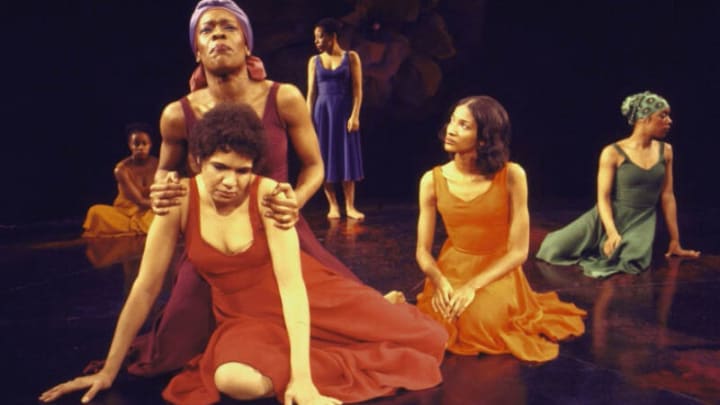
For colored girls... opened on Broadway at the Booth Theatre September 15, 1976, following a run at The Public Theater. The production, arranged and directed by Oz Scott and choreographed by Paula Moss, played 5 previews and 742 performances before closing July 16, 1978. The Broadway cast starred Beverley as Lady in Red, Laurie Carlos as Lady in Blue, Risë Collins as Lady in Purple, Aku Kadogo as Lady in Yellow, Janet League as Lady in Brown, Paula Moss as Lady in Green, and Shange as Lady in Orange with Aku Kadogo, Seret Scott, and Michele Shay as understudies.
The production would go on to be nominated for two Tony Awards, with Trezana Beverley winning for Best Featured Actress in a Play.
For Colored Girls would win an Obie Award for Distinguished Production and a Theatre World Award.
for colored girls who have considered suicide/when the rainbow is enuf opened at The Public Theater in June 1976. Three months later, in September, the show was performed at the Booth Theater on Broadway, where it was continued until July 1978 and ran for 742 shows.
Shange performed as the "lady in orange" at the Broadway opening. It was also published in book form in 1977 by Macmillan Publishing, followed by a Literary Guild edition in October 1977 and Bantam Books editions beginning in 1980. A cast recording was also released by Buddah Records.
From February to July 1978 the production, presented by the Adelaide Festival Centre Trust and several American entrepreneurs, toured Australia. It was staged first at Her Majesty's in Adelaide, South Australia, as part of the 10th Adelaide Festival of Arts, before touring to Melbourne, Sydney, Townsville, Cairns, and Brisbane, for two- to four-week runs. Original cast members Alfre Woodard, Trazana Beverley, Laurie Carlos, Aku Kadogo, Carol Maillard, and Lynn Whitfield featured in the show, while it was directed by Oz Scott.
For colored girls was adapted in 1987 for television on PBS station WNET-TV, as part of the American Playhouse. The adaptation was directed by Oz Scott, was seen as a serious departure from the Broadway production. The cast starred Alfre Woodard, Trazana Beverley, Laurie Carlos, Aku Kadogo, Carol Maillard, Ntozake Shange, and Lynn Whitfield the same tour cast.
In 2010, Film director and playwright Tyler Perry adapted for colored girls to a feature film. The cast features Janet Jackson, Tessa Thompson, Thandie Newton, Kimberly Elise, Loretta Devine, Kerry Washington, Whoopi Goldberg, Phylicia Rashad, Macy Gray, and Anika Noni Rose. The film received mixed reviews.
After for colored girls, Shange has written more poems, plays, essays, and novels. Shange has been in public speaking events until 2016.
In 2022, for colored girls was revived back to Broadway and was nominated for the Tony Award for Best Revival of a Play.
Shange died in her sleep on October 27, 2018, aged 70, in an assisted-living facility in Bowie, Maryland. She had been ill, having suffered a series of strokes in 2004 but she had been on the mend lately, creating new work, giving readings and being feted for her work. Her sister Ifa Bayeza (with whom she co-wrote the 2010 novel Some Sing, Some Cry).
“It's a huge loss for the world. I don't think there's a day on the planet when there's not a young woman who discovers herself through the words of my sister."
Since for colored girls, it leaves behind not only a lasting legacy for colored girls but an impact for African American women and writers who are poets or playwrights. In 2012, political commentator Keith Boykin wrote an essay novel called For Colored Boys Who Have Considered Suicide When the Rainbow is Still Not Enough: Coming of Age, Coming Out, and Coming Home. The book focuses on men of color on the topic of surviving growing up gay.
For colored girls has been continually performed in colleges and universities, art spaces, and theaters throughout the world. It has been set in beauty shops, prisons, and other historical time periods. Since for colored girls, her poetic play has inspired other playwrights to write choreopoems. Even myself I had written a poetic play called BOYS LIKE US
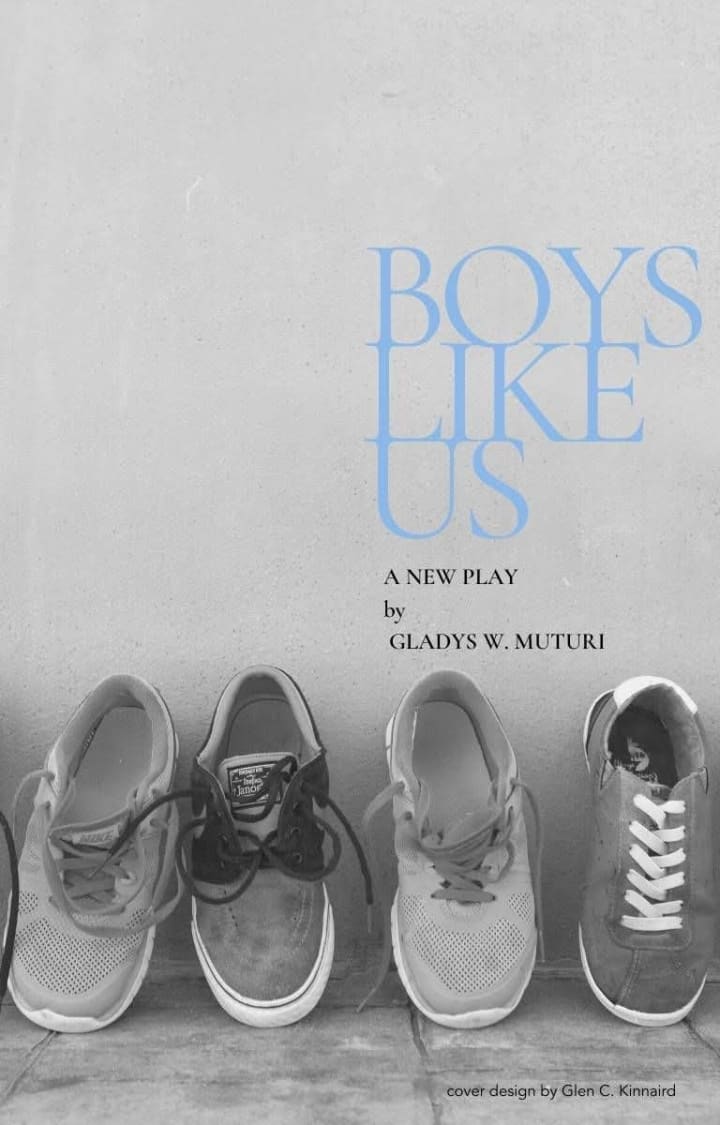
Which is coming soon.
I made a Gofundme page for my production company. If anyone wants to help fund BOYS LIKE US.
In 2024, the poems were adapted by students of St. Mira’s College for Girls, Pune, as part of their theater course. The play, which brought the poems to life on stage, was designed and directed by Prathmesh Viveki. The first performance took place on October 26, 2024, at the Indulakshmi Auditorium.
Source
https://publictheater.org/productions/season/1920/for-colored-girls/
https://officialntozakeshange.com/what-how-and-why-is-started-everything-you-need-to-know-about-choreopoem/
https://playbill.com/article/take-a-look-back-at-the-original-broadway-production-of-ntozake-shanges-for-colored-girls
About the Creator
Gladys W. Muturi
Hello, My name is Gladys W. Muturi. I am an Actress, Writer, Filmmaker, Producer, and Mother of 1.
Instagram: @gladys_muturi95
Facebook: facebook.com/gladystheactress
YouTube: @gladys_muturi
COMING SOON TALES & CONFESSIONS OF HIGH SCHOOL
Keep reading
More stories from Gladys W. Muturi and writers in Writers and other communities.
Keep Going Until I Make it Big
For the past six years since I have been on Vocal Media, I have published poetry, excerpt scripts, music critiques, film and TV critiques, biographies, celebrities, where are they now stories, true crime stories, personal stories, gadgets, tech, and history. Before I signed up on Vocal Media, I was unemployed and an aspiring writer trying to find a writing gig just to get my work to be noticed. I had completed my first play which had been unproduced and I was a stay-at-home single mother to my loving autistic son Xavier.
By Gladys W. Muturi2 years ago in Writers
6 AI Tools That Turn Static Images into Dynamic Videos
The demand for engaging visual content has never been higher, and video reigns supreme. For many businesses, marketers, and individual creators, however, producing polished video content can be a time-consuming and resource-intensive endeavor. The good news is that artificial intelligence is rapidly bridging this gap, offering innovative solutions to transform even the simplest static images into captivating dynamic videos.
By alinasir nasir6 days ago in Writers



Comments (1)
When I was about 12, I discovered the book at the library. As a young black Canadian, it floored me that you could write like that...and have it performed! Thank you for this, and I hope to one day be able to see the dream I had of it on stage.