
The Indonesian stainless steel market has vast potential
Indonesian stainless steel

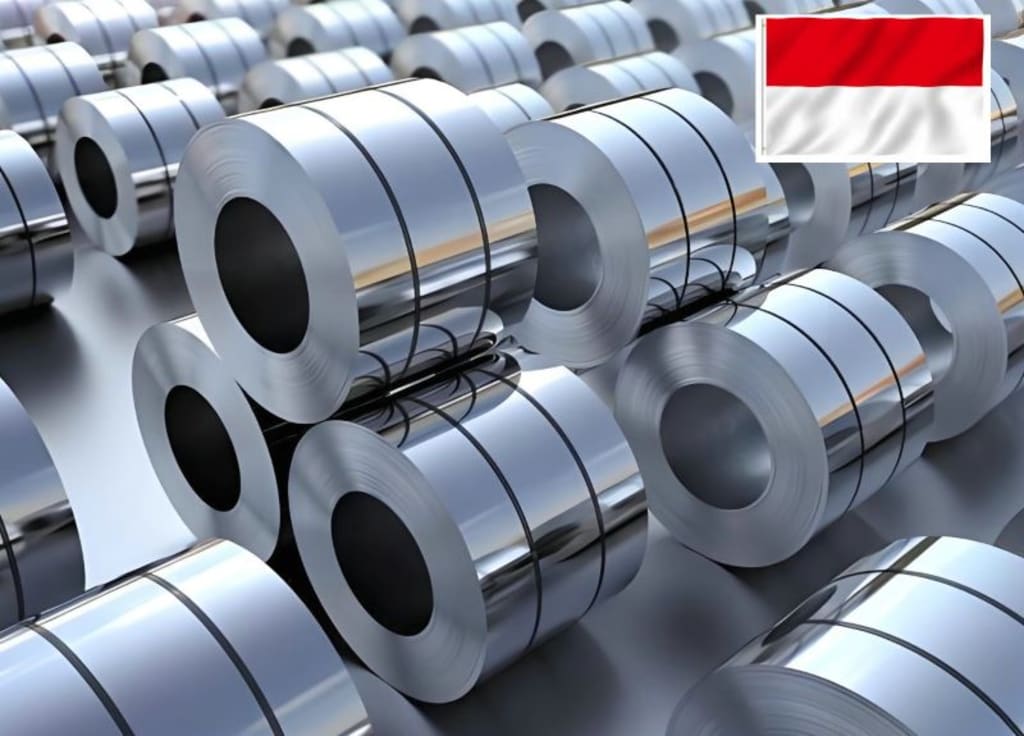
In the global stainless steel industry landscape, Indonesia is emerging as an important force in the industry's development, leveraging its unique advantages. The development of its stainless steel industry not only affects the domestic economic trend but also has a profound impact on the supply-demand balance and competitive landscape of the global stainless steel market.
1. Stainless Steel Supply in Indonesia
In recent years, Indonesia's stainless steel production has shown significant changes. In 2020, Indonesia's stainless steel production was approximately 2.83 million tons. In 2021, the stainless steel production reached 5.01 million tons, successfully becoming the world's second-largest stainless steel producer. Although the stainless steel production declined and adjusted in 2022 and 2023, it still firmly ranked as the world's second-largest stainless steel producer. In 2024, the stainless steel production once again exceeded 5 million tons, reaching 5.04 million tons, hitting a new high and demonstrating strong recovery and growth potential.
The expansion of stainless steel production capacity in Indonesia has been extremely rapid. From having virtually no stainless steel production capacity before, it reached 2 million tons in 2017, 4 million tons in 2020, and by 2024, the stainless steel production capacity had reached 7.5 million tons. The rich nickel ore resources provide a solid foundation for capacity expansion. Indonesia has 43% of the world's nickel resources, which has attracted numerous enterprises to set up operations. Taking Tsingshan Group as a representative, its Morowali Industrial Park in Indonesia is one of the largest stainless steel production bases in the world. Many enterprises plan to further expand their production capacity. It is expected that in the next 2 - 3 years, Indonesia's stainless steel production capacity is likely to climb to 9 million tons. In the next few years, its production capacity and output are expected to continue to grow, consolidating its position as an important global producer.
Nickel, as a key raw material for stainless steel production, gives Indonesia a unique advantage. The rich nickel ore resources not only ensure an adequate supply but also reduce the cost of raw material procurement. The local mining and supply of nickel ore can directly meet the domestic stainless steel production needs, reducing dependence on imported nickel. Thus, the Indonesian stainless steel industry has a significant cost advantage in global market competition. The Indonesian government has promoted the development of the stainless steel industry through a series of policies and measures. For example, restricting nickel ore exports and encouraging the development of domestic processing and value-added industries. This has prompted enterprises to increase investment in domestic stainless steel production, promoting the agglomeration and scaled development of the industry and providing policy guarantees for stainless steel supply.
2. Stainless Steel Demand in Indonesia
Indonesia's domestic stainless steel demand is mainly concentrated in industries such as construction, infrastructure, automotive, and household appliances. In the construction sector, with the acceleration of urbanization, new commercial buildings, residential construction, and infrastructure projects are emerging continuously, leading to a continuous increase in the demand for stainless steel. The rapid development of the automotive and household appliance industries has also led to a steady increase in the demand for stainless steel products such as components. However, despite the growth in demand, compared with its huge production volume, local stainless steel consumption in Indonesia is limited, and the scale of the domestic market demand is relatively small.
Indonesian stainless steel products occupy an important position in the international market, with a large amount of exports to countries and regions such as China, India, Vietnam, and Southeast Asia. The export products are mainly hot-rolled and cold-rolled coils with a width ≥ 600mm and slab. In the Asian market, Indonesian stainless steel meets the stainless steel needs of many countries with its cost advantage, and the export volume accounts for a relatively high proportion of the total output. The global demand for stainless steel has maintained stable growth, especially in emerging markets. With the acceleration of industrialization and urbanization, the demand for stainless steel is expected to continue to rise, providing a broad market space for Indonesian stainless steel exports.
3. Prospects for the Development Trend of Indonesian Stainless Steel
At present, there are numerous stainless steel projects planned in Indonesia. With the gradual progress of these projects, it is expected that by 2027, Indonesia's stainless steel production capacity will reach 9 million tons, and by 2030, it is likely to break through 10 million tons to 12 million tons. Many enterprises will continue to increase investment, introduce advanced production equipment and technologies, and further enhance production capacity. In the next few years, the Indonesian stainless steel industry will continue to be an important growth point for global stainless steel output. While expanding production capacity, enterprises will pay more attention to technological upgrading. By introducing advanced production technologies, such as more efficient smelting processes and automated production processes, product quality and production efficiency will be improved. This not only helps reduce production costs but also enhances the competitiveness of products in the international market, meeting the quality and performance requirements of different customers.
The Indonesian government is actively promoting infrastructure plans. The construction of the new capital, Nusantara City, will generate a large demand for stainless steel, ranging from construction structural materials to interior decoration materials. In addition, the continuous development of the automotive and household appliance industries will further increase the demand for stainless steel components. With the development of the domestic economy and the improvement of residents' living standards, the consumer market's demand for high-quality stainless steel products will gradually be released, becoming an important force driving the growth of domestic stainless steel demand. The recovery of the global economy and the rise of emerging markets bring opportunities for Indonesian stainless steel exports. Especially in some developing countries, the acceleration of industrialization and urbanization has led to a rapid increase in the demand for stainless steel. With its cost advantage, Indonesian stainless steel will further expand its market share in the international market and meet the global demand for stainless steel.
Fluctuations in nickel prices have a huge impact on the Indonesian stainless steel industry. As the main raw material, the instability of nickel prices directly leads to fluctuations in production costs. When nickel prices rise, stainless steel production costs increase, squeezing corporate profit margins. If nickel prices remain low for a long time, it may affect the production enthusiasm of nickel mining enterprises, thereby affecting the stability of the raw material supply for stainless steel production. Changes in global trade policies and tariff adjustments have a significant impact on the Indonesian stainless steel export market. The rise of trade protectionism may lead other countries to set up trade barriers and increase import tariffs on Indonesian stainless steel products, increasing the cost of products entering the international market and weakening their price competitiveness, thus adversely affecting export volumes. The increasing global environmental awareness and stricter environmental policies require Indonesian stainless steel enterprises to adopt stricter environmental protection measures in the production process. This means that enterprises need to invest more funds in the construction of environmental protection facilities and the upgrading of production processes to meet higher emission standards. Otherwise, they will face risks such as suspension and rectification, increasing the operating costs and management difficulties of enterprises.
To cope with fluctuations in raw material prices, enterprises can sign long-term and stable supply contracts with nickel ore suppliers and participate in hedging in the futures market to stabilize raw material costs. In the face of changes in the international trade environment, the Indonesian government and enterprises should strengthen trade negotiations and cooperation with other countries, actively expand emerging markets, and reduce dependence on a single market. In terms of the environment, enterprises need to increase R & D investment, adopt green production technologies, improve resource utilization efficiency, reduce pollutant emissions, and achieve sustainable development.
The Indonesian stainless steel industry occupies an important position in the global market in terms of supply, relying on rich nickel ore resources and continuous capacity expansion. On the demand side, although the domestic market demand is limited, its strong export capabilities make its products sell well in the international market. In the future, the Indonesian stainless steel industry has great potential in terms of capacity expansion and demand growth. However, it also needs to address challenges such as fluctuations in raw material prices, changes in the international trade environment, and environmental pressures. Through reasonable coping strategies, the Indonesian stainless steel industry is expected to achieve sustainable and stable development in the global stainless steel market, injecting new vitality into the development of the global stainless steel industry.
Sinosteel Stainless Steel Pipe is the Manufacturer and Supplier of Stainless Steel Pipe and Special Alloy Pipe, Steel pipes with an outer diameter from 8mm to 3600mm, with wall thicknesses from 0.2mm to 120mm. Factory covering an area of 333,000 square meters. Production capacity reaches 200,000 tons.
About the Creator
SINOSTEEL STAINLESS STEEL PIPE
Sinosteel Stainless Steel Pipe Technology (Shanxi) Co., Ltd. is the manufacturer of Stainless Steel Pipe and Special Alloy Pipe. Steel pipes with an outer diameter from 8mm to 3600mm, with wall thicknesses from 0.2mm to 120mm.
Keep reading
More stories from SINOSTEEL STAINLESS STEEL PIPE and writers in Writers and other communities.
A Brief Introduction to the Indonesian Steel Industry
I. General Information about Indonesia Among the member states of the Association of Southeast Asian Nations (ASEAN), Indonesia has the largest land area, the largest population, and the highest GDP. Specifically, Indonesia's GDP accounts for more than one-third of the total ASEAN GDP, and its population accounts for 41% of the total ASEAN population. In addition, Indonesia is the world's largest archipelagic country, with a national population of 276.36 million, ranking fourth in the world. In 2021, Indonesia's apparent steel consumption was 15.46 million tons, ranking third among ASEAN countries.
By SINOSTEEL STAINLESS STEEL PIPE9 months ago in Writers
Why You Should Write Love Letters to Yourself
The term of endearment hyperbole, ‘I Love You to the Moon and Back’, which I often tell my daughter, with the additional elongated: ‘and back again, beyond infinity’, is believed to have originated from Sam McBratney’s 1994 children’s book: ‘Guess How Much I Love You’.
By Chantal Christie Weiss2 days ago in Writers
A Dart at Dusk
Seconds ago, the sullen sun set on the two of us… my exuberant furry companion and me. A fresh breeze embraces us, delivering welcome relief from the day’s oppressive heat. His typical stumbling and staggering along — apace with a sloth — has turned into trip-trapping, high-stepping, almost skipping along.
By Angie the Archivist 📚🪶4 days ago in Petlife



Comments
There are no comments for this story
Be the first to respond and start the conversation.