
The Hands That Don’t Forget
A simple story about robots in care — and why we must not forget the human heart.
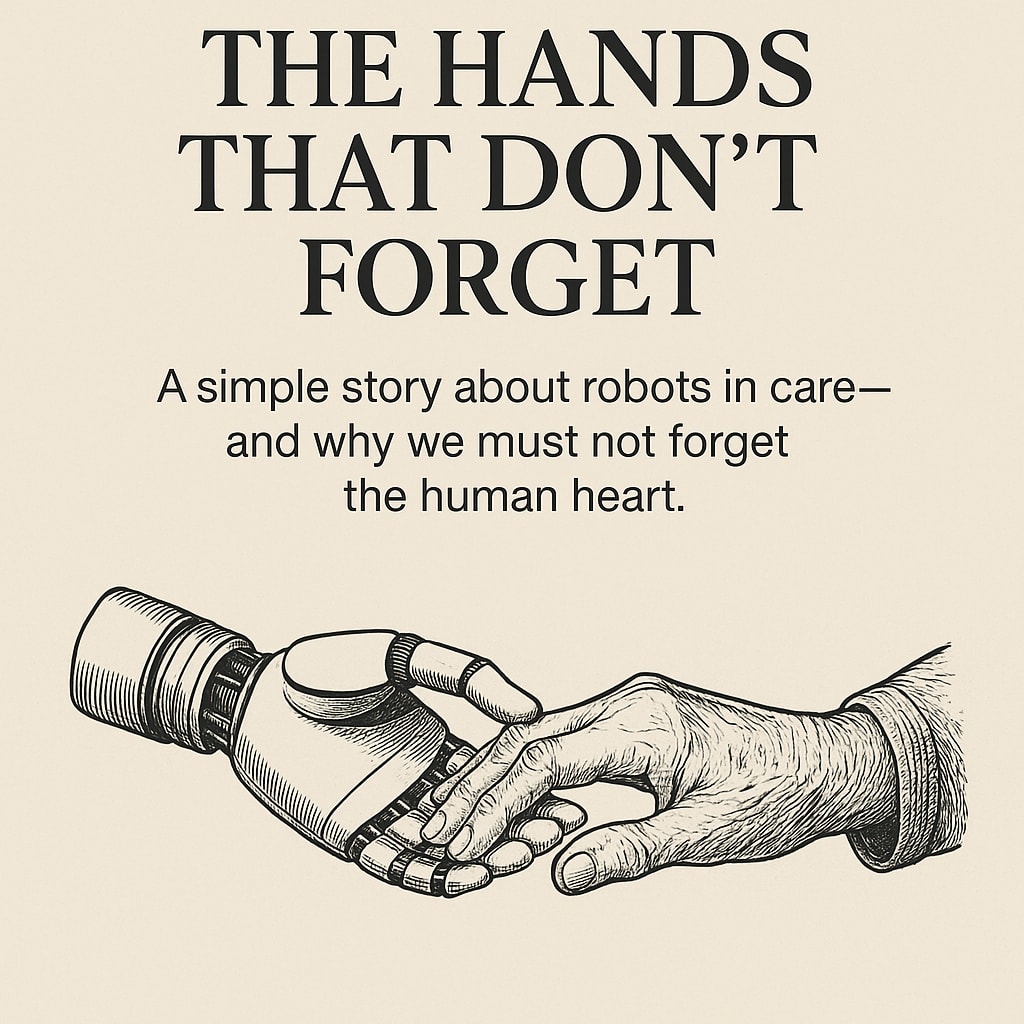
I am writing this story because the UK Government and care industry are now seriously exploring robots in social care. With more than 130,000 vacancies across adult care, the government believes technology and automation could be one of the solutions. Robot assistants are being tested to help at home — lifting, feeding, reminding about medicine, and offering night-time support. This sounds exciting, modern and efficient, But are we forgetting what care truly means?
To explain this, here is a simple story.
A Story That Could Soon Be Real
Mrs. Eleanor Reed, 87, lived alone in her small flat in East London. She was kind, polite and never wanted to “bother anyone.” Her hands shook when she held a cup — the same hands that raised children, cooked meals, and cared for a family her whole life.
Because of staff shortages, her three daily home-carer visits slowly reduced. One day, the council installed a robot care assistant in her home. It had soft human-like hands and a calm digital voice.
“Hello, Eleanor. I am here to help.”
And it did help.
The robot:
- never forgot her medication
- never got tired
- never rushed her
- cooked perfectly measured meals
- kept her safe
Everything was efficient. Everything was correct. But something was missing.
Eleanor stopped smiling.
The robot could make tea…
but couldn’t feel when she was too sad to drink it.
It could help her bathe…
but couldn’t sense her embarrassment or protect her dignity the way a gentle human carer would.
It could say “Good morning”…
but not truly ask “How are you… really?”
When Her Son Visited
Her son, Daniel, visited once a week. He saw a clean flat, food ready, medicines taken.
“Everything looks perfect, Mum,” he said.
Eleanor looked at him with teary eyes and whispered:
“The robot cares for me,
but no one cares about me.”
Those words broke something inside him. Why I Am Sharing This. Because the UK government is currently testing robotics in social care with three main aims:
1. Solve the care staff shortage: There are not enough carers. The ageing population is rising. Robots are seen as a way to “fill the gap.”
2. Reduce NHS and council costs: Robots are a one-time investment. Humans require salaries, training, and sick leave. Robots don’t.
3. Improve safety and prevent hospital admissions: They can monitor falls, alert emergencies, and reduce human error.
All of these goals are logical.
Yes — robots can help us in care.
But they must never replace us in care.
Because older people do not just need tasks completed.
They need connection, empathy, dignity, respect and love.
Where Robots Can Help (and Should Help)
We should use robots for:
✅ Lifting, moving, preventing carer injuries
✅ Night-time monitoring & fall alerts
✅ Medication reminders
✅ Cleaning & basic tasks
✅ Admin paperwork
These tasks tire humans and can be done by machines.
Where Robots Must Never Replace Humans
- Listening to their stories
- Holding their hands during fear
- Sharing small talk that makes them feel human
- Respecting their dignity and emotions
- Making them feel valued and not a burden
Care is not just physical.
Care is emotional, social and deeply human.
The Lesson
Robots should support carers – not replace them.
- Use robots to give carers more time, not remove human visits.
- Use technology to protect safety, not remove warmth.
- Use innovation to enhance dignity, not reduce humanity.
Because one day, it will be us needing care.
And when that day comes, none of us will ask for a machine that never makes mistakes. We will ask for a person who sits beside us, listens, smiles, and stays a little longer than needed.
About the Creator
Keep reading
More stories from writers in Writers and other communities.
Dubai Travel Guide: Your Essential Planning Companion
Dubai defies expectations. This city rises from the Arabian desert like a mirage made real, where record-breaking skyscrapers stand minutes from ancient souks, where you can ski indoors while the sun blazes outside, and where luxury and adventure collide in the most spectacular ways imaginable. Whether you're a first-time visitor or a seasoned traveler seeking something extraordinary, Dubai delivers an experience unlike anywhere else on earth.
By Google Account7 days ago in Writers
Wild Card Weekend Recap: What Happens Now?
I think I figured out why I love Wild Card Weekend so much. It's because it's the first playoff anything of the calendar year. The NFL season starts in the fall, and once upon a time, the champion was crowned either on or slightly before New Year's. The evolution of the NFL schedule has resulted in the playoffs starting just into the New Year, and currently, the final week of the season falls on the first weekend of the New Year, with Wild Card Weekend coming a week after that. So yes, chronologically, the NFL's Wild Card Weekend serves as the first playoff anything of the calendar year.
By Clyde E. Dawkins4 days ago in Unbalanced




Comments
There are no comments for this story
Be the first to respond and start the conversation.