
The Future of Artificial Intelligence
Exploring the Impact of AI on Society, Work, and Innovation
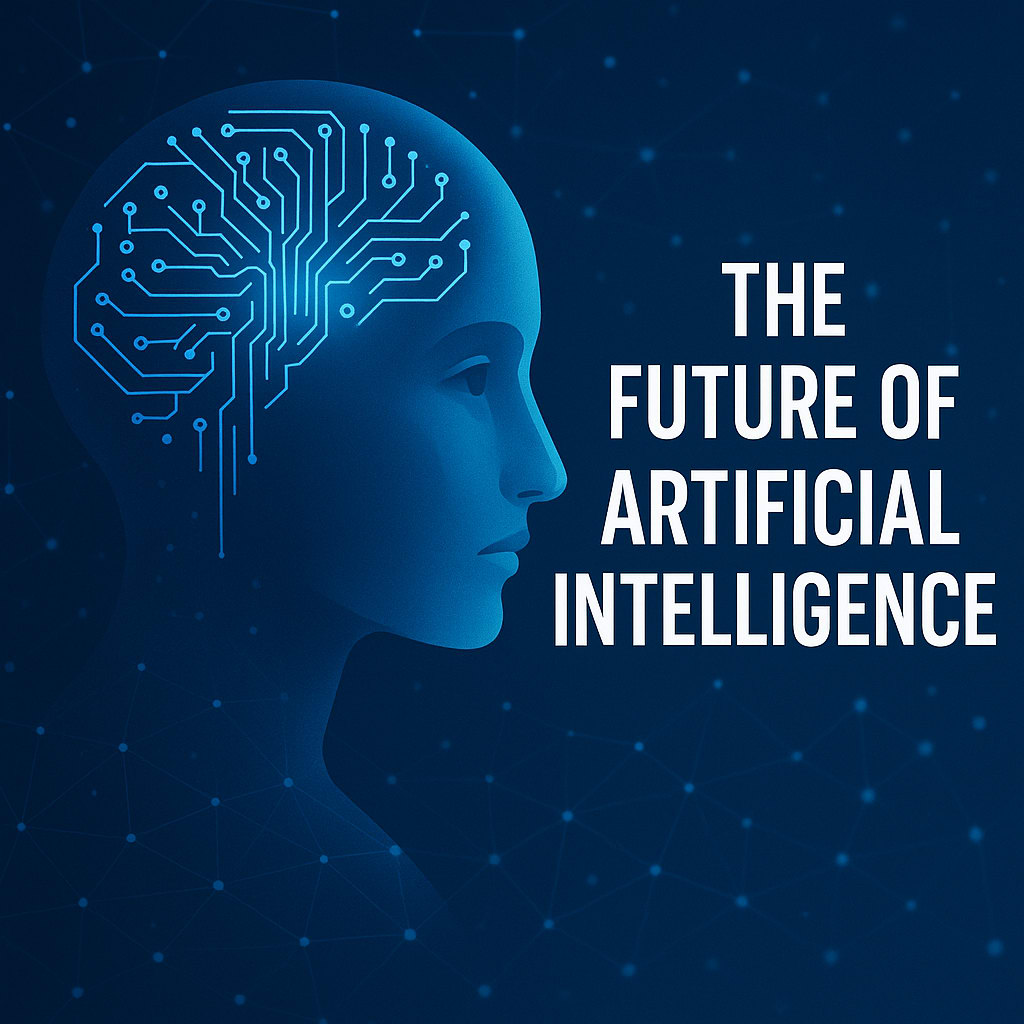
Artificial Intelligence (AI) has come a long way from being a concept rooted in science fiction to a driving force behind real-world innovation. From smart assistants in our phones to complex machine learning systems that drive self-driving cars and predict medical outcomes, AI is embedded in our daily lives—often in ways we don’t even realize.
But what lies ahead for this rapidly evolving technology? The future of artificial intelligence is not just about faster algorithms and smarter machines. It’s about how AI will transform industries, reshape society, and force humanity to answer fundamental ethical questions.
## The Next Wave of Innovation
In the coming decade, AI is expected to undergo dramatic transformations fueled by advances in computing power, neural networks, and access to big data. These developments will allow AI systems to go beyond current limitations and enter domains that have traditionally required human intuition and emotional intelligence.
For example, **generative AI** models are already pushing boundaries in content creation—from writing articles and designing images to composing music and coding software. These tools are evolving into creative partners, blurring the line between human and machine-generated content.
In the healthcare sector, **predictive AI** will continue to revolutionize diagnosis, treatment plans, and drug discovery. AI algorithms trained on massive medical datasets can detect patterns that humans might overlook, leading to earlier interventions and more personalized care.
Meanwhile, **autonomous systems** will become more reliable, making self-driving cars, delivery drones, and robotic assistants increasingly mainstream. The key will lie in refining real-time decision-making and safety protocols, ensuring these systems behave predictably in complex environments.
## AI and the Workforce
One of the most pressing concerns about the future of AI is its impact on jobs. It’s true that automation will displace certain types of work—particularly repetitive, rule-based tasks. However, history has shown that new technologies also create new job categories that were previously unimaginable.
Rather than a full-scale replacement, the future of work will likely be one of **augmentation**, where AI tools enhance human capabilities. For instance, a marketing analyst might use AI to sift through vast datasets and uncover insights in seconds, or a lawyer might use AI to speed up legal research.
The challenge will be ensuring that workers are equipped to adapt. Governments, institutions, and corporations will need to invest heavily in **education and reskilling programs**, focusing on digital literacy, critical thinking, and collaboration with intelligent systems.
## Ethical Considerations and Governance
As AI systems grow more powerful, the ethical stakes grow higher. Already, we’re seeing debates around **bias in algorithms**, **misinformation**, **data privacy**, and **surveillance**.
Bias in AI is especially concerning. Since AI learns from historical data, it can inherit and amplify the same biases that exist in our society—such as racial or gender disparities. An AI system used in hiring or criminal justice, for example, could make decisions that perpetuate inequality if not properly monitored.
To address these challenges, experts call for **transparent and accountable AI governance**. This includes developing global standards for AI development, requiring explainable algorithms, and creating ethical oversight boards to audit AI use cases.
Furthermore, there’s a growing consensus that AI should be **aligned with human values**—an area known as "AI alignment." This field is focused on ensuring that AI systems pursue goals that are beneficial and controllable, even as they become more autonomous.
## AI and Human Identity
Beyond economics and ethics, AI also forces us to reconsider aspects of human identity. As machines begin to replicate creativity, emotion recognition, and even conversation, we’re faced with new questions: What does it mean to be intelligent? What roles are uniquely human? Should AI ever be granted rights or consciousness?
These philosophical questions are not just academic—they will have real implications for how we design AI systems and how we coexist with them.
Already, AI is being used to create lifelike avatars of deceased people, generate realistic deepfakes, and simulate emotional connections in virtual environments. These applications could offer comfort and convenience, but they also carry risks of **emotional manipulation** and **identity confusion**.
In the future, we will need to establish **digital boundaries and norms**—deciding when it’s appropriate for AI to emulate human behavior and when it's necessary to maintain a clear line between human and machine.
## The Role of Collaboration
One thing is clear: the future of AI is not something that can—or should—be built by technologists alone. It requires collaboration across disciplines: ethicists, policymakers, designers, sociologists, and educators must all play a role in shaping how AI integrates into society.
Tech companies must adopt a **human-centered design approach**, where AI systems are built not just for efficiency, but with empathy, inclusivity, and transparency in mind. Governments must also be proactive in crafting **policies that anticipate change** rather than reacting after the fact.
Meanwhile, the public must be empowered to understand how AI works and how it affects their lives. Raising awareness and promoting digital literacy will be key to ensuring an informed, resilient society.
## Final Thoughts
The future of artificial intelligence is both thrilling and complex. While AI holds immense promise to solve some of humanity’s biggest challenges—from climate change to healthcare access—it also poses risks that must be carefully navigated.
If approached wisely, AI can usher in a new era of innovation and human flourishing. But doing so requires foresight, collaboration, and a deep commitment to aligning technology with our highest values.
We are not passive observers of AI’s future—we are its architects. The decisions we make today will shape not just how machines think, but how humanity evolves alongside them.
About the Creator
Keep reading
More stories from Noor Hussain and writers in Writers and other communities.
Importance of Traceability Documentation in US Military Procurement
Traceability documentation plays a critical role in the procurement processes of the United States military. The defense sector relies on a vast network of suppliers and contractors to deliver the specialized components required for aircraft, naval systems, ground vehicles, communication equipment, and other mission-critical technologies. With such a complex supply chain, maintaining accurate documentation for every component becomes essential to ensure reliability, compliance, and operational readiness.
By Beckett Dowhan4 days ago in Writers




Comments
There are no comments for this story
Be the first to respond and start the conversation.