
The Future of AI in Healthcare: Top Trends and Applications
Top Trends and Applications

Artificial Intelligence was only incorporated within the context of the healthcare sector over the recent years. AI in healthcare has created new innovations which aim at enhancing the health of patients and the manner in which workflow is conducted. AI has the potential to assist both healthcare practitioners and patients at every stage, from diagnostics and treatment to home care. In this blog post, some of the practical applications of AI in health care, which demonstrate how this technology could enrich the experiences of the patients and employees, will be described.
AI-Powered Diagnostics
There is no doubt that the medical sector is experiencing a shift, with diagnostics links utilizing the power of artificial intelligence solution at their forefront. These tools are center for disruption of machine learning algorithms to identify symptoms that are contained in X-rays, MRIs and CT scans with high level of accuracy. This is being done by companies such as Zebra Medical Vision and Aidoc.
These firms offer technology-based services for the diagnosis of diseases such as cancer, fracture, and brain bleed by radiologists. Instrumental to this, these AI tools also help save time for diagnosis while at the same time enhance accuracy, along with the improvement of the patient’s health.
Personalized Treatment Plans
AI enables the creation of personalized treatment plans tailored to individual patients. Vast amounts of data that include genetic information, lifestyle factors and medical history are easily analyzed. As a result, AI recommends the most effective treatment plans.
IBM--Watson Health is a prime example of an AI/ML company. It uses AI to assist oncologists in the development of customized cancer treatment plans. This personalized approach ensures that patients receive treatments that are particularly suited to their unique conditions. Thus, it leads to better outcomes and fewer side effects.
Predictive Analytics for Patient Care
These analytics help predict patient demand and identify potential adverse health effects. Some applications of AI/ML use patient information to forecast clinical outcomes, for example, hospitalization, disease exacerbation or possible medical complications.
These proactive measures help in clinical decision making with timely corrective tasks that enhance patient health and lower costs. In fact, hospitals are utilizing predictive analytics to identify individuals prone to getting sepsis. These AI trends allow early diagnosis of the disease and in addition, sharply raises survival odds.
Virtual Health Assistants
AI-powered chatbots, are effectively changing patient engagement and support. These custom chatbot development solutions provide patients with 24/7 access to medical information, appointment scheduling, and symptom checking.
Companies like Buoy Health and Ada Health utilize AI effectively to offer personalized health advice and support. It enhances patient experience and accessibility. Also, these virtual assistants answer common health questions, provide medication reminders, and even offer mental health support. This makes healthcare more accessible and convenient.
Drug Discovery and Development
AI speeds up the drug discovery and development process simply by the identification of potential drug candidates faster and more accurately. AI/ML tools analyze biological data to predict the way different compounds will interact with targets in the body. This reduces the time and cost associated with bringing new drugs to market.
Companies like Insilico Medicine and Atomwise are at the top of this AI trend. They help transform pharmaceutical research effectively. By using AI to screen millions of compounds quickly, these companies are speeding up the discovery of new treatments for diseases such as cancer, Alzheimer's, and rare genetic disorders.
Remote Patient Monitoring
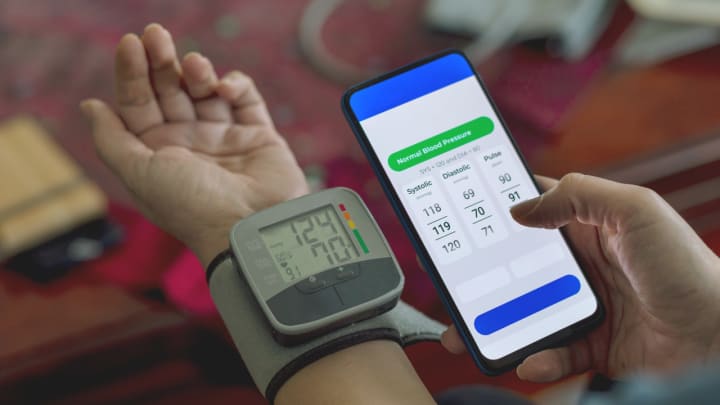
These include systems that utilize artificial intelligence to monitor patient’s health in real time outside the clinical care environment. Smart devices and sensors capture data in real-time, then analyzed by AI algorithms to identify departing patterns and inform care givers.
This technology is very useful when treating chronic diseases like diabetes, blood pressure among other ailments. It provides early and timely interventional measures and cuts down or prevents frequent hospitalization. For example, AI in healthcare takes data from a device that monitors one’s heart and is able to identify abnormal heart rhythms and warn a doctor before the patient has heart trouble.
Robotic Surgery
These surgeries enhanced by AI offer precision and control beyond human capabilities. Machines aid surgical operations to reach a high level of precision in difficult operations with low risks entailing.
Some of the famous robotic surgical systems are: The da Vinci Surgical System. It avails the surgeons with a better perspective that results in better surgical results and faster patient recovery. These systems undertake complicated operations by making small cuts that cause minimal pain to the patient and minimal time required to recover from the operation.
Natural Language Processing (NLP) in Medical Records
It is a branch of AI that enables computers to understand and interpret human language. In healthcare, NLP is used to analyze unstructured data in medical records that extract valuable insights and improve clinical documentation.
AI/ML companies like Nuance Communications are utilizing NLP to smoothen administrative tasks, reduce physician burnout, and enhance patient care. By converting spoken language into written text, NLP tools help doctors keep better records and spend more time with patients.
AI in Mental Health
AI as service is making waves in the field of mental health. The various applications and platforms driven by AI provide support for mental health conditions. They offer personalized therapy, mood tracking, and crisis intervention to help patients.
Based in Los Angeles, Woebot and Ginger are examples of AI based platforms that provide affordable and timely mental health care solutions to clients. Such applications provide the option of emotional behavioral therapy, daily mood changes and instant support during a mental health emergency. It makes mental health care more accessible and effective.
Conclusion
These above stated AI in healthcare examples are some of the significant AI integrations. They have the capability to transform the whole industry. However, these solutions are mere cherry on the cake when it comes to AI’s use cases in the medical industry.
The important thing to remember here is that these solutions cannot be designed as one-size-fits-all applications for every healthcare institution. Just like the personalized medical care established by these advanced technologies, they need to be customized to every institution’s requirement and problem statements.
Hence, one must connect with the AI development service provider with expertise in designing healthcare solutions to obtain the desired results.
About the Creator
MoogleLabs
MoogleLabs leverage AI/ML, Blockchain, DevOps, and Data Science to come up with the best solutions for diverse businesses.
Keep reading
More stories from MoogleLabs and writers in Writers and other communities.
AI Services Company: The Future of Digital Creativity
The world of creativity has been made more accessible thanks to the introduction of artificial intelligence. Today, every AI services company is working on projects that are pushing the boundaries of digital creativity. This is especially true in the world of web design industry, where they are building solutions that can automate website building and provide intelligent design assistants.
By MoogleLabsabout a year ago in Education
March 15, 2026
Merriam Webster - Word of the day: Tranche refers to a division or portion of a whole. World Contact Day is commemorated every year on March 15. It is a unique observance held globally to focus on communicating with extraterrestrial life and exploring the possibility that intelligent beings may exist beyond Earth. World Contact Day inspires people to invoke their curiosity and spend time thinking about the universe and the mysteries surrounding it. What is the “Ides of March”? According to the Roman calendar, the Ides are a monthly occurrence. In March and other months with 31 days, the Ides always falls on the 15th; it falls on the 13th in months with 30 days. The Ides traditionally marked the arrival of the new Moon and was cause for celebration. The word “Ides” is derived from Latin, meaning “to divide.” Mothering Sunday in 2026 falls on Sunday, March 15. Mothering Sunday, celebrated in the United Kingdom and Ireland, occurs on the fourth Sunday of Lent, which is exactly three weeks before Easter. Unlike the fixed-date Mother's Day in countries like the United States, Canada, and Australia, Mothering Sunday’s date changes each year according to the Christian liturgical calendar. On March 15, 2026, several notable observances and events are celebrated: Dumbstruck Day: A day to express frustration. Everything You Think is Wrong Day: A day to challenge and celebrate wrong beliefs. International Day Against Police Brutality: A day to raise awareness and advocate against police violence. My look at today, March 15, 2026 below:
By Denise E Lindquistabout 15 hours ago in Writers
Wedding Toast woes.
"Cheers Violet. I've been waiting for this moment for a long time. I can't believe you invited me to this wedding...is it to rub my face in your success at nabbing Guy. He doesn't even remember me. But I was the first one he managed to fool...He tried to marry me, but I found out just in time that he has a family back in Africa. So when you stole him from me...hahaha, you unwittingly did me a favor. He is trying to gain citizenship by using any willing female whom he can bamboozle.
By Novel Allen3 days ago in Writers


Comments
There are no comments for this story
Be the first to respond and start the conversation.