
The Echo of Twenty-Two
The Measure of a Line: The Lesson Between the Lines.

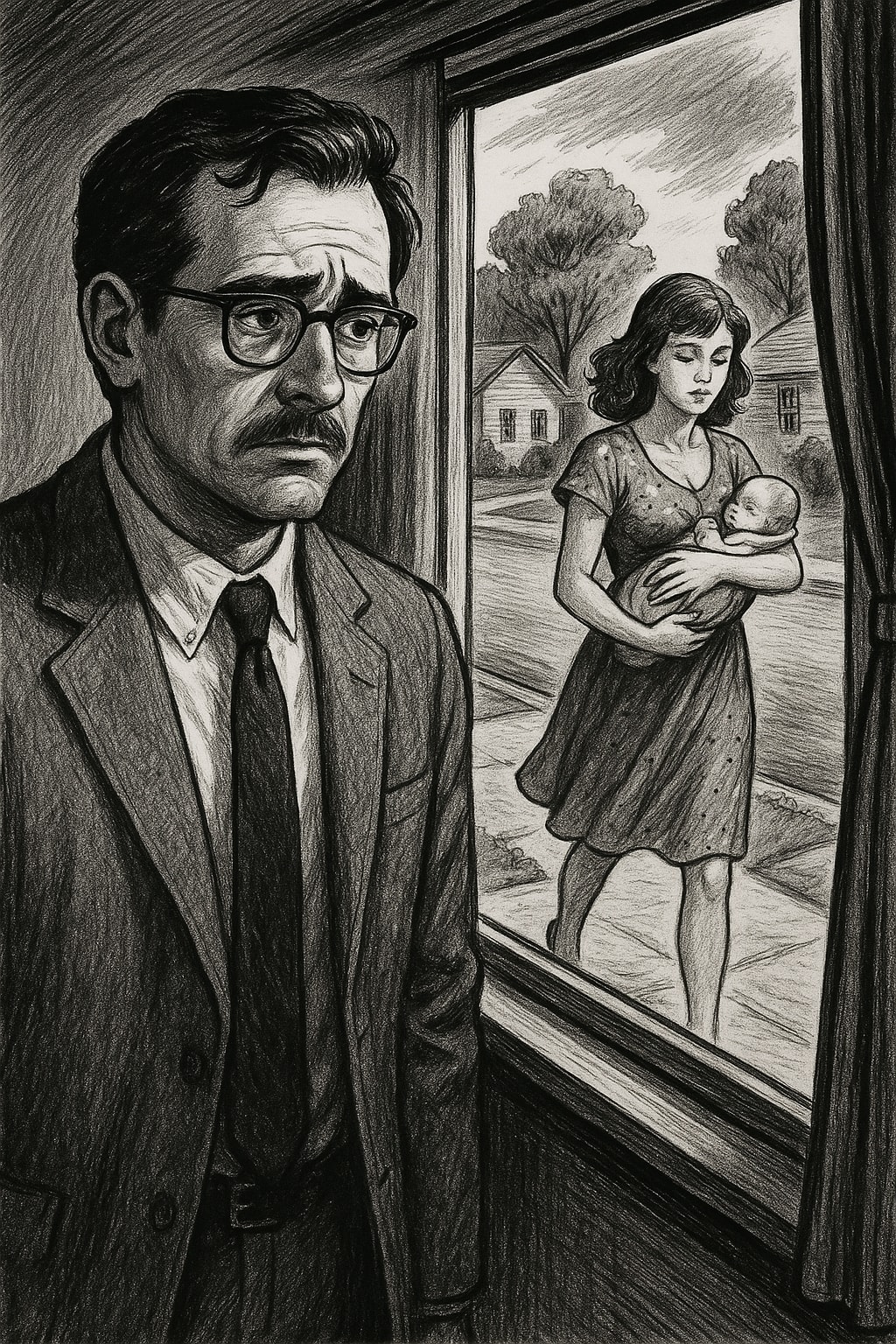
The Measure of a Line
The first day of the Advanced Poetics seminar was always a quiet riot of expectation. Twenty-year-old students, clutching overpriced, dog-eared anthologies, sat ramrod straight, waiting for Professor Mark Ellison to walk into the high-ceilinged lecture hall.
Mark was forty-five, but the sunlight that poured through the tall Gothic windows of the campus library failed to find a single line on his face that testified to his age. He had the easy posture of a man who loved his work and the clean, sharp features that allowed him to pass easily for thirty. He was also a man who had built his life on one immutable foundation: Tracy. His high school sweetheart, his only love, his wife of twenty-five years. Their life was defined by mutual quiet devotion, a shared history that was more comfortable than exciting, and the silent understanding that they would never have the children Mark had always, secretly, longed for. Tracy had made her decision long ago.
When Mark entered the room that September afternoon, his eyes swept over the rows, performing the practiced professional inventory: faces, names, potential, curiosity. Then he stopped.
Amber was sitting in the third row, bathed in a sliver of autumn light. She was twenty-two, but held the open, expectant stillness of someone younger. She wore a loose white shirt and her thick, dark hair was tied back carelessly. Mark wasn't looking at her as a student; he was looking at an echo. He was looking at Tracy, precisely twenty-two years old, sitting in a campus coffee shop before their first date, all potential and unwritten future.
Amber, sensing the fixed intensity of his gaze, looked up. Their eyes locked across the lecture hall. Mark instantly recognized the mistake he had made—a moment of transparent vulnerability. He shifted his weight and lowered his eyes, suddenly feeling every one of his forty-five years. Amber, however, didn't look away. A spark of something immediate and unsettling passed between them, igniting a crush in her and a deep, unfamiliar guilt in him.
He cleared his throat. “Welcome to Poetics. I am Professor Ellison, but please call me Mark. We begin today with T.S. Eliot, who taught us that April is the cruelest month, breeding lilacs out of the dead land. My aim is to teach you why.”
He launched into his lecture, but the rhythm of the class was subtly altered. Amber’s pen moved only when she wasn’t looking at him. When he spoke of poetic tension, she nodded, her eyes lingering on his mouth, and Mark found himself speaking a few decibels softer, his cadence more deliberate, aware of her attention in a way he hadn't been aware of anyone else’s for decades.
As the class was packing up, Amber approached his desk.
“Professor, I just wanted to say that quote… about April,” she said, her voice low and rich with interest. “My former professor used to say April was the kindest month, because it always brought possibility.”
Mark felt the pull, the slight deviation from the purely professional. “And you disagree?” he asked, leaning slightly forward.
Amber’s eyes flashed with a playful defiance. “I think Eliot was afraid of possibility. You seem… less so.”
He gave a genuine, small smile. “I try to keep an open mind, Ms. Davies. Now, if you’ll excuse me, I have a faculty meeting.”
“Of course, Professor,” she replied, but the lingering intimacy of their exchange left a warm, reckless heat in the air as she finally turned to leave. Amber knew then: she didn't just have a crush, she had a goal.
The Flaw in the Foundation
Three weeks into the semester, the first pop quiz hit the class. It was a simple recall exercise on meter and rhyme scheme. Amber, a talented poet herself, intentionally failed it, missing every other question with strategic carelessness.
The next day, Mark’s email landed in her inbox. It was concise and formal: Ms. Davies, I’d like to discuss your quiz score. Please see me after class on Thursday.
Amber smiled. Her plan was working perfectly.
When the last student had filed out on Thursday, Amber returned to the front. Mark sat on the edge of his desk, the fluorescent lights reflecting the weariness only an emotionally exhausted man could project.
“Amber, this isn’t like you. Your participation is excellent. Your written work shows a real understanding of structure. This score is… almost impossible to achieve accidentally.” He looked at her, searching for an explanation.
Amber dropped her façade slightly, letting a sliver of desperation show. “I’m sorry, Mark, Professor. It’s the metric system. My mind just completely blanks when I have to analyze scansion. I need help, but I really don’t want to fail this class. It’s my favorite.”
Mark hesitated. His personal policy was never to tutor students one-on-one, especially not young women. He had always been scrupulously careful. But the lie was subtle, wrapped in a vulnerability he recognized. And she had called him Mark.
“Look, I can’t tutor you officially,” he began, running a hand over the back of his neck. “But I can suggest that we meet for an informal discussion on the material. No class credit. Just... a review. Say, in my office, during lunch hours?”
“That would be incredible, thank you,” Amber said, her relief genuine, her eyes shining. It was a breach, and she had engineered it.
The Edge of the Map
The tutoring sessions began innocently. They discussed iambic pentameter and then, inevitably, shifted to their favorite poets, their personal histories, their dreams. Mark found himself talking about the things he no longer discussed with Tracy: the aching silence of their home, the lost dreams of fatherhood. Amber was a flawless mirror, reflecting back the excitement and intellectual curiosity he hadn't seen in decades.
One rainy Tuesday afternoon, two weeks after their first session, Amber was leaning over his desk, tracing a line of poetry with her finger. Mark was demonstrating a complicated rhyme scheme, their heads bent close. She looked up suddenly, their faces inches apart. The scent of rain and her floral perfume was intoxicating.
“You’re a good man, Mark,” she whispered, her voice barely audible.
“I’m really not,” he confessed, the words tasting like ash.
And then they kissed. It was fast, reckless, and catastrophic. The single kiss ripped through the foundations of his life, a catastrophic fault line beneath the quiet certainty he had built with Tracy.
They didn't speak of it for a week. Then Amber texted him, a simple, audacious invitation: Coffee? There’s a new place downtown that sells books and perfect espresso.
He knew what she meant. He wrestled with his conscience for twelve hours. He looked at Tracy that evening, calm and content as she graded papers on the sofa, and he felt a searing panic. He didn't want to lose her life, but he couldn't deny the hunger that Amber had reawakened.
He met Amber. Coffee led to a drink. The drink led to a small, anonymous hotel room just off the university grid.
When Mark got home at 2 AM, the bed was empty. Tracy was asleep on the sofa, still surrounded by student essays. He looked at her tired, familiar face and was overwhelmed by a tidal wave of self-loathing. He had shattered a twenty-five-year-old trust in a single, selfish evening.
He texted Amber: This was a terrible mistake. It cannot happen again.
Amber’s reply was instant: It wasn’t a mistake, Mark. It was the truth. Don't be afraid. We are adults. It's okay. I miss you already.
She didn't allow him the dignity of self-pity or regret. She simply pulled him forward. And Mark, exhausted by his own guilt and drawn by the powerful, intoxicating current of new desire, let himself be convinced. The affair continued.
The Impossibility of Closure
Six months later, Amber stood in Mark’s office, holding a small, white test strip.
“I’m pregnant,” she stated, her voice trembling, but her eyes held a defiant hope that Mark found terrifyingly beautiful.
Mark felt the blood drain from his face. This wasn't a secret weekend tryst; this was a life. He thought of Tracy, of the years of quiet despair they had shared over her firm, unwavering refusal to start a family.
“You can’t—we have to be rational,” Mark stammered, his mind racing through clinics and apologies.
“No,” Amber said, putting the strip on his desk, placing the evidence of their irreversible act between them. “I’m not getting rid of it. I want this baby, Mark.”
He looked at the small plastic stick, then at Amber's earnest, youthful face. He saw his last, desperate chance at fatherhood. Against every shred of reason, against the promise of his past, he felt a thrilling surge of relief.
“Okay,” he heard himself say, his voice thick with emotion. “We’ll keep it. I want this too. I’ve always wanted this.”
The truth about the affair, and now the baby, exploded into Tracy’s life six months later, shortly after Amber gave birth to a healthy baby girl. The moment Mark told her, Tracy didn’t scream or throw things. She simply looked at him, and her composure was more devastating than any rage. The man she had known since she was sixteen had vanished, replaced by a self-involved stranger.
“After twenty-five years, Mark, you traded everything for a child you could have had with me, if you had only pushed me,” she whispered, the cruelty of her words unintentional.
But then, an unexpected thing happened. Tracy forgave him. The sheer depth of their shared history anchored her. She couldn’t imagine a life without the man who was woven into the fabric of her identity. She would mourn the betrayal, but she would not leave.
Amber was livid. The forgiveness ruined her narrative. She had pictured herself stepping into Tracy’s old shoes, becoming the new foundation of Mark's life. Now, she was just the mistress with the baby. She threatened Mark: “If you don’t leave her, I’ll disappear. You’ll never see your daughter again.”
Mark, desperate, told Tracy about the threat. This time, Tracy was the pragmatist. “She’s young, unstable, and needs money. We want the baby. We convince her that the baby deserves a stable home with resources, with parents who are ready.”
They formulated a cold, clinical plan to convince Amber to hand over their daughter. Amber, hidden in the next room while Mark and Tracy were speaking, heard every calculated, heartless word.
The desire for love vanished, replaced by a poisonous hatred. Amber’s new goal was not to win Mark, but to punish him.
The college administration received an anonymous tip soon after. The evidence was irrefutable. Mark was fired a week later. His career was gone, his marriage was a hollow shell, and his life was crumbling around him.
Two days after the termination, Mark arrived at Amber’s tiny apartment. The crib was gone. The clothes were gone. Amber and his daughter had vanished without a trace, taking his last hope with them.
The Measure of the Wreckage
Fifteen Years Later
Mark was fifty-nine now. He was a shadow of the man who could pass for thirty. The lines of regret were deeply etched on his face, permanent reminders of the wreckage he had made of his life. After the scandal, he and Tracy drifted apart, held together only by inertia, until five years ago, when a drunk driver ran a light, and Tracy was killed instantly. Mark mourned not just his wife, but the life he had destroyed before fate took her. He was now truly alone, teaching part-time at a community college hundreds of miles away, his past a ghost he carried everywhere.
One Tuesday afternoon, a letter arrived. It was addressed simply to Mark Ellison, Professor. The envelope was plain, the handwriting, though youthful, was neat and precise.
He opened it, his hands shaking.
Dear Mark Ellison,
My name is Zoe Davies. I’m fifteen years old, and I’m your daughter.
I’ve been searching for you for four years, but I waited until I was old enough to know what I was doing to send this.
My mother is very sick. She has been for a long time, but now the doctors say she doesn't have much time left. It’s always just been the two of us. When she goes, I will have no one.
I need you. I need to know you.
I'm in town this weekend with my mom for treatment. If you can meet, please meet me on Saturday afternoon at 3:00 p.m. at the old bookstore downtown, the one with the perfect espresso.
Zoe.
About the Creator
TheScriptedMind
Sharing the thoughts we hide, the feelings we bury, and the truths we whisper only to ourselves.
Keep reading
More stories from TheScriptedMind and writers in Writers and other communities.
Pages We Never Wrote
The afternoon sun slanted through Alice’s curtains, painting her small apartment gold. The place smelled faintly of coffee and old paper — her kind of comfort. She was cleaning out a drawer when she found it: a worn brown notebook with a broken spine and a small doodle of a heart on the back page.
By TheScriptedMind3 months ago in Writers
How Ecommerce Brands Use Review & Rating Data to Improve Conversions and Trust
In the digital age, customers want to hear from other shoppers before making a purchase. Product reviews and customer ratings have evolved into some of the most crucial decision-making factors for buyers. In fact, nearly 90% of consumers read online reviews before purchasing a product.
By Retail Gators7 days ago in Writers




Comments (1)
I wasn’t ready for how this would stay with me. Every section felt like a descent — not into evil, but into the painful truth of being human and fallible. The final letter broke me. It’s such a quiet ending for such a loud tragedy. Beautifully, painfully written.