
The Butterfly Effect: More Real Than It Seems
What if a single, almost invisible action could change the course of the world?

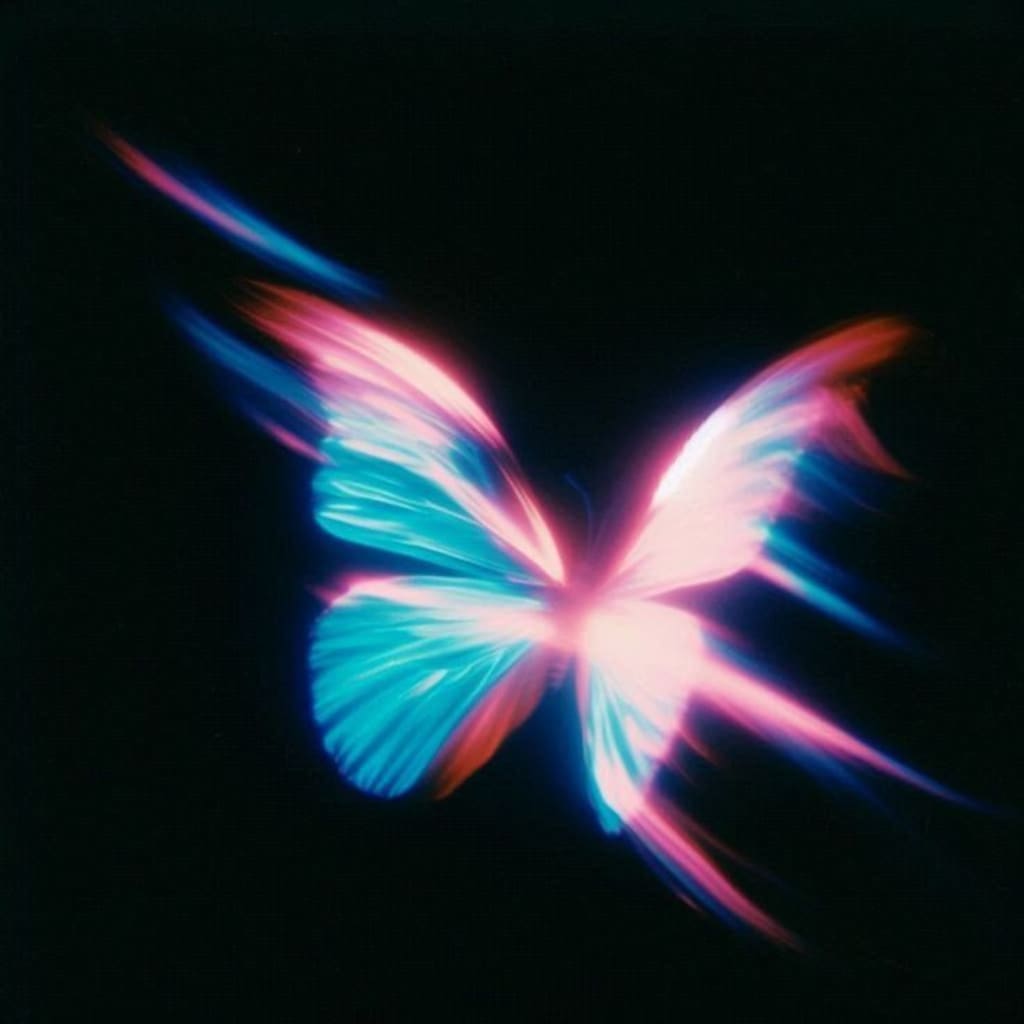
The butterfly effect is a fascinating topic that I would like to discuss this time, as it is quite different from others. Its existence raises questions and proposes an intriguing idea that has been studied by many people from unique and diverse perspectives. It has led me to reflect on whether things—what we see—exist simply by chance, or whether they depend on something entirely different or external.
Basically, this text focuses on the butterfly effect, a theory that suggests how the flap of a butterfly’s wings, or any small and imprecise action, can change events for better or worse. These actions may lead to outcomes that are either minimal or enormous, affecting the world in unexpected ways.
The origins of this phenomenon date back to 1961, when the scientist Edward Lorenz discovered something remarkable. While working with a computer model to predict the weather, he noticed that small variations in numerical data—changing from three decimal places to six—produced completely different weather patterns. When he considered the long-term consequences of these variations, he decided to call this phenomenon the “butterfly effect.” Since then, many ideas and interpretations have emerged around this theory.
This is what makes the butterfly effect such a useful and intriguing subject of study. There are several key examples that help explain this phenomenon more clearly. For instance, in the stock market, predictions are not based on certainty but on probability. In some situations, numbers lead to logical outcomes—such as in mathematics, where we know that two plus two equals four. However, when an accident occurs or when you forget your wallet before going to work, this is not a matter of probability but of cause and effect: a chain of events connected through time that cannot be studied with complete precision, but can be understood through determinism—the idea that every event is connected by one or more causes.
On the other hand, randomness refers to underlying causes whose outcomes we cannot predict or even know if they will occur. When a cause is extremely small, it can escape our perception while still generating a massive or significant effect somewhere else in the world. From an apparently insignificant action to large-scale consequences—such as disasters, epidemics, or structural collapses in countries like Brazil—the butterfly effect suggests that science is not always exact. In complex systems, errors continuously increase, and many events occur due to external factors beyond our control.
This idea can be summarized with the following statement: “A minimal intervention in complex systems can lead to massive changes.” A commonly mentioned example is Adolf Hitler—if he had been accepted into art school, history might have taken a completely different path. In this sense, chaos emerges from order, and speculation itself becomes part of scientific thought. What we currently understand is that there is no absolute precision in determining exactly when or how an event will occur.
Nevertheless, in fields such as physics, if we have the necessary parameters—distance, mass, velocity, and point of origin—we can calculate with relative accuracy when an object or a rocket will fall.
From my point of view, the butterfly effect is an interesting and even entertaining theory, as it leads us to profound “what if?” questions. For example, if we leave a supermarket without paying, we logically assume that security guards will stop us; or we know that an airplane cannot fly without wings. Similarly, meeting new people can completely alter the course of our lives, triggering romantic or emotional events that affect our future for better or worse. These changes are uncertain and continue to evolve as time moves forward.
Ultimately, the butterfly effect is a deep and beautiful concept that never ceases to be fascinating. It invites us to imagine countless possibilities arising from a single moment—one that we can never know for certain will happen or not.
About the Creator
julian nivia
I like do histories about philosophy, science, psychology and I like play voley ball
Keep reading
More stories from writers in Writers and other communities.
Writing To Succeed
If you want to find something that will help readers find your writing, possibly expand your audience, and maybe even get you noticed for other things, then you’re not alone. But how can you get it done in a world full of want-to-be writers? Look less at what you’re writing now, and more at what other writers have used to boost their views and reads.
By Jason Ray Morton 4 days ago in Writers
The Library of Lost Things
The rain didn’t just fall in Oakhaven; it sighed. It was the kind of gray, relentless drizzle that made you want to stay inside and count your regrets. I found myself standing in front of a building I’d passed a thousand times but never truly noticed: a narrow storefront with a peeling wooden sign that read The Library of Lost Things.
By Nolan Ellis2 days ago in Writers
Hottest in the Office
Dear Rafi, You’re very distracting to work around. For the first second I saw you the other day, I thought you were some type of executive. It took a moment to realize no, you were just the new guy, dressed up for the job he wants. Be still, my heart.
By Gabriel Shamesa day ago in Pride




Comments
There are no comments for this story
Be the first to respond and start the conversation.