
The Architect of Time: The Untold Journey of Christopher Nolan
Success Story

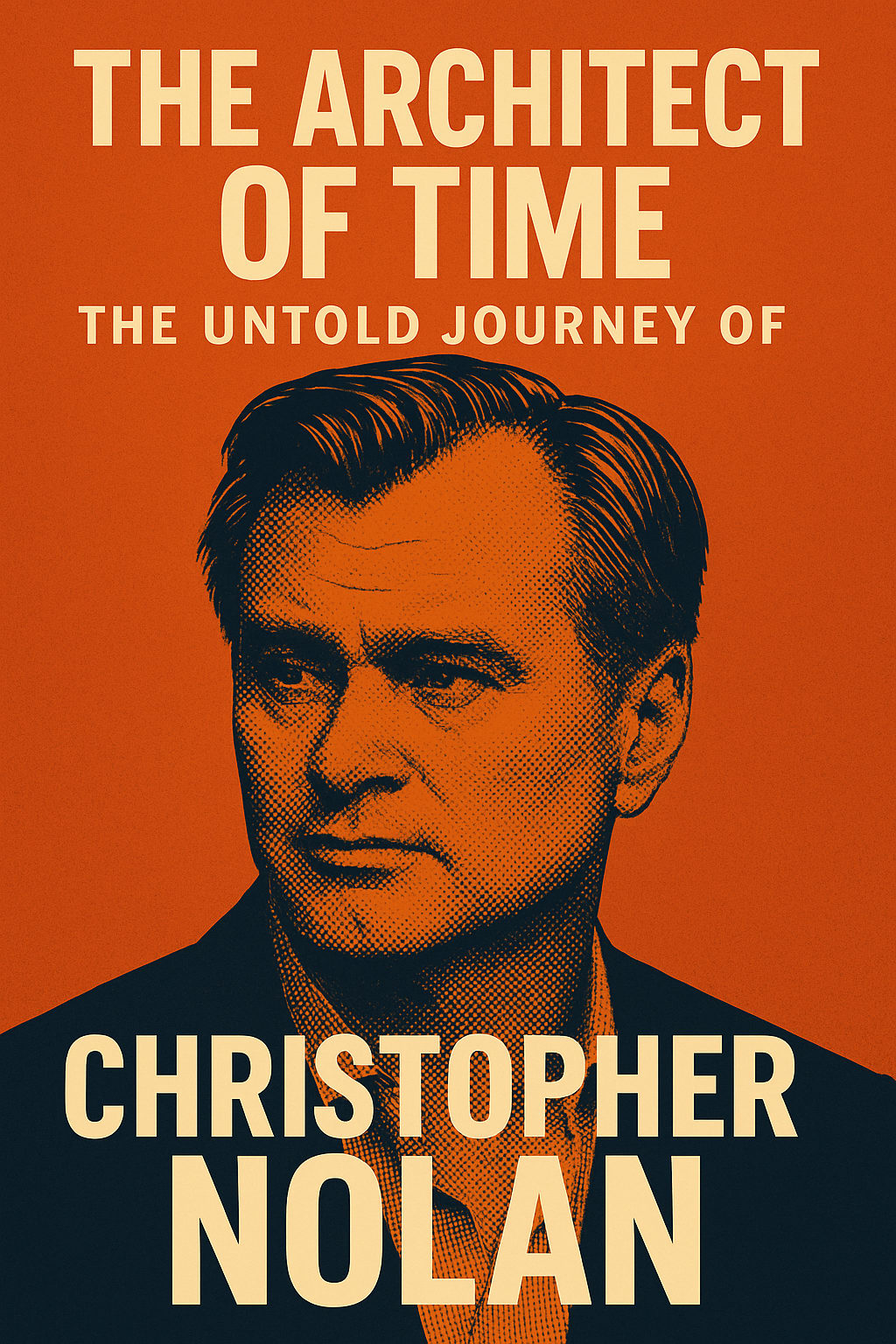
You’re never going to learn something as profoundly as when it’s purely out of curiosity.”
These are the words of Christopher Nolan, the cinematic magician who bends time, space, and reality like no other.
But before he became the mind behind Inception, Interstellar, and The Dark Knight Trilogy, Nolan was just a curious kid with a camera in his hand and galaxies swirling in his imagination.
The Beginning: A Boy Who Dreamed in Frames
Born on July 30, 1970, in London, Christopher Edward Nolan was always drawn to stories that went beyond the surface. At just 7 years old, he began making short films with his father’s Super 8 camera. His brother, Jonathan Nolan, often acted in them. They weren’t just playing—they were building worlds.
Unlike most kids who idolized athletes or rock stars, young Nolan was obsessed with Stanley Kubrick, Ridley Scott, and George Lucas. He didn’t just watch movies; he dissected them.
The Student Who Skipped the Rules
Nolan studied English Literature at University College London, but film was his real classroom. While other students partied, he was experimenting with editing, light, and unconventional narratives. He chose UCL not for its academics—but because of its filmmaking equipment.
His first short film, Tarantella, was shown on PBS when he was just 19. But the road ahead wasn’t easy. Hollywood wasn’t interested in British kids with no formal film degree and no family in the industry.
Memento: The Puzzle That Changed Everything
Nolan’s first feature film, Following (1998), made on a budget of only $6,000, was a raw, black-and-white thriller that hinted at his love for fractured timelines and noir storytelling. But it was Memento (2000) that changed everything.
Based on a short story by his brother Jonathan, Memento told the story of a man with short-term memory loss, told entirely backwards. It was risky, bizarre, and genius.
Hollywood couldn’t ignore him anymore. The film became a cult hit, earning Nolan an Oscar nomination for Best Screenplay and announcing him as a visionary of his time.
The Dark Knight Era: Rewriting Superhero Cinema
In 2005, Warner Bros handed Nolan the keys to Batman—a franchise that had lost its identity after a few poor films.
He rebuilt it from scratch.
Batman Begins (2005) brought depth and realism. Then came The Dark Knight (2008)—a film so powerful, it wasn’t just a superhero movie. It was a political thriller, a moral puzzle, and a tragedy about chaos and justice. Heath Ledger’s Joker became legendary, and Nolan became a household name.
He completed the trilogy with The Dark Knight Rises (2012), and together the trilogy earned over $2.5 billion worldwide.
But Nolan wasn’t done bending reality.
Inception: The Dream Within a Dream
In 2010, Nolan released his most ambitious film yet—Inception. A story about dream heists, spinning tops, and the architecture of the subconscious. It took him 10 years to write the script.
Studios doubted it. “It’s too confusing,” they said. But Nolan didn’t flinch.
When Inception hit theaters, it wasn’t just a film—it was an experience. Audiences debated the ending for years: Did the top fall or not?
It won 4 Oscars and made Nolan the king of intellectual blockbusters.
Interstellar: A Love Letter to Time and Space
Then came Interstellar (2014)—a film about black holes, time dilation, and the power of love across galaxies.
With help from physicist Kip Thorne, Nolan made science emotional. The scene where Cooper watches 23 years of video messages after only a few hours on a planet is etched into cinematic history.
He showed us that time isn't just ticking—it’s aching.
Tenet: Nolan’s Most Confusing Masterpiece
In 2020, when the world shut down, Tenet hit theaters with a concept no one had ever seen: time inversion. Forward and backward, at the same time.
Many couldn’t understand it on the first watch. But that’s Nolan. He doesn’t serve you answers—he makes you earn them.
Even amid the pandemic, Tenet grossed over $360 million worldwide.
The Oppenheimer Storm
In 2023, Nolan shocked everyone again with Oppenheimer, a haunting biopic of the man who created the atomic bomb. It wasn’t just a history lesson—it was a deep dive into guilt, legacy, and destruction.
Starring Cillian Murphy, Oppenheimer became Nolan’s most emotionally charged work yet, earning 13 Academy Award nominations and winning 7 Oscars, including Best Picture and Best Director for Nolan.
At last, Hollywood gave its master the crown he long deserved.
Why Nolan Matters
In a world of fast-cut trailers, recycled stories, and endless sequels, Christopher Nolan remains the bold artist who dares to dream differently.
He trusts the audience to think. He gives us puzzles, but never without pieces. He believes in the magic of cinema—not just as entertainment, but as exploration.
And perhaps that's his greatest gift:
He makes us fall in love with the unknown.
Final Thoughts
Christopher Nolan’s journey is not just about making hit films. It’s about creating experiences that challenge and inspire.
He proved that you don’t need to follow the rules to create masterpieces. You just need vision, courage, and the power to dream—again and again.
So the next time you watch a Nolan film, remember:
It’s not just a movie.
It’s an invitation—to think, to feel, and to wonder.
About the Creator
Frank Massey
Tech, AI, and social media writer with a passion for storytelling. I turn complex trends into engaging, relatable content. Exploring the future, one story at a time
Reader insights
Outstanding
Excellent work. Looking forward to reading more!
Top insights
Compelling and original writing
Creative use of language & vocab
Easy to read and follow
Well-structured & engaging content
Excellent storytelling
Original narrative & well developed characters
Expert insights and opinions
Arguments were carefully researched and presented
Eye opening
Niche topic & fresh perspectives
Heartfelt and relatable
The story invoked strong personal emotions
Masterful proofreading
Zero grammar & spelling mistakes
On-point and relevant
Writing reflected the title & theme
Keep reading
More stories from Frank Massey and writers in Writers and other communities.
J.K. Rowling’s Untold Story: The Hidden Struggles Behind Harry Potter’s Magic
Picture this: a single mom in a cold Edinburgh café, her baby asleep in a stroller, with just a few coins and a dream. The world feels heavy, ready to crush her. But inside, a story burns—a tale of wizards and courage. This was J.K. Rowling before she became the Harry Potter author. Most know her as a billionaire writer, but few know the untold story of J.K. Rowling—a journey of heartbreak, secrets, and a twist that changed everything. Join us for a thrilling ride through her struggles, triumphs, and the magic nobody saw coming.
By Frank Massey 6 months ago in Writers




Comments
There are no comments for this story
Be the first to respond and start the conversation.