
The 7 Rules Of Interior Design: Guide
Balance, rhythm, harmony, emphasis, proportion & scale, color, and functionality: key principles to create a beautiful and practical space.
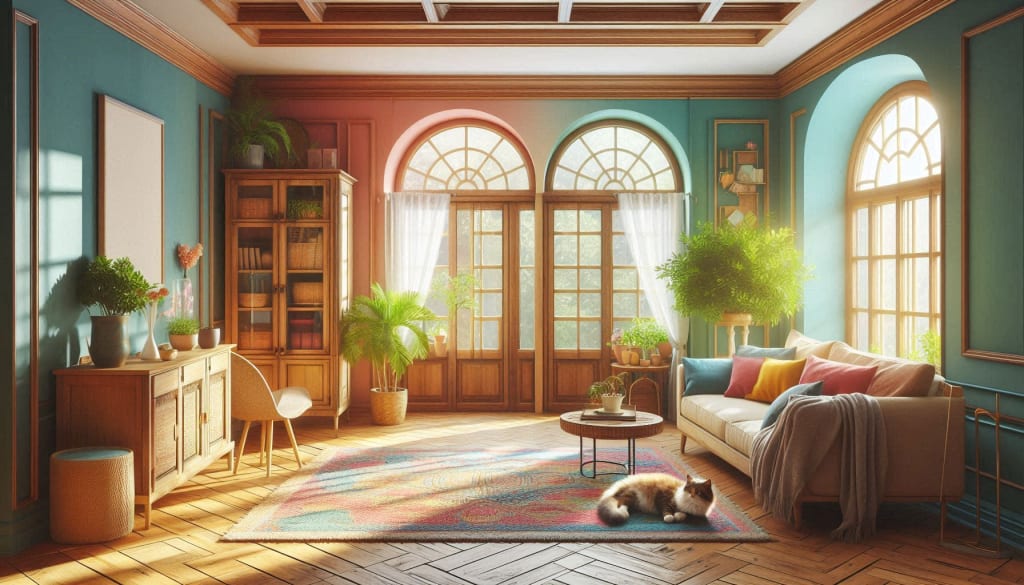
Interior design is an art and science that involves enhancing the interior of a space to achieve a more aesthetically pleasing and functional environment. There are several fundamental principles that guide successful interior design. These principles help designers create spaces that are harmonious, efficient, and visually appealing. Below are the seven key rules of interior design:
1. Balance
Balance refers to the visual equilibrium of a room and involves distributing the visual weight of furniture, colors, textures, and space. Balance can be achieved in three main ways:
- Symmetrical Balance: Often found in traditional interiors, symmetrical balance involves mirroring elements on either side of a central axis. This creates a sense of order and stability.
- Asymmetrical Balance: More dynamic and less formal, asymmetrical balance involves arranging elements of different visual weights to create balance without exact duplication.
- Radial Balance: This is achieved when elements are arranged around a central point, often seen in designs with a round table or a circular light fixture at the center.
2. Rhythm
Rhythm in interior design is about creating patterns of repetition and contrast to move the eye around the room. It helps establish visual interest and harmony. There are several ways to achieve rhythm:
Repetition: Using a recurring element, such as a color or shape, throughout the space.
Progression: Gradually increasing or decreasing the size of similar objects, such as nesting tables or a series of candles.
Contrast: Placing opposing elements next to each other, like black and white, to draw attention.
3. Harmony
Harmony is about creating a cohesive and unified look by making all the elements in a space work together. This can be achieved through a consistent style or theme and using similar colors, textures, or shapes to tie everything together. A harmonious design makes a space feel calm and well-organized.
4. Emphasis
Emphasis involves creating a focal point in a room to draw attention and anchor the space. This can be achieved by highlighting a feature such as a fireplace, a piece of artwork, or a bold piece of furniture. Once a focal point is established, other elements should complement and not compete with it.
5. Proportion and Scale
Proportion and scale refer to the relationship between the sizes of various elements within a space and how they relate to each other and the overall space. Proportion is about the ratio between objects, while scale refers to the size of objects in relation to the room itself. Ensuring that furniture and decor are appropriately scaled prevents a room from feeling cluttered or sparse.
6. Color
Color is a powerful tool in interior design that can set the mood, define a space, and tie different elements together. Colors can affect the perception of space and influence emotions. A well-considered color scheme can create depth, interest, and harmony within a room. Designers often use color theory to select complementary, analogous, or monochromatic color schemes that enhance the room's purpose and style.
7. Functionality
Functionality is about ensuring that a space is not only beautiful but also practical and suitable for its intended use. This includes considering the layout, furniture selection, lighting, and storage solutions. Functional design maximizes the utility of a space while still maintaining aesthetic appeal.
Conclusion
These seven rules of interior design serve as a foundation for creating spaces that are not only visually appealing but also functional and harmonious. Whether designing a home, office, or public space, adhering to these principles can help achieve a well-balanced and aesthetically pleasing environment that meets the needs of its occupants. By thoughtfully applying these principles, designers can transform any space into a cohesive and inviting haven.
About the Creator
Keep reading
More stories from writers in Writers and other communities.
Icepocalypse Cometh
It’s comin’, y’all, the once-a-decade real winter down south. I know y’all make fun of us down here when we have winter weather, but y’all get snow; we get sleet and ice. A quarter of an inch of ice brings down tree limbs. An inch of ice brings down seven-hundred-year-old oaks. The last one I was in was the one that took the Eisenhower Pine from The Augusta National, a few hundred yards behind my house. It sounded like a war zone all night, trees falling, wind uprooting others, fallen branches becoming icy missles. It was godawful. Two days later, we had an earthquake. A week later, our power was back on. In short, don’t tell me three inches of sleet followed by an inch of ice is no big deal when it’s crippling with repercussions that last long after the storm has passed and the ice has melted. That’s what’s headed my way tomorrow night and all day Sunday into Monday. I imagine I’ll be without power and internet until Wednesday or so. Keep my family and me in your prayers if you’re a praying person. Perform a ritual for our protection if you’re not. I’ll be here tomorrow and tonight, but I’m pretty sure I go dark sometime Saturday night. Harper wasn’t made for winter. I don’t even like wearing shoes.
By Harper Lewisabout 22 hours ago in Writers
The Path to Salvation
The late autumn evening air filled the monk's lungs, but it wasn't the season that chilled his bones. The heavy-handed presence of evil he had sensed upon entering the woods surrounding this mountain village had not bothered to conceal itself from him.
By Made in DNA3 days ago in Fiction



Comments (1)
Thanks for sharing