
The 3 A.M. Writer: Why Inspiration Comes at Night
A fun, relatable essay about why creativity peaks when the world sleeps.


There is something about three in the morning that feels like it belongs to no one but you. The world outside has quieted down. Cars have stopped rushing. Neighbors are finally asleep. Even the air feels different—thicker, slower, more private. And somewhere in that stillness, when most people are tucked beneath their blankets, writers like me find ourselves wide awake, fingers hovering over keyboards or pens scratching furiously across paper.
I call it the 3 A.M. magic.
By day, my mind is noisy. There are errands to run, bills to think about, emails to answer, and endless social media notifications pulling my attention like hungry children. Every time I sit down to write at noon or 6 p.m., I find my creativity smothered by obligations. It’s not that I don’t want to write; it’s that the noise of daily life makes writing feel like trying to sing in the middle of a crowded street. My voice, no matter how strong, gets lost.
But at three in the morning, everything changes. The house is dark. The phone is silent. Even the hum of the refrigerator sounds like a background score to my thoughts. It’s as if the world has stepped aside and finally given me the stage. Suddenly, sentences come out smoother. Characters whisper their secrets. Ideas that seemed ordinary at lunch suddenly sparkle with life. I don’t know if this is science, mystery, or a combination of both, but I do know this: inspiration loves the night.
Maybe it’s because night lowers our guard. In the daytime, we’re expected to perform—to be productive, responsible, polite, and alert. But at night, when nobody’s watching, the masks fall off. That’s when the truest thoughts crawl out of the shadows of our minds. It’s when you admit things to yourself that you couldn’t confess in daylight. That hidden honesty is a gift to any writer.
Some scientists say the late-night surge of creativity comes from the way our brains work when we’re tired. During the day, our brains are strict managers, filtering out distractions, forcing us to focus on logic and routine. But as the night wears on, those managers clock out. The brain becomes looser, freer, less bound by rigid thought. In that looseness, connections form that we might never have made otherwise. Suddenly, a childhood memory collides with a headline we read earlier, and boom—a story idea is born.
Other people think it’s less about science and more about solitude. We live in a loud, demanding world. When the world sleeps, we finally get to hear our own voices without interruption. Inspiration doesn’t always require brilliance; sometimes it just needs quiet.
I remember one night vividly. It was 3:07 a.m., and I had been tossing in bed for an hour, haunted by a single line of dialogue that refused to leave me. Finally, I gave up on sleep, grabbed my notebook, and sat down by the window. That one line turned into a scene, and that scene turned into a short story. By sunrise, I had written something that would later become one of my proudest pieces. If I had ignored the urge and stayed in bed, it might have slipped away forever. Inspiration, after all, is a fragile guest—you have to welcome it when it knocks, even if the timing is inconvenient.
Of course, being a 3 A.M. writer has its downsides. The next morning, when everyone else is refreshed and bright-eyed, I’m a zombie clutching my coffee like it’s life support. I’ve stumbled into work with dark circles under my eyes, secretly wishing I could nap under my desk. Friends ask why I don’t just write during the day like a “normal” person. I laugh, but inside, I know that creativity doesn’t follow a nine-to-five schedule. You can’t clock in and out of inspiration. Sometimes, it’s either 3 A.M. or nothing.
But here’s the funny part: I’m not alone. Many artists, musicians, and writers throughout history have sworn by the midnight hour. Franz Kafka, who often wrote past midnight, once said, “Don’t bend; don’t water it down; don’t try to make it logical; don’t edit your own soul according to the fashion. Rather, follow your most intense obsessions mercilessly.” I like to think he knew something about the clarity that comes when the rest of the world has gone quiet.
Being a 3 A.M. writer isn’t about insomnia or bad habits. It’s about finding your rhythm, the strange, personal pocket of time when your creativity is at its peak. For some, that’s early morning with the sunrise. For others, it’s late afternoon in a buzzing café. For me, it’s the deep hours of the night, when the moon keeps watch and the streets are silent.
So the next time you find yourself awake while the world sleeps, don’t curse your restless mind. Lean into it. Grab your pen, your laptop, your notebook, and see what your half-dreaming brain has to say. You might just discover that 3 A.M. is not the hour of sleeplessness, but the hour of creation.
After all, inspiration doesn’t care about the clock—it only cares that you’re listening.
About the Creator
Keep reading
More stories from Saqib Ullah and writers in Writers and other communities.
Early March 2026: 4 Goals Accomplished
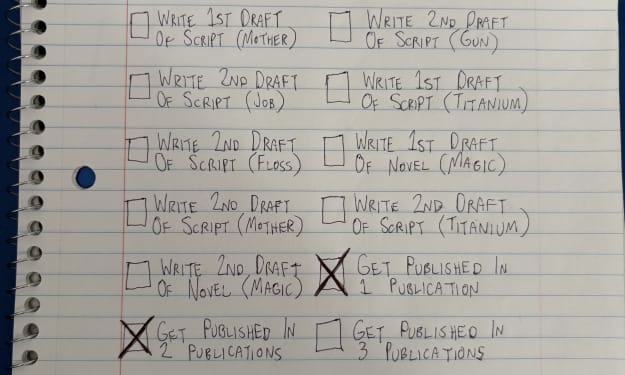
It's early March and I've now accomplished my 4th writing goal for the year of 2026. Before diving into the behind-the-scenes of it... why not tell you up front what that accomplishment was? I was published in a 2nd publication for this year. Published in Helix Literary Magazine out of Central Connecticut State University. You can read it for free right now!
By Stephen Kramer Avitabile6 days ago in Writers
Why NSN Parts and CAGE Codes Are Important in Aerospace Procurement
Aerospace procurement is one of the most complex and highly regulated areas of global supply chains. Aircraft and defense systems require thousands of specialized components that must meet strict quality, safety, and traceability standards. In such an environment, accurate identification of parts and reliable supplier verification are essential. This is where National Stock Numbers (NSNs) and Commercial and Government Entity (CAGE) codes play a critical role. These standardized identification systems help organizations streamline procurement, maintain compliance, and ensure that the correct components are sourced from trusted suppliers.
By Beckett Dowhanabout 6 hours ago in Writers

Comments
There are no comments for this story
Be the first to respond and start the conversation.