
Technological innovation
Exploring the Frontiers of Cutting-Edge Technology
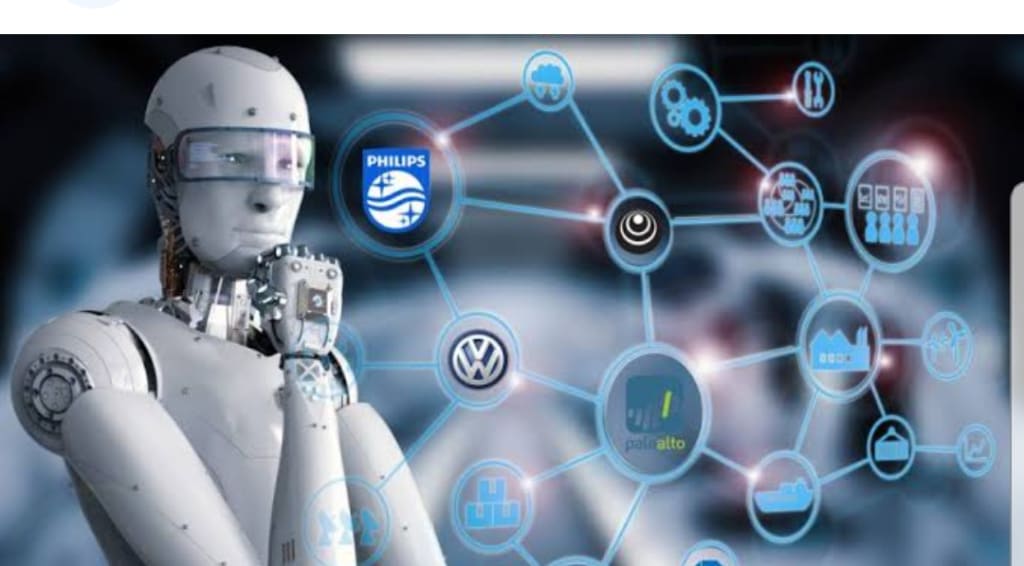
In today's rapidly evolving world, cutting-edge technology serves as the engine driving progress across various sectors. From healthcare to transportation, communication to entertainment, innovative technologies continue to reshape how we live, work, and interact with the world around us. This essay delves into some of the most exciting advancements at the forefront of technological innovation, exploring their impact and potential implications for society.
Artificial Intelligence and Machine Learning:
Artificial Intelligence (AI) and Machine Learning (ML) stand at the forefront of cutting-edge technology, revolutionizing industries ranging from healthcare to finance. AI algorithms have demonstrated remarkable capabilities in tasks such as natural language processing, image recognition, and predictive analytics. These technologies empower organizations to streamline operations, personalize user experiences, and uncover valuable insights from vast datasets. As AI continues to advance, ethical considerations regarding data privacy, bias mitigation, and AI governance become increasingly critical.
Quantum Computing:
Quantum computing represents a paradigm shift in computational power, promising exponential speedups over classical computers for certain types of problems. Harnessing the principles of quantum mechanics, quantum computers have the potential to revolutionize fields such as cryptography, drug discovery, and optimization. Despite significant technical challenges, ongoing research and development efforts aim to overcome these obstacles and unlock the full potential of quantum computing, paving the way for groundbreaking discoveries and innovations.
Biotechnology and Genetic Engineering:
Advancements in biotechnology and genetic engineering are reshaping healthcare, agriculture, and environmental sustainability. CRISPR-Cas9 gene editing technology, for example, enables precise modifications to DNA, offering unprecedented opportunities to treat genetic diseases and enhance crop yields. Additionally, breakthroughs in synthetic biology are driving the development of biofuels, bioplastics, and novel therapeutics. However, the ethical implications of manipulating the genetic code raise complex questions regarding consent, equity, and unintended consequences, necessitating thoughtful consideration and regulation.
Internet of Things (IoT) and Edge Computing:
The proliferation of connected devices within the Internet of Things (IoT) ecosystem is transforming how we interact with the physical world. By embedding sensors, actuators, and microprocessors into everyday objects, IoT enables real-time monitoring, analysis, and control of systems and environments. Edge computing complements IoT by processing data closer to its source, reducing latency and bandwidth requirements. Together, these technologies facilitate smart homes, autonomous vehicles, and industrial automation, while also raising concerns about cybersecurity, data privacy, and interoperability standards.
Augmented Reality (AR) and Virtual Reality (VR):
Augmented Reality (AR) and Virtual Reality (VR) offer immersive experiences that blur the line between the digital and physical realms. AR overlays digital information onto the user's real-world environment, enhancing perception and interaction, while VR creates entirely virtual environments for exploration and simulation. These technologies find applications in gaming, education, training, and remote collaboration, unlocking new possibilities for storytelling, design, and entertainment. As AR and VR continue to mature, challenges related to hardware affordability, content creation, and user experience optimization remain areas of active research and development.Cutting-edge technology continues to push the boundaries of what is possible, fueling innovation and driving societal progress. From artificial intelligence and quantum computing to biotechnology and augmented reality, these advancements hold the promise of solving complex challenges and improving the quality of life for people around the globe. However, realizing this potential requires not only technical expertise but also ethical foresight, regulatory frameworks, and interdisciplinary collaboration. By embracing innovation responsibly, we can harness the transformative power of technology to create a more equitable, sustainable, and prosperous future for generations to come.
About the Creator
Keep reading
More stories from writers in Writers and other communities.
Knives and Forks
Alright, it’s enough, I’m not going to fall asleep anyway, and I can’t stand another hour of staring at this ceiling. Thoughts just drift through my mind, and from all this lying around, my calves start to cramp again. At least I slept through most of yesterday. Paying that debt I built with lifestyle. That helps. With that, I can push through today until the evening, as I did so many times before. I blame her for it anyway. It was definitely her who tore me out of my dreams at half past two in the morning. She did it, and now she’s pretending that nothing happened.
By George Roast7 days ago in Writers
TUS NUA - ch 53
TUS NUA – ch 53 New Beginnings – Mia and Midnight (*)(*)(*) Finola knew Ali’s brother-in-law needed to put his mind at rest. She fed her arm through his and led him outside. “We’ll sit here. If you like, I can put a block around us so our conversation will be private.”
By Margaret Brennan6 days ago in Fiction



Comments
There are no comments for this story
Be the first to respond and start the conversation.