
Staying Inspired
Writing Advice From People Who Aren’t Me

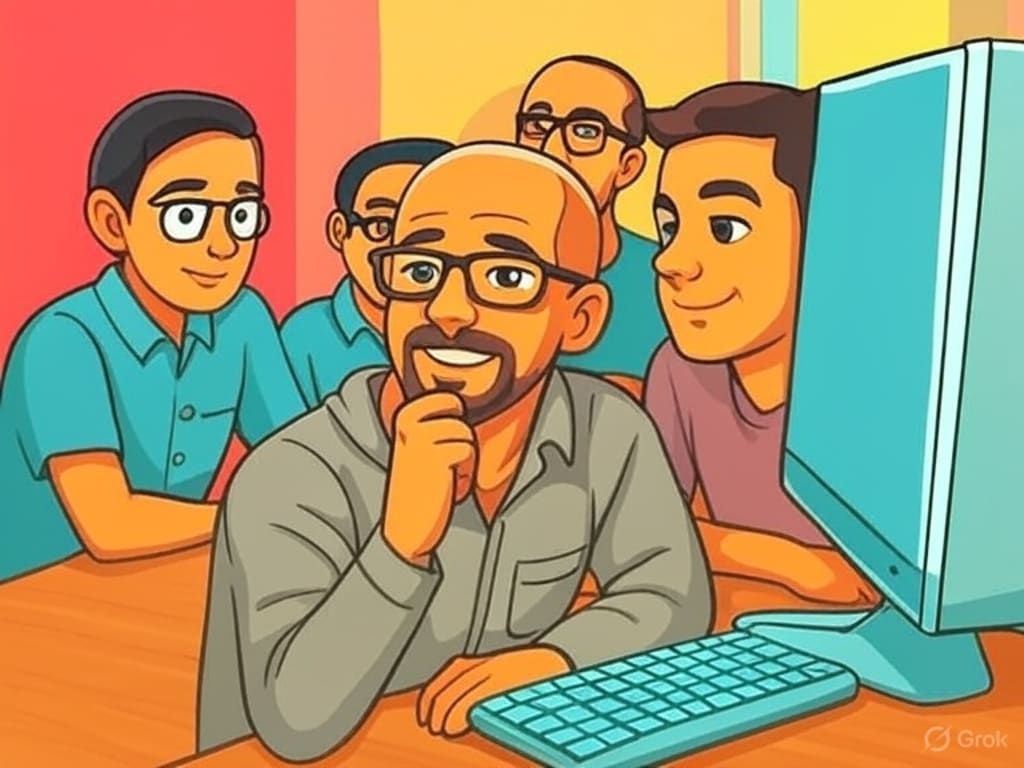
Okay, here’s the thing with me: I have an unspoken time limit for everything I do. It’s silent, it’s sneaky, and it’s always there. No one knows what the time limit is, including me, but like the timer in Scattergories, that limit will be met, and it will be impossible to continue when it is met. This applies to every single thing I do in my life, including writing a story. What this means for me is that I have to either knock out stories fast, or not at all. I do have methods to improve my ability to do this, but that’s not what I’m here to talk about today. Today, I’d like to tell you what other people have to say on the matter.
Practical Advice
1) Build A “Spark File”
I’ve seen this term being thrown about a bit. From what I can garner, a “spark file” is basically a list of ideas that you come up with at random times. The prevailing wisdom is to keep something handy to take notes on at all times (notebook, cell phone, etc.) so that when you’re struck by an idea, you can instantly write it down. Even if it’s just a particularly fitting turn of phrase that you overheard someone else say, write it down.
Ideally, you’ll want a master file to put all of these ideas in. That’s your “spark file.” Even more ideally, you’ll have that master file with you at all times, and you will instantly enter your ideas into it as soon as they pop into your head. In reality, good luck on that.
Personally, I use napkins, old bill envelopes, and Notes in my iPhone to record my ideas, and they never even have the slightest chance of making it into anything resembling a “spark file.” That said, the sheer act of writing the ideas down often cements them in my brain. In other cases, I discover my notes later, often discarded on the floor, and am hit with surprised inspiration, causing me to suddenly leap into action and write a story.
If you’re able to create a “spark file,” go for it; I’m sure it works wonders for most people. If you’re weird like me, write down random notes and blow your own mind later.
2) Use Every Moment
Everyone has a life. We have kids, jobs, hobbies, or at the very least, eternal laundry and dishes, and the fact is that our lives don’t care if we want to be writers or not. Unless you’re an independently wealthy hermit (and maybe even then), you simply can’t wait for the perfect moment. Instead, you have to steal every imperfect moment that you can.
In modern times, we’re ridiculously lucky. We have phones in our pockets, and those phones have apps that we can use to write. So take advantage of that. When you’re sitting on the toilet, standing in line, or not quite ready to get out of bed and face the day yet, write. It doesn’t matter if you have a minute or an hour. Write. Do it right now.
As a related aside, some writers use something called the “Pomodoro Hack,” which involves setting a timer for 25 minutes, writing like a crazy person, then taking a 5-minute break. That’s not my style, but if it works for you, do it. I’m actually in the process of designing and creating an app that I think will go along nicely with that concept, and I think authors will really enjoy it. Let me know in the comments if you have any thoughts on that or any suggestions I can try to include.
3) Curate Your Social Media Feed
Tons of authors fail due to their social media feed. Maybe they're writing along nicely, get a notification on their phone about a post, check the post, and are lost for the next three hours, doomscrolling. That’s a killer.
The thing is, it’s just so much easier to read random things or watch random videos than it is to write, and something about the concept of the “feed” seems to be hypnotic for some people. They have trouble breaking away from it, then they beat themselves up about it once they finally tear their eyes away.
The first step toward fixing that is to turn off your notifications when you’re writing. Learn about using the “Focus” setting on your iPhone if you have one so that you only hear the most important things that you actually need to hear from your phone. Don’t let yourself start down that path.
The second step, however, is to curate your social media feeds to inspire you, not distract you. Allow your feed to remind you of the good parts of writing, encouraging you to write more. Do as I say, not as I do on this one, because the doomscrolling trap is not one I get caught in. That, however, comes down to simple personality differences, and if it’s a problem for you, definitely have a look at your social media timeline and make some tweaks. You might look at joining some hashtag convos like #FridayReads to get inspiration or #WIPWednesday to read what others are writing and to get some feedback on your own.
4) Take A Step Outside Your Comfort Zone
Most of us have one or two genres that we love, and we stick to them. However, variety is the spice of life, and your writing can benefit from mixing up what you read, no matter what genre you write. Yes, you heard that right. We're all influenced in some way by what we read, and the wider variety of reading experiences you have, the more robust your writing will be.
With that in mind, give this a shot: Once a month, read a book that is normally outside your wheelhouse. If you love fantasy, pick up a romance. If you love romance, grab a sci-fi. Get some recommendations from some friends (in real life or on social media). Give them a shot; you might be surprised.
5) Embrace Your Terrible First Draft
This one’s a controversial topic. Some people hate the idea of writing an imperfect sentence and will spend 10 minutes agonizing over the wording of a single one. I say, if you want to do that, do it later. For now, just get the words on the page. It turns out that a lot of other people agree with me on that one.
You’re not trying to win any prizes with your first draft (unless you’re me, of course. I’ve been known to enter many a story that were essentially first drafts into contests, both here and elsewhere. Don’t do this at home, kids.) But honestly, even if you are, it’s better to have something than nothing, and if you hold yourself to impossibly high standards for every word, nothing is exactly what you'll have. And consider this: No matter how long you meditate about the wording in your first draft, you’re likely to change it later. That’s why it’s called a first draft, not a final draft.
Takeaway
Writing can be tedious, and it can be difficult to continue to find inspiration and avoid the dreaded writer’s block. The important thing is to keep at it, using every moment that you have to spare. Diversify your reading to give you new ideas, and don’t let the dreaded doomscrolling steal your thunder. And if that first draft seems like a total disaster, so what? You’re the only one who ever needs to see it. Write it, polish it, then show it to someone else to critique it. It doesn’t have to be perfect, even then. If you thought it was, why would you need it critiqued?
Author's Note: I hope you enjoyed this read! I'd love to hear what you think, so please feel free to leave a comment, click the heart, and subscribe! Also, let me know: What’s your go-to trick for staying inspired?
About the Creator
Laura Pruett
Laura Pruett, author of The Dwarves Of Dimmerdown and others.
Keep reading
More stories from Laura Pruett and writers in Writers and other communities.
A Dwarf's Life -- In Brief (Episode 3)
To Gromdahl's dismay, before he had time to react, before he really even had time to fully realize what was happening, the vines had already wrapped around the cart's axles and had begun to tighten around Bessie's ankles as well. The goat tried to bolt, tried to escape from the creepers’ infernal grasp, but she was held fast to the spot and could only bleat in terror. Gromdahl released his grip on the crank and drew his axe from his belt with a bellow.
By Laura PruettExclusive • 8 months ago
Unofficial Challenge: What would you do if you were rich?
I love the kind of work I get to do in my career, but as I job search and browse apartments again due to another understaffed and unsustainable work environment that I did not intend to get into, my daydreams of better days consistently lean into the same question: What would I do if I didn't have to worry about my basic needs being met?
By Kay Husnick13 days ago in Writers
Review of 'Man on the Run'
My wife and I saw Man on the Run, a nearly 2-hour documentary on Amazon Prime, about Wings, Paul McCartney's group that flew around the world from shortly after The Beatles broke up in early 1970 to shortly after John Lennon was murdered at the end of 1980, making a Beatles reunion forever impossible.
By Paul Levinsona day ago in Beat




Comments (1)
There are some great tips here. I love the idea of a "spark" file. Embracing the first draft is something I need to work on. I spend way too much time on it!