
Property Investment in the UAE: A Practical Long-Term Guide (2025–2026)
A clear guide to investing in UAE property

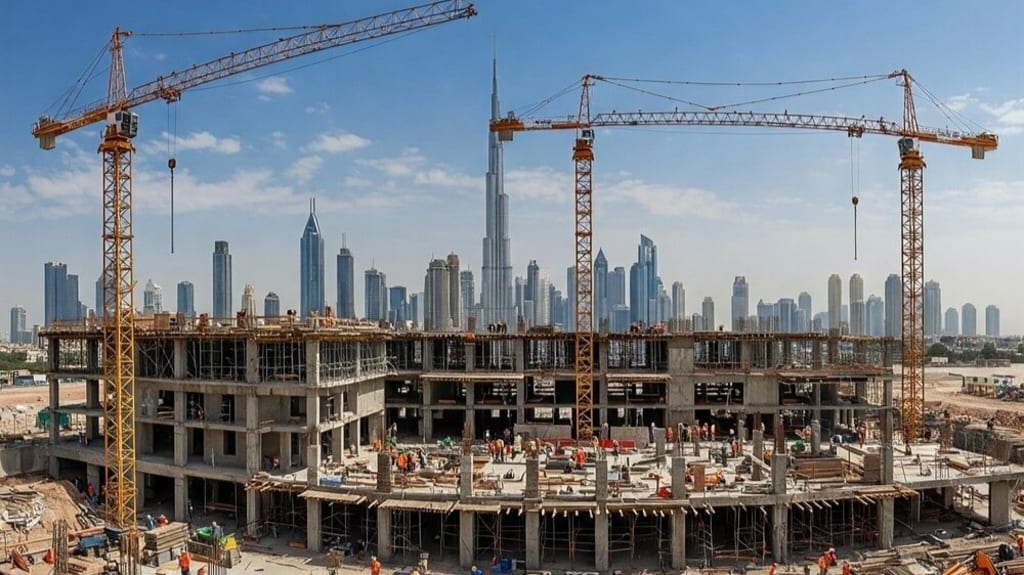
Real estate investment in the UAE particularly Dubai has matured into a globally recognised asset class. Driven by population growth, strong regulation, tax advantages, and sustained international demand, property investment in the UAE continues to attract owner-occupiers, hybrid investors, and pure landlords alike.
However, long-term success depends less on hype and more on clear goals, realistic return expectations, and understanding costs and risks. This guide breaks down how to approach property investment in the UAE in a structured, data-driven way.
Property Investment in the UAE: Define Your Long-Term Goals First
Successful real estate investment in Dubai begins with a simple question:
What role will this property play in your life or investment journey?
Dubai’s real estate market rewards patience and informed decision-making. Buyers generally fall into three distinct categories, each with different priorities and success metrics
Property Investment in the UAE: Owner-Occupiers
Owner-occupiers buy property primarily as a home, not a rental asset. Rental yield is usually irrelevant because the property will not be leased out. Instead, the focus is on lifestyle suitability and long-term resale value.
Dubai Investment Opportunities: Key Considerations for Owner-Occupiers
Lifestyle alignment
Proximity to workplaces, schools, healthcare facilities, public transport, and lifestyle amenities is crucial. Communities with strong infrastructure typically retain value better over time.
Emotional investment
Many owner-occupiers prioritise being close to family, preferred neighbourhoods, or cultural communities. Emotional factors often outweigh pure financial metrics.
Long-term residency
Owner-occupiers typically plan to live in the property for decades, sometimes passing it on to future generations. Dubai’s long-term residency initiatives such as property-linked Golden Visas support this approach
Property Investment in the UAE: Owner-Investors
Owner-investors live in the property but still treat it as a financial asset. This group often views the purchase as a stepping stone planning to upgrade or monetise the asset later.
Dubai Investment Opportunities: Key Considerations for Owner-Investors
Future resale potential
Properties with unique layouts, strong developers, or locations in emerging communities tend to outperform average market appreciation
Rental flexibility
Some owner-investors rent out part of the property or lease it fully after relocation, converting their home into an income-producing asset.
Property Investment in the UAE: Pure Investors and Landlords
Pure investors focus exclusively on rental income, yield optimisation, and capital appreciation. They usually own multiple properties and may never reside in them.
Buying Investment Property in Dubai: Key Considerations
Rental yield
Gross yields in Dubai average 6–8%, with some affordable areas exceeding 9%, outperforming many global cities
Capital appreciation
Dubai recorded 180,900 property transactions worth AED 522 billion in 2024, a year-on-year increase of around 36%, reflecting strong capital growth momentum
Market dynamics
Understanding demand drivers, supply pipelines, and tenant profiles is essential for long-term performance
Tip 2: Maximise Property Investment ROI in Dubai
Property investment ROI in the UAE comes from two main sources: capital gains and rental income. Each behaves differently and requires separate evaluation.
Property Investment ROI: Capital Gains
Capital gains occur when a property is sold for more than its total acquisition and holding cost.
Dubai’s real estate market has shown strong appreciation in recent years. According to market data, residential prices rose by 15–16% year-on-year in 2025, driven by population growth and foreign investment demand
Example (illustrative):
If a Dubai Marina apartment was purchased for AED 2.5 million and later sold for AED 3.2 million after AED 200,000 in renovation and transaction costs, the net capital gain would be AED 500,000.
If the property is not rented during ownership, it should be treated as a carrying cost until exit.
Property Investment ROI: Rental Income
Rental income transforms property into a cash-generating asset. Investors typically evaluate performance using gross and net rental yield.
What Is Gross Rental Yield?
(Annual Rent ÷ Purchase Price) × 100
Example:
AED 42,000 ÷ AED 1.5 million ≈ 2.8% gross yield
However, serious investors focus on net yield, which deducts service charges, maintenance, vacancy, and financing costs.
UAE Rental Yield Benchmarks
- Prime Dubai areas: 6–8% gross yields
- Affordable communities: up to 9%+
Dubai yields consistently outperform global cities such as London, Hong Kong, or Singapore
Tip 3: What Influences Property Value in the UAE
Real estate is not risk-free. Prices respond to economic conditions, supply cycles, and policy shifts.
Navigating Supply and Demand
Property prices tend to rise when demand outpaces supply and fall when oversupply emerges. Dubai’s off-plan segment accounted for over 60% of transactions in 2025, reflecting buyer preference for new stock and flexible payment plans
Dubai Investment Opportunities: Accessibility and Infrastructure
Connectivity is a major value driver. Properties near:
- Major highways
- Metro lines
- Airports
consistently command higher rents and resale values, particularly among professionals and frequent travellers.
Buying Investment Property in Dubai: Public Facilities
Communities with strong amenities parks, schools, hospitals, and retail centres attract stable tenant demand and family buyers, supporting long-term capital values.
Property Investment in the UAE: Government Initiatives
The UAE government has introduced multiple reforms to enhance investor confidence:
- Zero property, income, and capital gains tax
- Full foreign ownership in designated areas
- Long-term Golden Visas for property investors
These initiatives have significantly boosted transaction volumes and foreign participation
Property Investment in the UAE: Market Risks and Stability
Global factors such as interest rates, oil prices, and economic cycles can impact sentiment. However, the UAE’s diversification strategy and regulatory oversight provide resilience compared to less structured markets
Investment Property in Dubai: Holding Power
During downturns, investors without holding power may be forced into discounted “fire sales.” Long-term investors with sufficient liquidity can wait out market cycles, preserving value and improving exit outcomes.
Tip 4: Know the Costs Before Investing in Dubai Property
Understanding upfront and ongoing costs is essential for realistic ROI planning.
Buy Investment Property in Dubai: Minimum Down Payment
- According to UAE Central Bank regulations:
- Expatriates: 20% minimum down payment
- UAE nationals: 15%
Example:
AED 1 million property → AED 200,000 minimum down payment (expatriate)
Key Transaction Costs
- Dubai Land Department (DLD) fee: 4% of property value
- Administrative fees: ~AED 580
- Agent commission: ~2% (buyer side)
- Mortgage registration: 0.25% of loan value + AED 290
- Legal fees: ~AED 5,000–10,000 depending on complexity
These costs are standard and regulated across Dubai property transactions.
Renovation, Furnishing & Recurring Costs
Ongoing costs include:
- Maintenance and service charges
- Insurance
- Mortgage repayments (if applicable)
- Vacancy periods
Older properties generally require higher renovation budgets than new off-plan units.
Tip 5: Treat Property Investment in the UAE as a Long-Term Asset
Real estate should be one component of a diversified investment portfolio not the sole pillar.
Diversify Beyond Property
Balancing property investments with equities, funds, or insurance-linked savings helps manage risk and liquidity constraints.
REITs: An Alternative to Physical Property
Real Estate Investment Trusts (REITs) offer exposure to property markets without direct ownership. REITs:
- Pay dividends from rental income
- Trade on exchanges
- Require significantly less capital
- Offer higher liquidity than physical property
They are suitable for investors seeking diversification or lower entry barriers.
Final Thoughts
Property investment in the UAE remains attractive due to:
- Strong yields
- Transparent regulation
- Long-term population growth
- Investor-friendly tax policies
However, success depends on clear objectives, cost awareness, and long-term thinking. Treat real estate as a strategic asset not a speculative shortcut and align purchases with your financial capacity and time horizon.
About the Creator
Alexander James
Alexander James redefines men’s fashion with premium fabrics, impeccable craftsmanship, and timeless designs. From luxury formalwear to stylish casuals, he brings elegance, comfort, and confidence to every outfit.
Keep reading
More stories from Alexander James and writers in Writers and other communities.
How Liam Gordon Murphy Bridges Negotiation with Marketing
In today’s competitive business world, success often depends on how well one can communicate, influence, and adapt. This is where Liam Gordon Murphy stands out — a Sydney-based Negotiation Consultant and Marketeer who has mastered the art of blending negotiation strategy with marketing insight. His approach is not just about closing deals or creating campaigns; it’s about understanding people, aligning interests, and building lasting value through clear communication and smart strategy.
By Alexander James3 months ago in Writers
An Envelope Full of Memories
I’m back with more writing adventures from my youth! It feels light and crisp in my hands. The paper is slightly wrinkled and yellowed with age… and there’s a weird stain in the top left corner. Inside it is a little window to a younger me.
By Sandy Gillman4 days ago in Writers
Day 4 of Quitting
If this is how sobriety feels, maybe it’s better to go through life a little buzzed… this, along with other hits like, I want to kill myself, I wish I was dead, and I’m going to throw myself off a bridge have been the only thoughts on rotation these past few days. I promise myself that if, in a month, I still feel like this (‘this’ meaning despondent, full of rage, and simultaneously numb) I can go back to smoking. Until mid-February though? Nicotine is off the table.
By sleepy drafts4 days ago in Longevity


Comments
There are no comments for this story
Be the first to respond and start the conversation.