
Personality Is Destiny: The Ancient Blueprint That Still Shapes Our Lives
Personality Is Destiny: The Ancient Blueprint That Still Shapes Our Lives
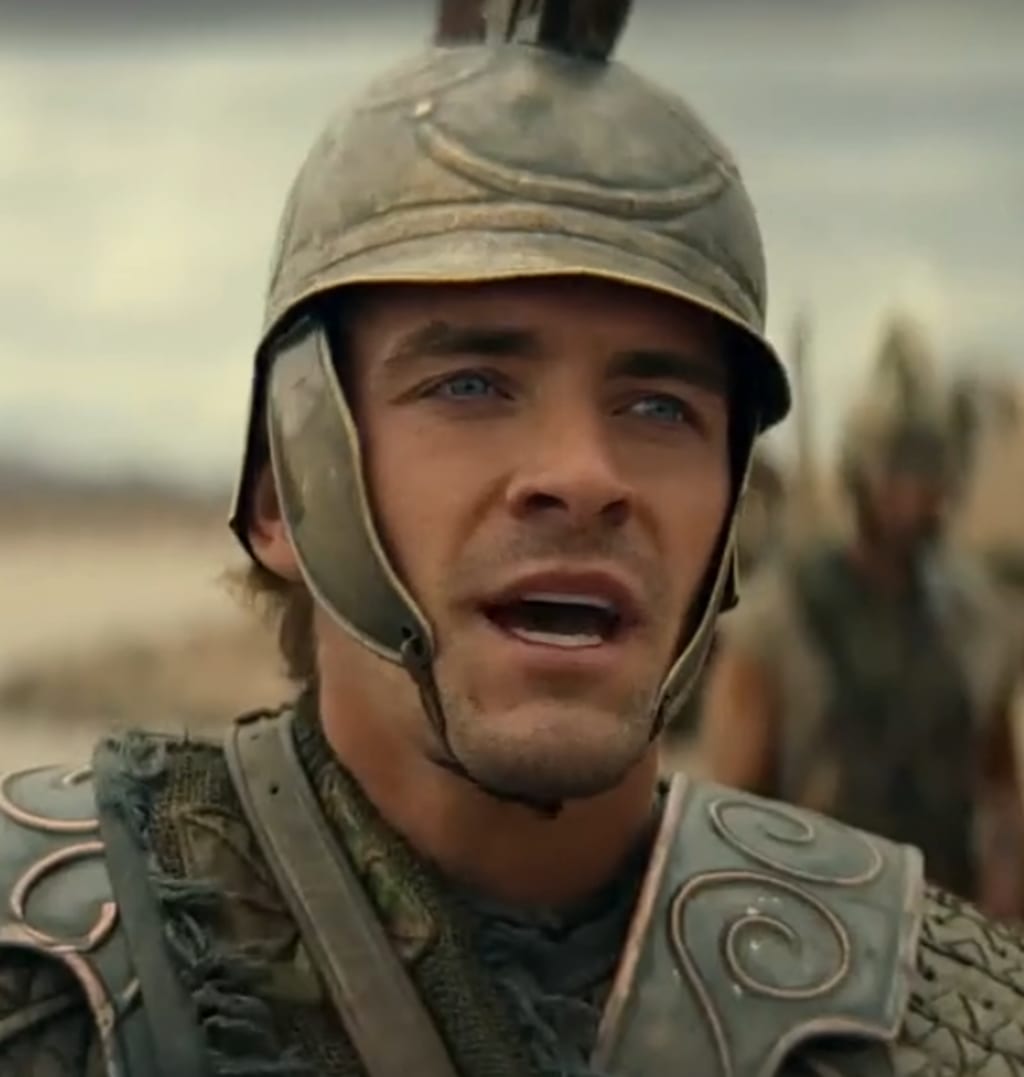
In a world obsessed with IQ, EQ, and algorithms, one element of human experience remains stubbornly timeless: personality. It determines the choices we make, the relationships we build, and ultimately, the legacy we leave behind. From war-torn dynasties to the emotional entanglements of modern life, personality is not just a set of traits—it’s the hidden architecture of destiny.
I. When Personality Shapes Empires: Lessons from the Past
Sun Ce: Brilliance Undone by Impulsiveness
Known as the “Little Conqueror of Jiangdong,” Sun Ce rose to power with unmatched military might in the late Han dynasty. But while his strength commanded fear, his impulsive and reckless nature proved fatal. Described by contemporaries as “careless and unguarded,” Sun Ce met his end at the hands of an assassin—a direct consequence of the very traits that once fueled his rise. His death reshaped the balance of power in the Three Kingdoms era, illustrating how untempered personality can rewrite history.
Guan Yu: Pride That Preceded the Fall
Revered as a symbol of loyalty, Guan Yu's legendary stature concealed a fatal flaw: arrogance. He belittled allies, dismissed wise counsel, and refused to work alongside those he deemed beneath him. Ultimately, this pride fractured alliances, resulting in his defeat and capture at Maicheng. His story underscores a recurring truth: when ego eclipses wisdom, even heroes fall.
II. The Modern Mirror: When Personality Meets Real Life
The Control-Freak Archetype: A Case of Self-Sabotage
Consider “Aunt J,” a fictionalized amalgam of many real-life stories—a woman with a fierce need to control everything: finances, family, even the destinies of her children. Her obsession with control alienated those closest to her. Her children, crushed under her expectations, eventually pulled away. Friends and relatives withdrew too, tired of walking on eggshells.
Psychologically, this pattern aligns with low empathy and high neuroticism. People with controlling tendencies often struggle to recognize others' needs, seeing relationships as extensions of their will. In the end, Aunt J was left with what she feared most: complete loss of control.
The "Love-Blinded" Woman: How Romantic Idealism Can Derail a Life
Then there's "Xiaojing," a woman once brimming with potential, who repeatedly fell into toxic relationships. In each, she abandoned her goals to support men who gave her little in return. Psychologists call this the “emotion-first cognitive bias”—a pattern rooted in low self-worth. Believing that love equals validation, she invested everything in being chosen, only to be repeatedly abandoned.
Her story is a reminder: love without self-awareness is not devotion—it’s self-erasure. And when self-worth hinges solely on being loved, the fallout is not just emotional—it’s existential.
III. How to Rewire the Blueprint: Psychology as the Architect of Change
Behaviorism: Change Your Habits, Change Your Fate
Behavioral psychology offers hope: personality is not static. Our habits, repeated over time, become our character. Through techniques like habit-stacking and daily tracking, we can actively shift patterns.
Want to become more disciplined? Try the “21-Day Rule.” Create a behavior log. Commit to small, measurable goals—30 minutes of reading, 15 minutes of exercise, or a single courageous social interaction. As these behaviors repeat, they rewire neural pathways, slowly transforming who we are.
For those prone to anger or anxiety, try the 10-second pause rule. Breathe deeply before responding. That moment of delay is not weakness—it’s self-mastery in motion.
Cognitive Restructuring: Rewriting the Inner Script
Cognitive Behavioral Therapy (CBT) offers another path. One tool, known as the “Three-Column Technique,” helps reframe self-defeating thoughts. It involves recording:
The Trigger Event
The Automatic Thought
The Emotional Reaction
Then, we challenge those thoughts with evidence. For example, if your automatic thought is “No one likes me,” ask: What proof do I have? When has that been false? Over time, this process reprograms our internal dialogue and reshapes the very lens through which we experience the world.
IV. The Science of Growth: Why Personality Is Not a Life Sentence
Neuroplasticity and the Growth Mindset
Contrary to old beliefs, neuroscience confirms that personality is malleable. The prefrontal cortex, the seat of planning, empathy, and impulse control, continues evolving well into adulthood. With conscious effort and the right environment, we can become calmer, more focused, and more emotionally intelligent over time.
Embracing a growth mindset—believing that traits can be developed, not just inherited—turns every challenge into a portal for evolution. It’s not about becoming someone else. It’s about becoming more of who you’re capable of being.
Existential Choice: You Are the Architect
Philosopher Jean-Paul Sartre said, “Man is nothing else but what he makes of himself.” Even if we inherit certain traits, we are not bound by them. Through self-awareness and intentional action, we can carve new paths. Each decision—however small—is a brick in the mansion of your becoming.
Final Thoughts: Become the Architect of Your Fate
From ancient generals to modern mothers, from broken hearts to behavioral rewiring, one thing remains true: personality shapes destiny—but it is not destiny. You can rebuild your internal landscape. You can break inherited cycles. You can become the person your future needs.
So ask yourself today: What habit can I change? What thought can I reframe? What choice can I make, not out of fear or default, but out of vision?
Because every moment you act with awareness, you step out of the shadow of fate—and into the light of freedom.
About the Creator
Keep reading
More stories from hedgehog_talk and writers in Writers and other communities.
Those Who Persevere to the End Will Eventually Earn Medals in the Passage of Time
In an age where information floods every corner of our screens, we’re constantly surrounded by stories of overnight success: someone gains a million followers in three months, another raises a round of funding within half a year. It’s easy to believe that achievement is just a formula away.
By hedgehog_talk11 months ago in Writers
March 15, 2026
Merriam Webster - Word of the day: Tranche refers to a division or portion of a whole. World Contact Day is commemorated every year on March 15. It is a unique observance held globally to focus on communicating with extraterrestrial life and exploring the possibility that intelligent beings may exist beyond Earth. World Contact Day inspires people to invoke their curiosity and spend time thinking about the universe and the mysteries surrounding it. What is the “Ides of March”? According to the Roman calendar, the Ides are a monthly occurrence. In March and other months with 31 days, the Ides always falls on the 15th; it falls on the 13th in months with 30 days. The Ides traditionally marked the arrival of the new Moon and was cause for celebration. The word “Ides” is derived from Latin, meaning “to divide.” Mothering Sunday in 2026 falls on Sunday, March 15. Mothering Sunday, celebrated in the United Kingdom and Ireland, occurs on the fourth Sunday of Lent, which is exactly three weeks before Easter. Unlike the fixed-date Mother's Day in countries like the United States, Canada, and Australia, Mothering Sunday’s date changes each year according to the Christian liturgical calendar. On March 15, 2026, several notable observances and events are celebrated: Dumbstruck Day: A day to express frustration. Everything You Think is Wrong Day: A day to challenge and celebrate wrong beliefs. International Day Against Police Brutality: A day to raise awareness and advocate against police violence. My look at today, March 15, 2026 below:
By Denise E Lindquistabout 13 hours ago in Writers
I Chose Self-Publishing Because 70% Royalties Sounded Better. Then 70% Of Zero Changed My Mind.
I have a self-published book, and it was a flop. Only sold 10 copies type of flop. But I didn't choose self-publishing after careful consideration of both paths. I chose it because it seemed obviously better, and I didn't want to interrogate that assumption.
By Ellen Frances7 days ago in Writers
The Forsyth House Fire
Since 1851, Forsyth House has stood on the corner of Union Street and Gordon Street in the heart of Glasgow. Its iconic, or was... because on Sunday 8th of March, 2026, a fire broke out in a small, seemingly un-named shop in the building and tore all that history down. As I write, the rubble is still unsettled and the street is still blocked off. Central Station is quiet on the upper level, and around 30 small businesses have quite literally gone up in smoke.
By S. A. Crawford3 days ago in The Swamp


Comments
There are no comments for this story
Be the first to respond and start the conversation.