
Navigating the Desert Terrain: Why Self-Loading Concrete Mixers are Essential for Saudi Arabia's Construction Boom
Self-Loading Concrete Mixers are Essential for Saudi Arabia's Construction Boom

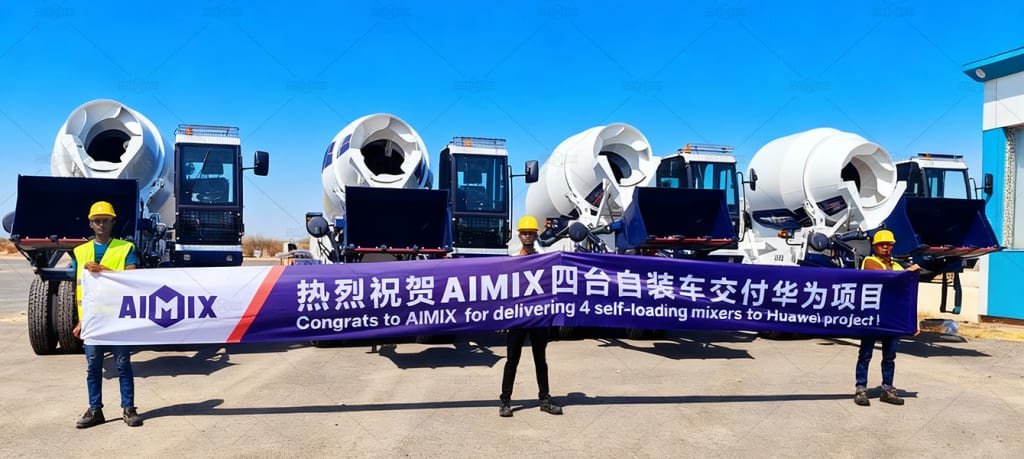
The scale and ambition of Saudi Arabia's current construction boom, propelled by Vision 2030, is unparalleled. From the futuristic urban landscapes of NEOM to the expansive tourism developments along the Red Sea, projects are rising not only in established cities but also in some of the most remote and logistically challenging desert terrains on earth. In these environments, traditional construction methodologies—reliant on long-distance delivery of ready-mix concrete—are not just inefficient; they are often impossible. This is where the self loading concrete mixture transitions from a convenient piece of equipment to an indispensable strategic asset. Its integrated design, combining a loader, batcher, mixer, and sometimes a pump, provides a singular solution to the multifaceted challenges of building in the Saudi desert, ensuring progress continues irrespective of the distance from urban centers or the harshness of the environment.
Conquering Logistical Aridity: Solving the Remote Site Supply Chain
The primary challenge of desert construction is logistical aridity—the severe difficulty in moving materials over vast distances where no fixed supply infrastructure exists. A ready-mix truck traveling hundreds of kilometers from the nearest batching plant faces prohibitive fuel costs, extreme wear on vehicles, and the high risk of concrete setting or losing its specified workability during the extended transit. A self-loading mixer fundamentally rewrites this equation. It transports only the raw, dry components—aggregates, cement in bags or a separate silo, and water in its onboard tank—to the site. These materials are far less sensitive to travel time. Upon arrival, the machine becomes an autonomous production node. It loads, batches, and mixes the concrete on-demand, precisely where it will be placed. This capability turns any accessible patch of desert with a material stockpile into an instant, micro-scale concrete plant, collapsing supply chains that would otherwise be measured in hundreds of kilometers down to mere meters.
Operational Sovereignty in a Demanding Environment
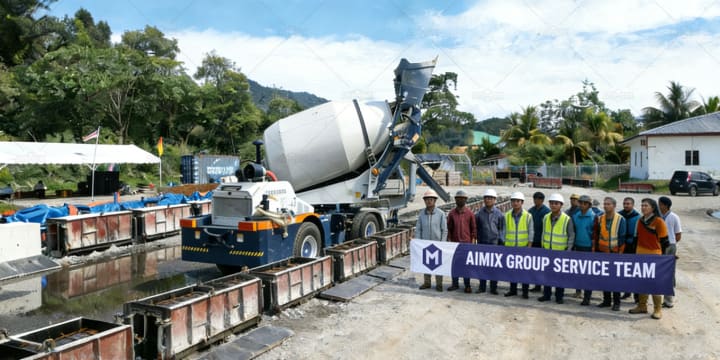
Beyond access, the self-loading mixer grants something equally valuable: operational sovereignty. Project timelines in mega-developments are critical and unforgiving. Dependency on external concrete suppliers introduces a vulnerable variable; any delay at the source or en route can cascade into costly downtime for entire work crews. With a self-loader, the project team controls the production schedule absolutely. Concrete can be mixed the moment the forms are ready and the crew is prepared, eliminating idle time and protecting the project's critical path. Furthermore, these machines are engineered for resilience. Modern units feature robust cooling systems, dust-proofed components, and powerful engines capable of operating in high ambient temperatures and sandy conditions. They can utilize locally sourced, often variable desert aggregates, adjusting the mix in real-time to maintain consistency, a level of adaptability that fixed-ratio delivery trucks cannot match.
Economic Efficiency and Project Viability
When evaluated through a comprehensive cost lens, the economic argument for self loading mixer in Saudi Arabia becomes compelling. The analysis must move beyond simple equipment rental versus concrete price per cubic meter. It must account for the eliminated "desert premium"—the enormous cost of transporting wet concrete over long distances, which often doubles or triples the base material cost. It must factor in the drastic reduction in material waste, as the machine produces exact, small-batch quantities as needed, unlike delivered concrete which often arrives in minimum truckloads. It should also consider the labor efficiency gained by consolidating multiple tasks (loading, mixing, transporting) into one machine operation with a smaller crew. This holistic efficiency translates into more competitive bids for contractors and more predictable, controllable budgets for project owners, making the financial viability of remote projects significantly more attainable.
Alignment with National Vision and Sustainable Practice
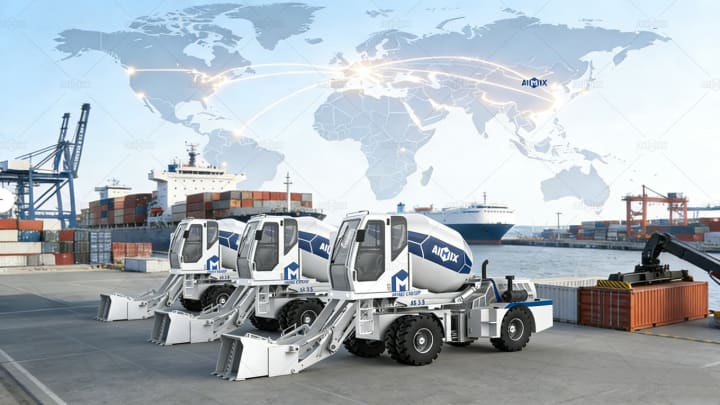
Finally, the adoption of this technology aligns seamlessly with the broader goals of Vision 2030. It supports workforce localization by creating demand for skilled equipment operators and maintenance technicians, fostering a new generation of Saudi talent in advanced construction machinery. From an environmental perspective, it is a more sustainable choice. By eliminating countless long-haul truck journeys, it substantially reduces the carbon footprint and dust pollution associated with a project. The precise batching and mixing also conserve water—a precious resource in the desert—by avoiding the waste common in traditional methods. In the fragile desert ecosystem, minimizing the physical footprint and disruption is paramount. The self-loading mixer, by centralizing production and reducing heavy vehicle traffic across the landscape, contributes directly to this goal. Therefore, it is not merely a tool for building structures; it is an enabling technology for building the future of Saudi Arabia responsibly and efficiently, one batch at a time.
About the Creator
consrtuctionmachines
AIMIX is a customer-center-oriented heavy equipment manufacturer and supplier, devoted to production, innovation, combination, one-stop solution, etc.
https://aimixgroup.com/
Keep reading
More stories from consrtuctionmachines and writers in Writers and other communities.
Noise Reduction Technologies in Modern Concrete Mixers
Concrete mixers are essential for construction projects, but they often generate significant noise. Excessive noise can disrupt work environments and affect health. Innovations in noise reduction technologies have led to quieter mixers. This article explores these advancements, focusing on their impact on self loading concrete mixers and mobile concrete mixers. Customers can gain valuable insights into these new technologies and their benefits.
By consrtuctionmachines7 months ago in Writers
Analyse this!
Wanna know how to improve your writing? There is a simple, quick, tried and tested method. Tried and tested by who? By me, as it happens, and I can guarantee that it will work for you. I know what I am talking about. Not always, of course, but certainly in this case.
By Raymond G. Taylora day ago in Writers




Comments