
Marie Curie: A Woman Who Changed Science
A Legacy Beyond Time

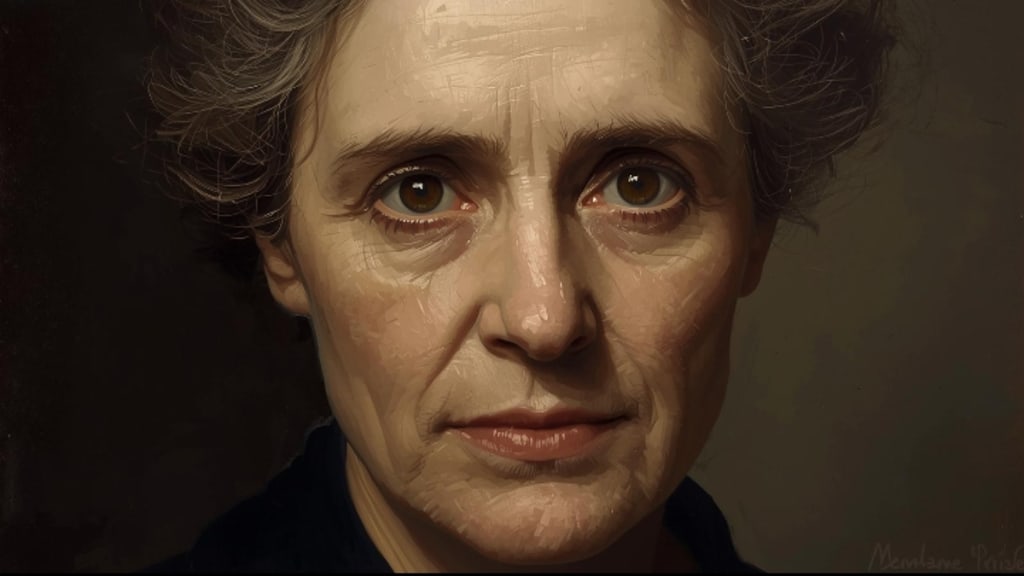
Childhood in Poland:
Marie Curie was born in 1867 in Warsaw, Poland. Her real name was Maria Sklodowska. She grew up in a family that loved learning. Her father was a teacher of mathematics and physics. He often showed his children scientific tools, like magnets and glass instruments.
But life was hard. Poland was under Russian rule, and education for women was not welcomed. Universities in Poland did not accept girls. Maria loved to study, but she could not go to a normal university.
She joined a secret school called the “Flying University.” There, students met in hidden rooms and learned science and philosophy. It was risky, but Maria wanted knowledge more than anything.
Journey to Paris;
Maria dreamed of studying in Paris, where women were allowed to enter universities. To earn money, she worked as a governess for many years, teaching children of rich families. She studied by herself at night, saving every coin...
In 1891, she finally went to Paris. She changed her name to Marie. Life there was very difficult. She lived in a tiny room, often cold and hungry. Many days she only ate bread and tea.
But she worked hard. She studied physics and mathematics at the Sorbonne University. At first, many male students did not believe a woman could do well. But Marie was determined. She studied day and night and soon became one of the top students in her class.
Meeting Pierre Curie;
In Paris, Marie met Pierre Curie, a quiet and brilliant scientist. They shared the same passion for discovery. Soon, they got married and started working together. Their love was not only personal but also scientific.
The Great Discovery;
At that time, a scientist named Henri Becquerel had found that some rocks gave off mysterious rays. Marie and Pierre decided to study these rays.
They worked in a small, broken shed that was cold in winter and very hot in summer. They stirred heavy pots of a black mineral called pitchblende, hoping to find something new. The work was very hard. Marie often worked until her hands were red and blistered.
Finally, in 1898, Marie and Pierre discovered a new element. She named it polonium, after her homeland, Poland. Later that same year, they discovered another element, radium. Radium gave off a beautiful blue-green light in the dark.
The discoveries were amazing. Doctors soon learned radium could be used to treat cancer.
First Woman to Win a Nobel Prize!!!!!
In 1903, the Nobel Prize committee wanted to give the prize only to Pierre and Becquerel. Pierre refused and insisted that Marie’s name must be included. Finally, Marie became the first woman to win a Nobel Prize in Physics!!!!!
Tragedy and Strengthen!..……...… 1906, tragedy struck. Pierre died in a street accident, leaving Marie with two daughters. She was heartbroken but did not stop her work.
Marie took Pierre’s place as a professor at the Sorbonne. She became the first woman professor in its history. In 1911, she won another Nobel Prize, this time in Chemistry, for isolating pure radium. She became the only person ever to win Nobel Prizes in two different sciences.
Helping in War!!
During World War I, Marie wanted to help. She developed mobile X-ray units, called “Little Curies.” She trained nurses and even drove one herself to the battlefield. Thanks to her work, many wounded soldiers had their lives saved.
The Final Years!!
Marie never protected herself from the harmful rays of radium because people did not yet understand the danger. Over the years, radiation damaged her health.
In 1934, she died from an illness caused by radiation. Even today, her notebooks are still so radioactive that they must be kept in special boxes.
Her Legacy;
Marie Curie’s life was full of struggles. She fought against poverty, prejudice, and illness. But she never gave up. She showed the world that women can achieve great things in science.
She once said:
“Life is not easy for any of us. But we must have perseverance and confidence in ourselves.”
Her courage and discoveries changed medicine, physics, and the place of women in science forever.
About the Creator
Keep reading
More stories from MUHAMMAD UMAIR KHAN and writers in Writers and other communities.
The Arrival of 2000 year
The Arrival of the New Year.., When the year 1999 was coming to an end, people all around the world were filled with excitement, curiosity, and also a little bit of fear. The arrival of the year 2000 was not just the beginning of a new year. It was the beginning of a brand-new century and, even more, the start of a new millennium. For many, it felt like stepping into a doorway that led to a different world.
By MUHAMMAD UMAIR KHAN4 months ago in Writers
Where Dreams Loved Me Back
chapter 1 Chapter One: The Quiet I Learned to Carry Matthew’s perspective, I don’t remember when life started feeling heavy. It wasn’t sudden — it was gradual, like carrying a bag that someone kept adding weight to until one day I realized I couldn’t put it down anymore.
By Anshu Giriabout 5 hours ago in Writers




Comments (1)
great