
Integrating AI in Healthcare Software: Transforming Diagnostics and Treatment Plans
AI in Healthcare

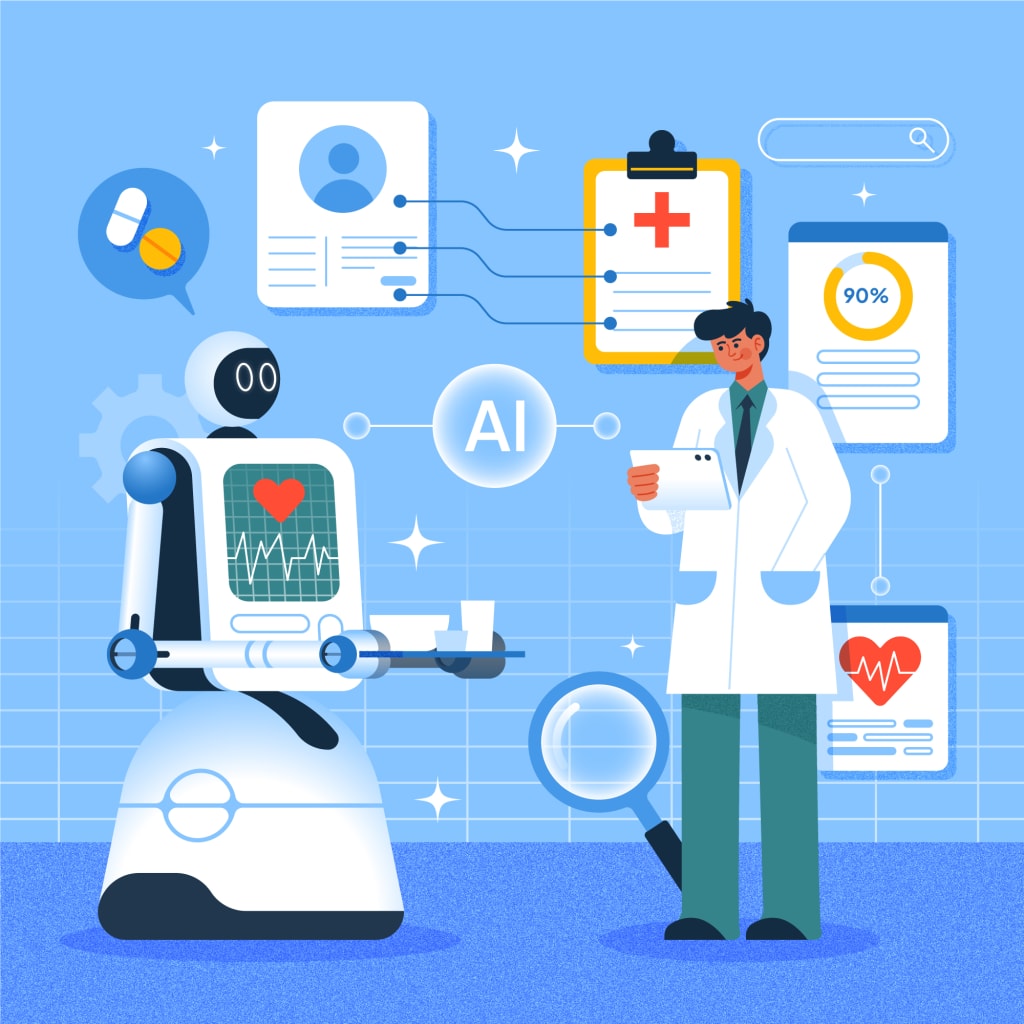
In recent years, the integration of AI in healthcare has gone from an emerging trend to a critical force driving innovation across clinical settings. As medical data grows exponentially and the demand for precision care intensifies, AI integration into healthcare software is transforming how diagnoses are made, and treatment plans are delivered.
From predictive analytics and image recognition to natural language processing and personalized care plans, artificial intelligence is unlocking unprecedented possibilities in modern medicine.
The Power of AI in Healthcare
AI in healthcare is not just about automation — it’s about augmenting human expertise with data-driven insights. AI algorithms can sift through massive datasets, recognize patterns that may go unnoticed by clinicians, and deliver faster, more accurate results.
Key Areas Where AI is Making an Impact:
Medical Imaging: AI-powered tools analyze X-rays, CT scans, and MRIs to detect anomalies such as tumors, fractures, and hemorrhages with high accuracy.
Clinical Decision Support Systems (CDSS): These systems assist healthcare professionals in diagnosing complex conditions using predictive modeling and real-time patient data.
Remote Patient Monitoring: AI enables continuous monitoring of chronic conditions, detecting early warning signs, and suggesting interventions.
Personalized Medicine: AI can tailor treatment plans based on a patient’s genetic profile, lifestyle, and medical history, improving outcomes and minimizing side effects.
The Role of Healthcare Integration in AI Success
Effective healthcare integration is critical to the success of AI implementations. Without seamless interoperability between EHRs, diagnostic tools, wearable devices, and care management systems, AI cannot access the quality or quantity of data it needs to perform effectively.
Why Integration Matters:
Ensures data consistency across systems
Enables real-time insights at the point of care
Reduces redundant documentation and testing
Enhances collaboration between departments and providers
Integrated systems allow AI models to continuously learn and adapt, making them smarter and more useful over time.
Real-World Applications of AI Integration in Diagnostics and Treatment
1. AI-Driven Radiology Platforms
AI-enabled diagnostic software can automatically highlight critical findings on medical images, significantly reducing turnaround time. These systems are now integrated with PACS and EHR systems to provide radiologists with a unified view of patient data.
2. AI in Oncology
AI tools analyze pathology reports, genetic data, and clinical histories to recommend personalized cancer treatment options. Through AI integration, oncologists can receive evidence-backed suggestions in minutes.
3. Chronic Disease Management
AI-based tools integrated with RPM devices help manage diabetes, hypertension, and heart conditions. These systems send alerts to physicians when vital signs exceed thresholds, enabling early intervention.
4. Virtual Health Assistants
AI-powered chatbots are being integrated into patient portals and mobile apps to provide medication reminders, answer FAQs, and schedule appointments, improving patient engagement and adherence.
Challenges in AI Integration for Healthcare
Despite its transformative potential, AI integration in healthcare faces several challenges:
Data silos: Fragmented systems make it difficult to train AI models on diverse datasets.
Regulatory hurdles: AI tools must meet strict FDA and HIPAA requirements.
Trust and transparency: Clinicians may hesitate to rely on black-box algorithms.
Bias in AI: Inaccurate or non-representative data can lead to biased predictions.
Solving these challenges requires close collaboration between healthcare providers, software developers, and AI experts.
The Future of AI in Healthcare Software
The future of AI in healthcare lies in building smarter, more connected ecosystems. As integration capabilities improve, we’ll see:
Real-time AI assistants embedded in electronic medical records
Precision diagnostics based on genomic, lifestyle, and environmental data
Dynamic treatment plans that adapt based on patient response
AI-led population health analytics to predict and prevent outbreaks
Healthcare organizations that prioritize AI integration today will lead the charge in delivering smarter, more personalized, and value-driven care tomorrow.
Final Thoughts
Integrating AI in healthcare software is no longer a futuristic concept — it’s a present-day necessity. By unifying AI with healthcare IT systems through seamless healthcare integration, providers can enhance diagnostic accuracy, optimize treatment plans, and ultimately, improve patient outcomes.
At Emorphis Technologies, we specialize in designing secure, scalable AI-integrated healthcare solutions that empower providers to deliver intelligent, patient-first care. If you're ready to revolutionize your healthcare software with AI, we're here to help.
About the Creator
Larisa Albanians
Hey, a healthcare technology solutions provider at emorphis, that is helping organizations to deliver better healthcare solutions.
Keep reading
More stories from Larisa Albanians and writers in Writers and other communities.
How Multi-Cloud Strategies are Revolutionizing Healthcare IT
Introduction The adoption of cloud computing in healthcare is accelerating as organizations seek more efficient, scalable, and secure solutions for managing patient data, electronic health records (EHRs), and advanced analytics. Among the various cloud strategies, multi-cloud is emerging as a game-changer, enabling healthcare providers to leverage multiple cloud platforms for enhanced flexibility, security, and performance.
By Larisa Albanians9 months ago in Writers
Point The Blame At Your Heart
I write some poems, but not as many as others on Vocal. Most of my poems are about love—wanting love, sad love, or feelings of love. I think I am a big softie inside! Here we go. We blame love stuff on our hearts. We say “loving you with all my heart” and “you break my heart.” All love and feelings are linked to our hearts. We blame everything good or bad on hearts.
By Rosalina Janea day ago in Writers




Comments
There are no comments for this story
Be the first to respond and start the conversation.